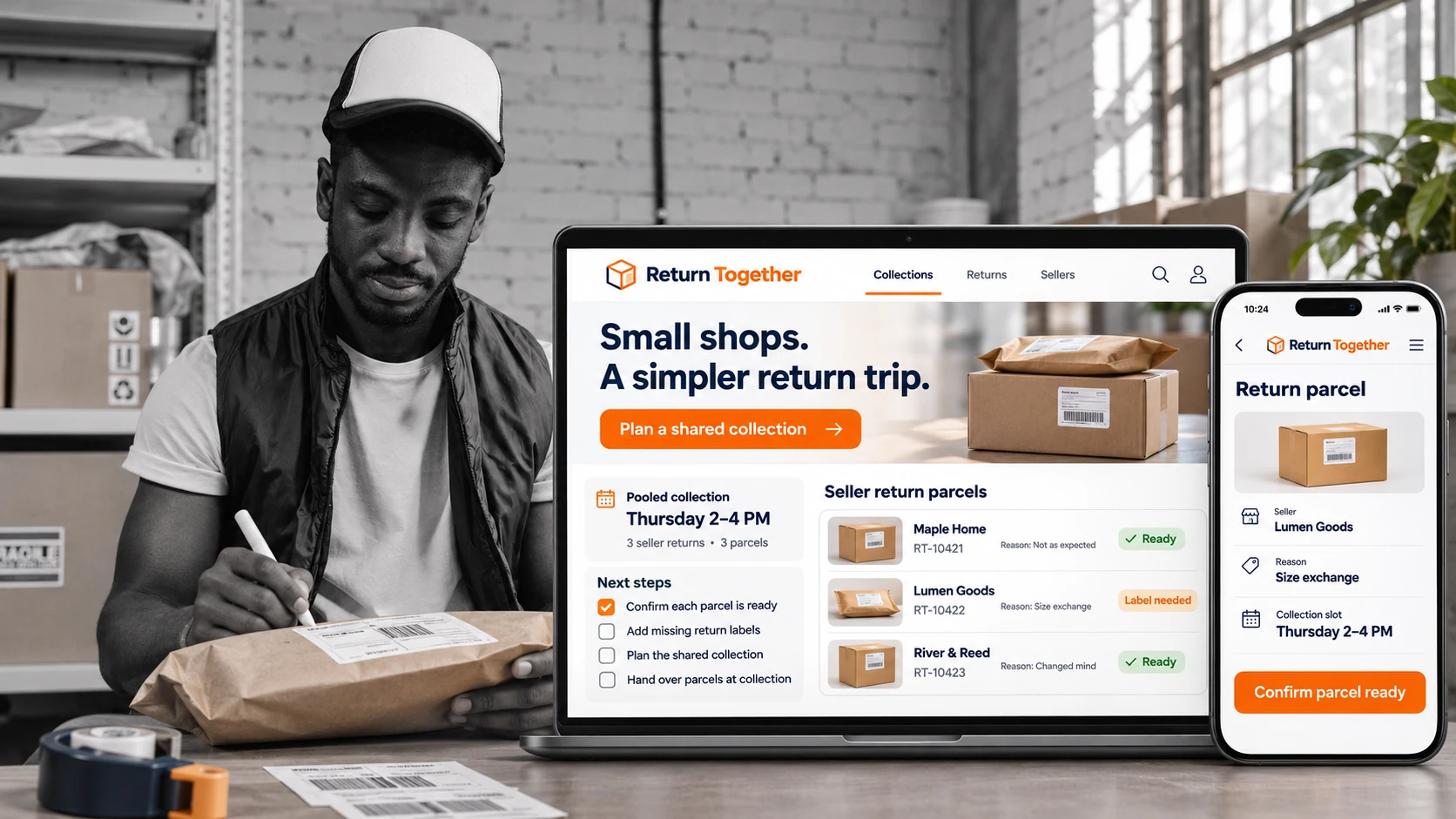
A small shop has three returns in different parts of town, each with its own messages, label and collection question. A shared collection route sounds useful, but mixing up the parcels would create another problem. Your service could organise the logistics together while preserving the individual detail each merchant needs.
A business you can
picture.
Choose a small merchant group and a manageable collection area. Sellers approve return requests, the operator plans suitable pickups and each parcel retains its own reference through the handover.
Who would be glad
you built it?
Small online merchants
A manageable route for return collections
Customers returning an agreed item
Clear collection instructions and a receipt
Collection operators
Accurate parcel details and planned handovers
Where the money
could come from.
Merchants could pay per collected return, with the charge covering the agreed collection and handover stages. Your margin must support routing, operator payments, tracking and issue handling. Inspection or repackaging should be separately scoped where available. A pooled route is useful only if its full operating costs and each parcel’s accountability remain clear.
The part you could
make your own.
Your proposed difference is shared logistics without a shared tangle of cases. A merchant could see the reason and collection history for its own item even when several sellers use the same route.
An angle to test with the people you want to serve.Start with something
worth using.
Choose one merchant group and service area. Record authorised returns, schedule suitable collections and issue parcel-specific receipts. Keep handover and condition observations separate from the merchant’s decision about refund eligibility.
- Separate an approved return from a refund decision.
- Group collections that can share a practical route.
- Record each parcel's condition and destination.
Give the promise
something to stand on.
You need dependable logistics partners and clear custody records. Parcel acceptance, loss, damage and handover responsibilities must be agreed, while the merchant retains control of its customer return policy.
Define parcel acceptance, loss, damage and handover responsibilities. The merchant remains responsible for its customer policy, while the platform records what the collection service actually did.
Let a small beginning
teach you something.
Trial a small group of nearby merchants with already authorised returns. Follow each parcel through collection and handover, then ask whether the merchant can reconcile its case without calling the driver for missing details.
Can every collected parcel be matched to the correct merchant case and an accountable handover record?
Look for these signs
- Parcels retain unique case references
- Customers receive clear collection records
- Merchants distinguish collection from refund decisions
A little more
clarity.
Does collecting an item approve the refund?
No. The collection record states what the service handled. The merchant’s policy and authorised review determine the customer’s refund or replacement, which should be explained separately.
Can different item categories share a route?
Only when acceptance, handling and storage arrangements are suitable. Start with compatible parcels and clear limits rather than treating every return as an interchangeable box.
What should my first version focus on?
Start with the first test described here, then build around the part people actually use and would pay to keep.
Now picture it
with your name on it.
Your people. Your priorities. The version you keep thinking about. Answer a few questions and leave with a starting plan you can keep.
Free to explore. No account or email needed for your starting plan.