Logistics & mobilityEstablished model
Local delivery service

Help every delivery move with a clearer handover.

The order is ready. The driver needs the details. The customer wants to know where things stand. You could give a delivery team one shared view of the day, making it easier to see the next job and respond when a journey does not go to plan.

Make this fit me
You could also build this as a mobile app
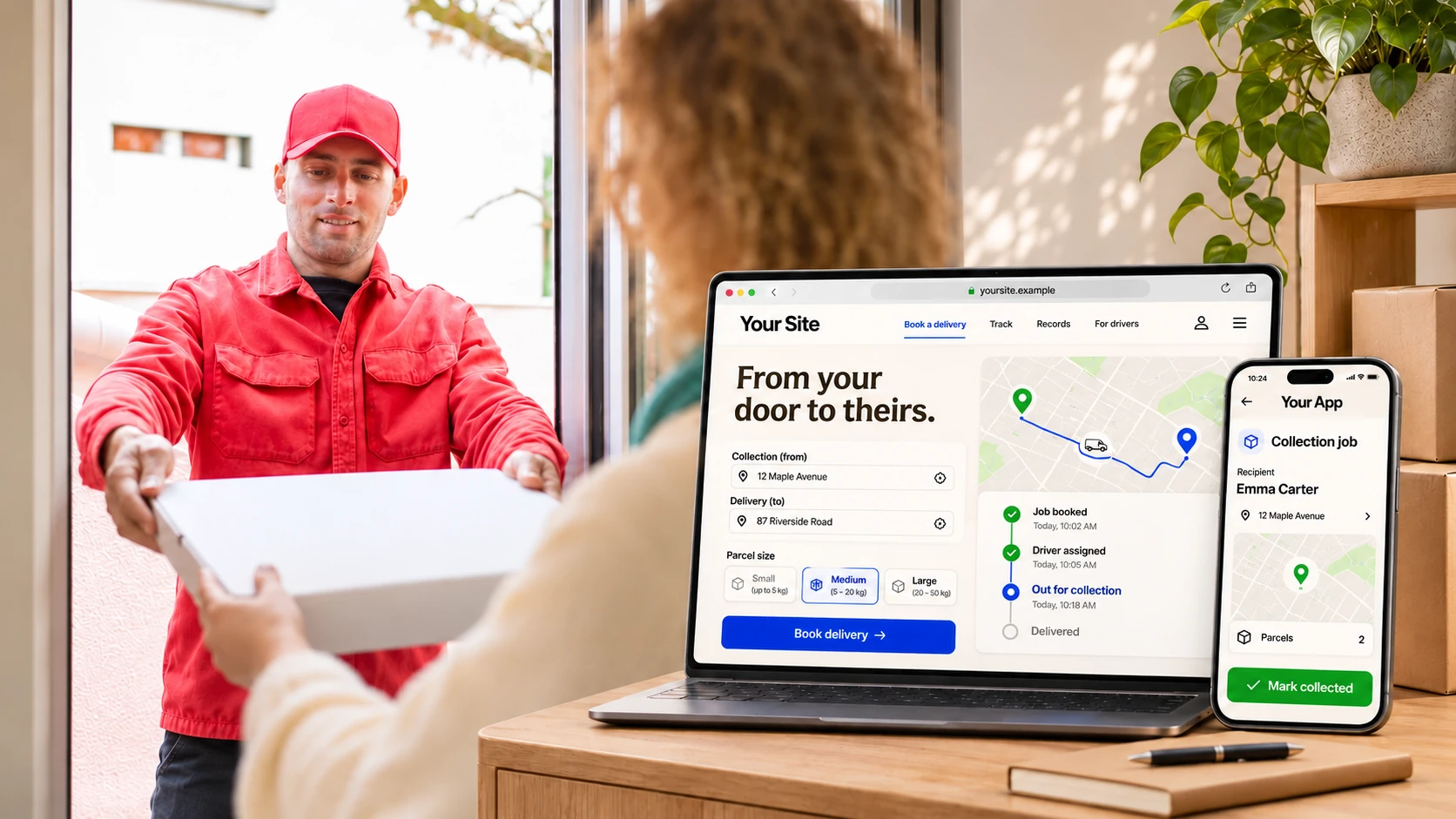
Local delivery service concept: A delivery person in red uniform handing over a package at a doorway. A desktop website and matching phone show the digital business.Illustrative concept
IMAGINE THIS MOMENT

A driver reaches an address with no recipient available while another collection is waiting across town. The dispatcher is answering both calls and searching for order details. Your workspace could bring the job, contact and next decision together, helping a small operator respond without losing the rest of the day.

A business you can
picture.

Start with one operator and a limited delivery area. Build around the way the team really works.

Who would be glad
you built it?

Local courier operators

Coordinate jobs and exceptions.

Independent retailers

Understand collection and delivery status.

Drivers

Find the right details for each handover.

Where the money
could come from.

A delivery operator could pay a recurring software fee for an agreed number of active vehicles or jobs. That payment buys coordination and records. Mapping, notifications, support and connectivity-related problems carry costs; make any usage limits clear so an operator can understand the bill before a busy period.

The part you could
make your own.

Handling the difficult handover well could be your advantage. Useful failure reasons, clear customer contact and an agreed next action may matter more than an attractive moving dot. Test that with dispatchers during real work.

An angle to test with the people you want to serve.

Start with something
worth using.

Pilot with one operator, a small service area and a simple job list. Include driver assignment, recipient details, status updates and a failed-delivery action. Add route optimisation only when the basic workflow is dependable.

  • Create jobs with the instructions the driver needs.
  • Assign work to an available driver.
  • Send clear status updates to customers.
  • Record completion or explain why a delivery could not finish.

Give the promise
something to stand on.

WHAT YOU BRING

This could suit you if you understand local delivery operations and can support a team during working hours. Address quality, failed handovers and realistic status updates are central to the experience.

Driver onboarding, connectivity and support are ongoing work. Protect addresses and location data. Explain what completion evidence means and how damaged goods, failed delivery and disputes are handled. Arrival promises must match the operator’s capacity.

Let a small beginning
teach you something.

Shadow an operator's dispatch routine with permission, then run a limited set of real jobs through the workspace. Pay particular attention to changes and failures, where a neat demonstration often hides the hardest work.

THE QUESTION TO TEST

Can the dispatcher handle a failed handover without losing track of the other jobs in progress?

Look for these signs

  • Job details reach the assigned driver
  • Exceptions have a clear next action
  • Customers receive accurate status updates
WHEN THE FIRST VERSION HAS TAUGHT YOU MORE
Where you could take it next

Multiple depots, business ordering connections and route suggestions could follow. Keep dispatch staff able to correct a recommendation when local knowledge or a changed situation calls for it.

A little more
clarity.

Does this require live vehicle tracking?

A first version can use meaningful driver updates at agreed stages. Live location adds permissions, connectivity and reliability considerations; introduce it when the operator can explain the operational benefit.

Can you guarantee delivery times through the app?

The interface should reflect the operator's actual service arrangements. Traffic, recipient availability and other disruptions still happen. Use realistic windows and explain changes instead of displaying a precise promise the team cannot support.

Do I need to own vehicles?

No. Your software can serve an existing operator, with delivery responsibilities agreed clearly.

Must the first version optimise every route?

No. Clear assignments, updates and exception handling can provide a focused first test.

SOMETHING TO LEARN FROM

Onfleet provides delivery-management tools, including proof of delivery. It is a reference for the workflow. Your opportunity needs a particular customer group or operating problem you can serve well.

WHAT COULD GO INSIDE

A few additions
to explore.

Delivery route and load planningGive your delivery coordinator a clearer view of the day's promises before assigning work to the vehicles that must fulfil them.Maps and local availabilityHelp a visitor connect a useful offer to a real place, with the coverage and arrival details that matter beyond the map pin.Automatic reminders and updatesLet a timely update carry the routine reassurance, so your team can give more attention to the questions that need a person.
MAKE ROOM FOR YOUR VERSION

Now picture it
with your name on it.

Your people. Your priorities. The version you keep thinking about. Answer a few questions and leave with a starting plan you can keep.

Free to explore. No account or email needed for your starting plan.
PICTURE THE MOBILE APPDelivery dispatch app

Keep a small delivery team moving together.

An order is ready, a driver is nearby and someone is waiting for an update. You could build a dispatch app that brings those small decisions together for a local operator. Give dispatchers, drivers and recipients a clear view of the next step, beginning with a service area you can manage well.

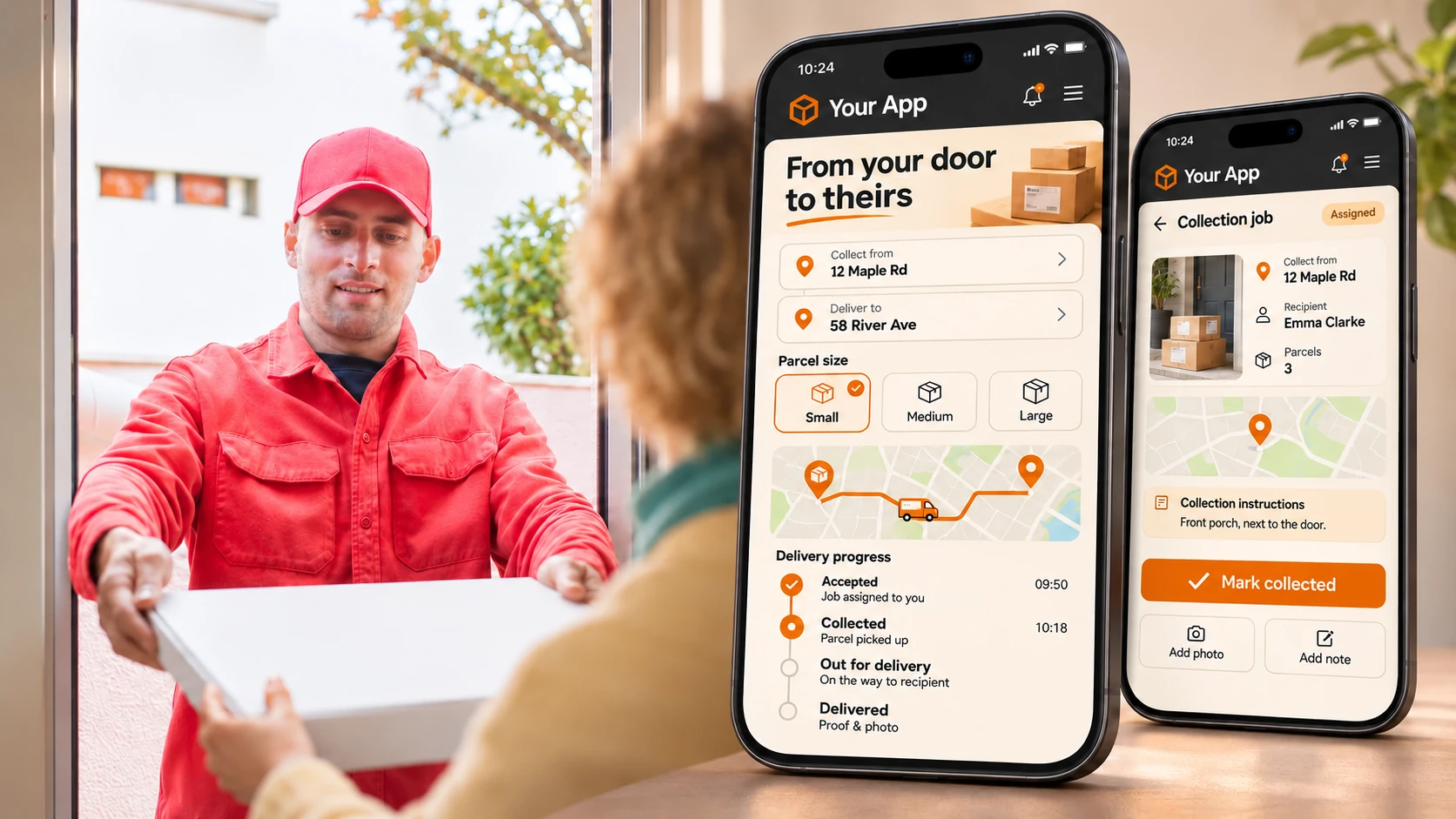
A delivery person in red uniform handing over a package at a doorway. Two phone screens preview the delivery dispatch app, with no desktop view.App concept
IMAGINE THIS MOMENT

A shop has packed an order, but the customer still asks whether it has left. The dispatcher is juggling calls and the rider has incomplete directions. You could build a phone workflow that carries the necessary information from collection to handover, including what happens when delivery cannot be completed.

One useful moment.
A reason to open it.

A dispatcher creates a job with collection and recipient details. The assigned driver accepts it on the phone and sees the next place and action.

Who would be glad
you built it?

Local merchants

Know when an order has been collected.

Dispatch teams

Assign work and see unresolved exceptions.

Delivery drivers

Receive usable instructions without searching chat histories.

A place in their life.
At the right moment.

Why it belongs on a phone

Delivery information changes while people are moving. Location where appropriate, timely assignments and quick status records make the phone part of doing the job rather than just checking it afterwards.

A reason to come back

Drivers and dispatchers return throughout each working day. The service must stay clear when something goes wrong, including an unavailable recipient, a changed address or a delayed pickup.

Location & mapsLive coordinationOn-the-go records

Where the money
could come from.

An existing delivery operator could pay a team subscription for dispatch and driver access. The value is a clearer service workflow, not the delivery itself. Account setup, support, mapping services and communications have costs. If you also operate deliveries, rider pay, transport and failed attempts belong in a separate operating model.

The part you could
make your own.

Serve a specific delivery pattern, such as small retailers' scheduled rounds. Better collection instructions and honest exception updates could become a useful distinction to test with dispatchers and merchants.

An angle to test with the people you want to serve.

Start with something
worth using.

Start with one operator, one service area and manual job assignment. Record acceptance, collection and handover, with a clear exception path. Keep route optimisation and customer marketplaces for later learning.

  • Dispatcher-created jobs and driver assignment
  • Pickup and recipient instructions
  • Clear accepted, collected and delivered states
  • Permission-based delivery proof and exception notes

Give the promise
something to stand on.

WHAT YOU BRING

You bring access to an operator and knowledge of its real delivery promises. Agree who resolves missing addresses, unavailable recipients and damaged parcels before expanding the app's reach.

Driver onboarding, connectivity and support are ongoing work. Protect addresses and location data. Explain what completion evidence means and how damaged goods, failed delivery and disputes are handled. Arrival promises must match the operator’s capacity.

Let a small beginning
teach you something.

Shadow an agreed delivery round with the operator's permission. Map the questions asked by phone, then trial the app on suitable jobs while the dispatcher retains responsibility for decisions.

THE QUESTION TO TEST

Can a driver complete the handover with the job information provided, and report exceptions without improvising?

Look for these signs

  • Jobs contain usable recipient instructions.
  • Dispatchers notice unresolved deliveries.
  • Handover records match the actual outcome.
WHEN THE FIRST VERSION HAS TAUGHT YOU MORE
Where you could take it next

Multiple depots, business ordering connections and route suggestions could follow. Keep dispatch staff able to correct a recommendation when local knowledge or a changed situation calls for it.

A little more
clarity.

Do we need live tracking immediately?

A few reliable job states may be enough for the first pilot. Continuous location adds battery, connectivity and privacy considerations; add it only when it solves a defined operating problem.

What if a recipient is unavailable?

Give the driver an exception option and a contact route. Your operator needs a policy for waiting, reattempts and returns, which the app should reflect instead of inventing.

Do I need to own vehicles?

No. Your software can serve an existing operator, with delivery responsibilities agreed clearly.

Must the first version optimise every route?

No. Clear assignments, updates and exception handling can provide a focused first test.

SOMETHING TO LEARN FROM

Onfleet provides delivery-management tools, including proof of delivery. It is a reference for the workflow. Your opportunity needs a particular customer group or operating problem you can serve well.

WHAT COULD GO INSIDE

A few additions
to explore.

Delivery route and load planningGive your delivery coordinator a clearer view of the day's promises before assigning work to the vehicles that must fulfil them.Maps and local availabilityHelp a visitor connect a useful offer to a real place, with the coverage and arrival details that matter beyond the map pin.Automatic reminders and updatesLet a timely update carry the routine reassurance, so your team can give more attention to the questions that need a person.
MAKE ROOM FOR YOUR VERSION

Now picture it
with your name on it.

Your people. Your priorities. The version you keep thinking about. Answer a few questions and leave with a starting plan you can keep.

Free to explore. No account or email needed for your starting plan.
KEEP THE POSSIBILITIES OPEN

Something else
might speak to you.