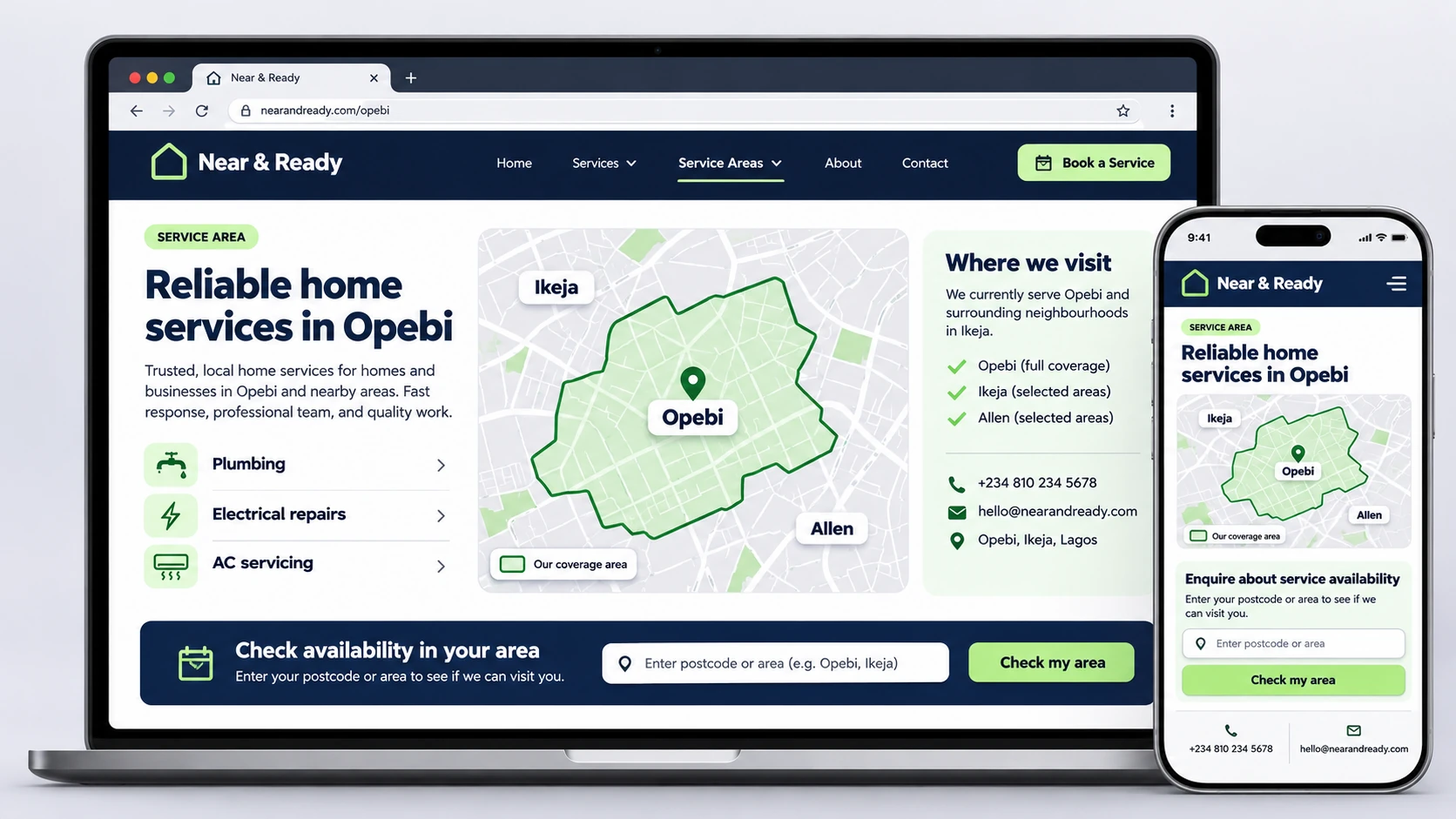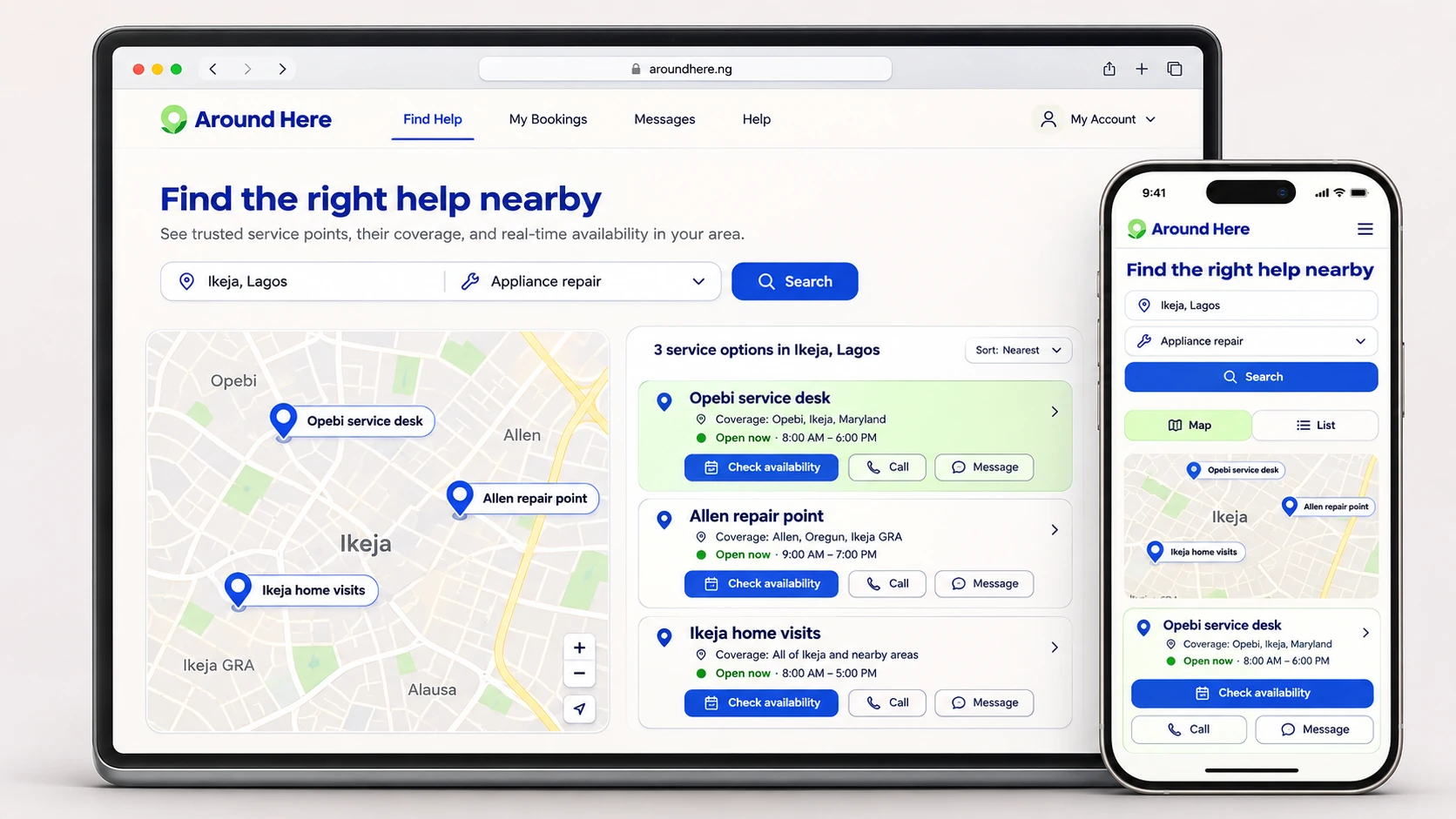
A customer finds a nearby service on a map but discovers that the marker is an office rather than the place they should visit. A clearer location feature could connect the pin to its actual purpose, coverage and contact route, helping people decide whether the offer fits before making a journey or request.
Visitors see a map pin without knowing whether it marks a public venue, an office, a collection point or an approximate service area.
The map and accompanying list explain the location's purpose, relevant coverage and the right next step for checking or arranging the service.
Where it could
make a difference.
Local service businesses
Show a real base and service coverage.
Rental operators
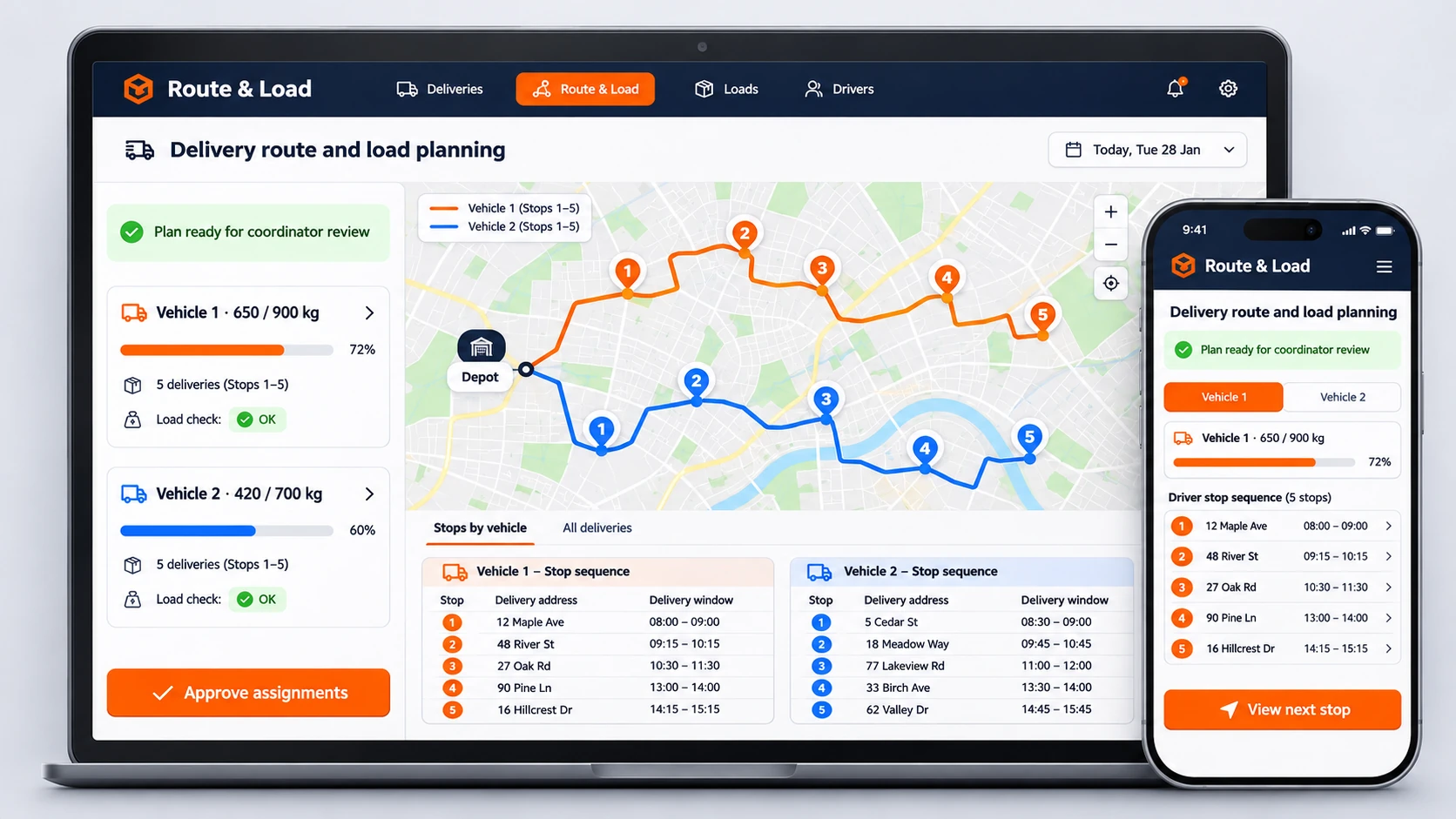
Connect available items with collection locations.
Directory owners
Help visitors explore verified places.
Useful on: Directory, Booking website, Delivery website, Business website.
What this could mean
for your business.
Location tools can support relevant enquiries and make practical choices easier. Their value depends on accurate records and useful availability information. Review location-related confusion, suitable enquiries and successful handovers, while including mapping service costs and the work of keeping places current.
Start with something
worth using.
Start with verified locations, meaningful area information and a clear contact or availability check. Offer a readable list alongside the map. Add live availability only when a dependable source supports it.
- Accurate location records
- Coverage or area information
- Search and contact routes
Give the promise
something to stand on.
You need accurate location records and someone who updates coverage and practical details. Decide whether a location is public, approximate or private, and do not expose home addresses without an appropriate reason and permission.
Choose a suitable map service and budget for its use. Keep private addresses protected where appropriate and make permission-based location use optional for visitors.
- Verified location data
- A mapping service
- Coverage update responsibility
How it fits what you already have
Check coordinates, addresses, map services and coverage records. Define update responsibility and privacy rules, and ensure filters, opening details and availability status come from sources your team can maintain accurately.
Let a small beginning
teach you something.
Ask people unfamiliar with the locations to find a suitable service and explain where to go or whom to contact. Review mistaken assumptions about the pin, opening details and coverage boundaries.
Can the visitor understand what the location represents and whether the relevant service is available there or in their area?
Look for these signs
- Pins match verified location records.
- Coverage and collection details are clear.
- A list supports users who cannot use the map.
A little more
clarity.
Does a nearby pin mean the service covers my address?
Not necessarily. Show coverage separately and provide a way to check exceptions. Distance to an office does not always determine where a business can deliver or work.
Must every listing show an exact address?
No. The appropriate detail depends on the service and privacy expectations. An approximate area and contact route may be more suitable until an appointment or handover is agreed.
Could this work with my existing website?
We would check how your current website is built, what it already does and which services need to connect. That helps us choose a suitable addition and avoid paying twice for something you already have.
What would this change
in your business?
Your customers. Your working day. The part you would love to make easier. Answer a few questions and leave with a starting plan you can keep.
Free to explore. No account or email needed for your starting plan.