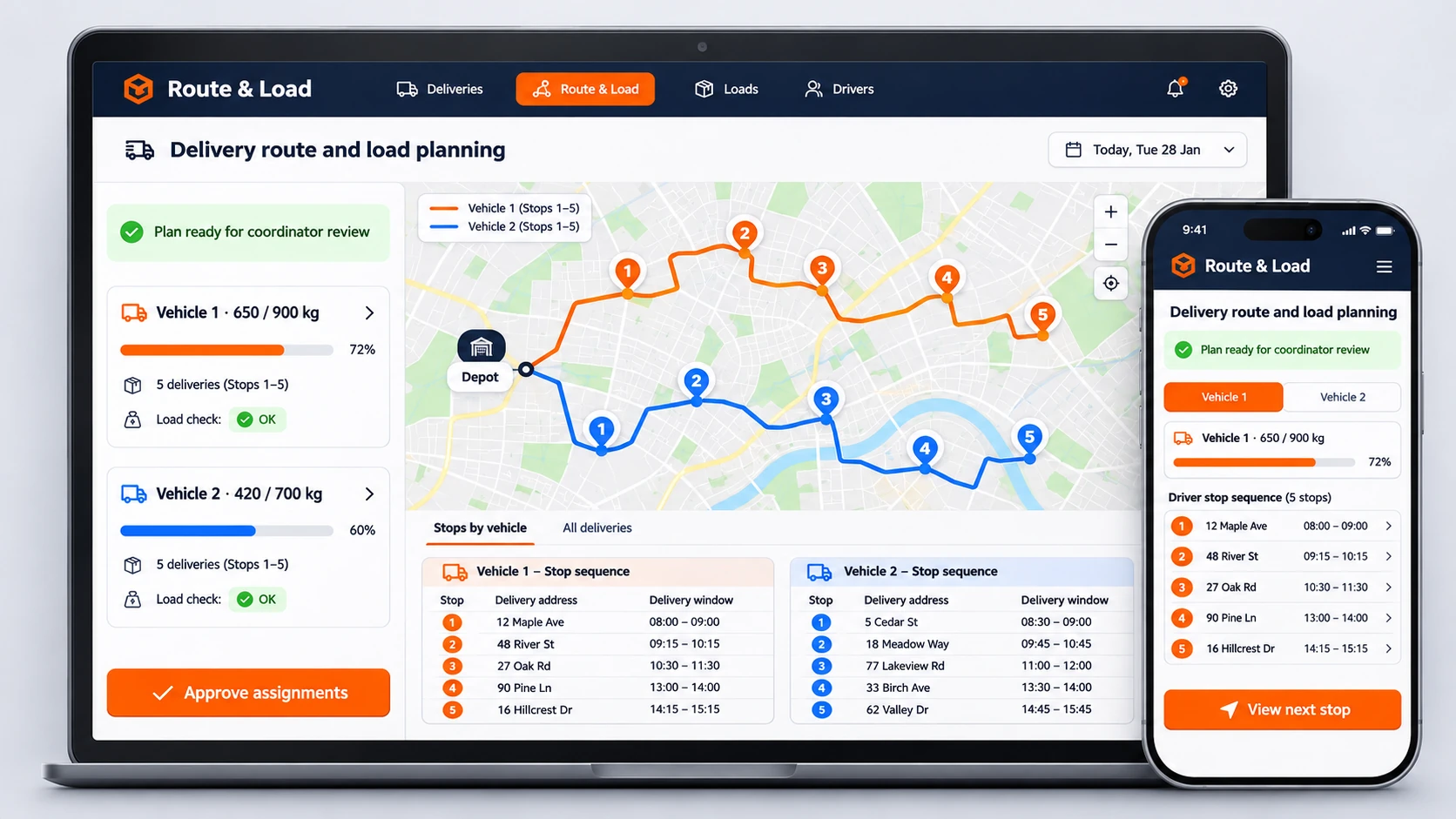
Several orders need delivery, but their sizes, time windows and vehicle limits sit in different records. A route and load view could bring those constraints together before dispatch. Your coordinator can then make a considered plan and communicate changes, rather than discovering an unsuitable assignment after the vehicle is loaded.
Delivery details and vehicle limits are scattered, so a planner may assign work before seeing the practical constraints together.
Stops, windows and load information appear in one review, allowing the coordinator to approve assignments and communicate necessary changes before dispatch.
Where it could
make a difference.
Local suppliers
Plan deliveries around load and customer windows.
Delivery operators
Assign work to suitable vehicles.
Commerce teams
Share practical fulfilment constraints with dispatch.
Useful on: Delivery website, Online store, Business portal.
What this could mean
for your business.
A clearer plan can support fulfilment and help staff use vehicles and time more deliberately. Any efficiency benefit needs to be measured in actual rounds. Include mapping costs, data preparation and exception handling, and review missed windows or unsuitable loads alongside distance and planning effort.
Start with something
worth using.
Start with stops, delivery windows, load information and coordinator-approved assignments. Include an exception list. Add route suggestions only after the basic data is accurate enough to support them.
- Stops and delivery windows
- Vehicle and load information
- Coordinator-approved assignments
Give the promise
something to stand on.
You need current job details, vehicle information and an experienced coordinator. Agree which constraints are firm, which are preferences and who approves a revised plan.
Reliable addresses, quantities and vehicle information are essential. Agree how late changes, access restrictions and failed deliveries are handled; estimates should remain distinguishable from confirmed commitments.
- Current job and vehicle data
- Suitable mapping service
- A delivery coordinator
How it fits what you already have
Check order details, addresses, vehicle records and mapping services. Define load units, planning authority and update delivery to drivers, including how late order changes and unavailable vehicles affect an already approved plan.
Let a small beginning
teach you something.
Use completed delivery rounds to test whether the view captures real constraints. Then pilot a manageable day with the coordinator in control, reviewing changes and unsuitable assignments before expanding.
Can the coordinator identify an impossible or unsuitable assignment before a vehicle leaves with the day's load?
Look for these signs
- Vehicle limits are visible in planning.
- Customer windows accompany the stops.
- Revised assignments reach the responsible team.
A little more
clarity.
Will the system always find the best route?
No. The result depends on the information and constraints provided, and conditions can change. Begin with a clear planning view and keep an accountable coordinator in control.
Is load size just a number of parcels?
Not always. Weight, dimensions, handling and compatibility may matter for your operation. Choose the details that affect your actual vehicles and delivery process.
Could this work with my existing website?
We would check how your current website is built, what it already does and which services need to connect. That helps us choose a suitable addition and avoid paying twice for something you already have.
What would this change
in your business?
Your customers. Your working day. The part you would love to make easier. Answer a few questions and leave with a starting plan you can keep.
Free to explore. No account or email needed for your starting plan.