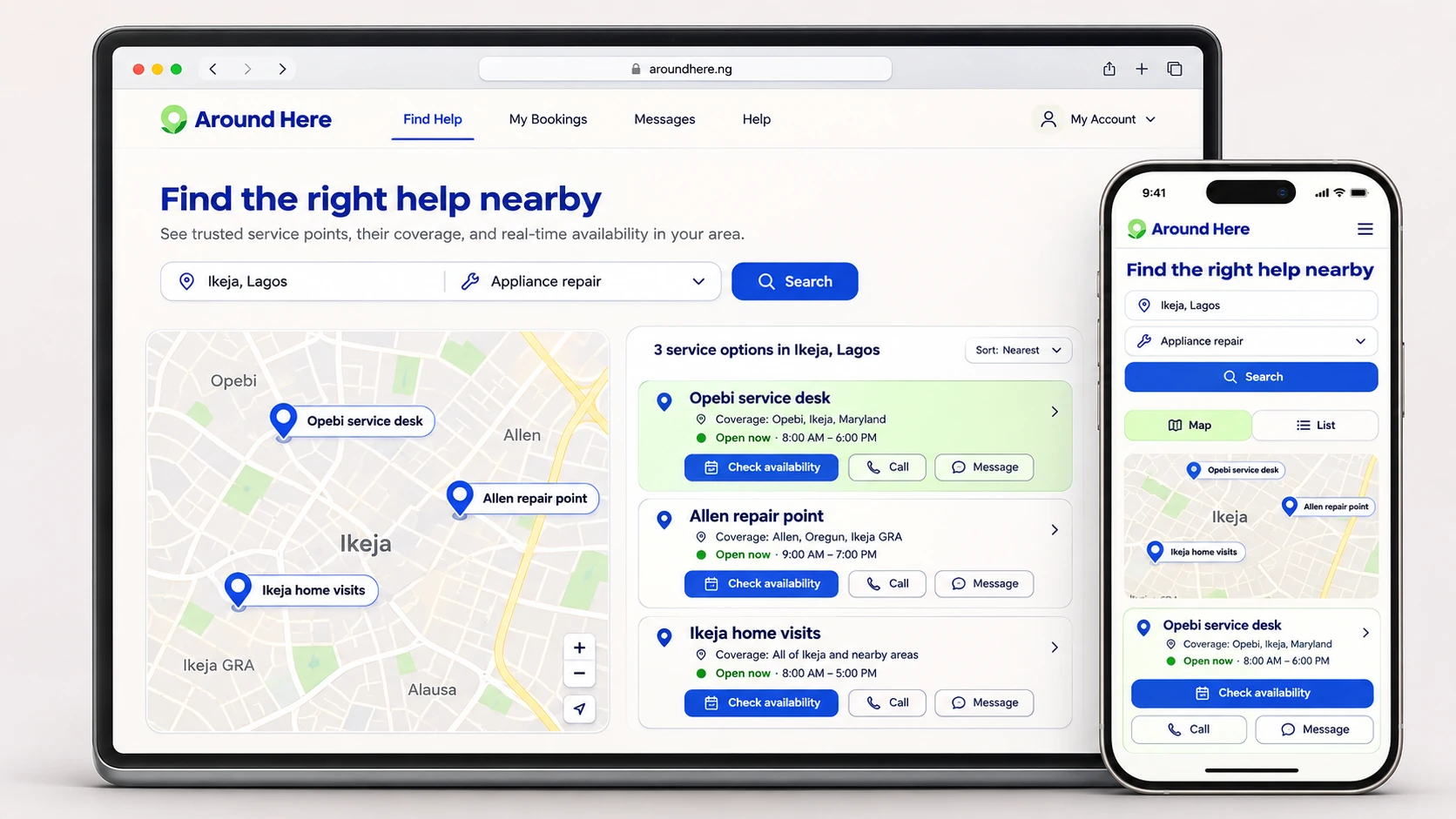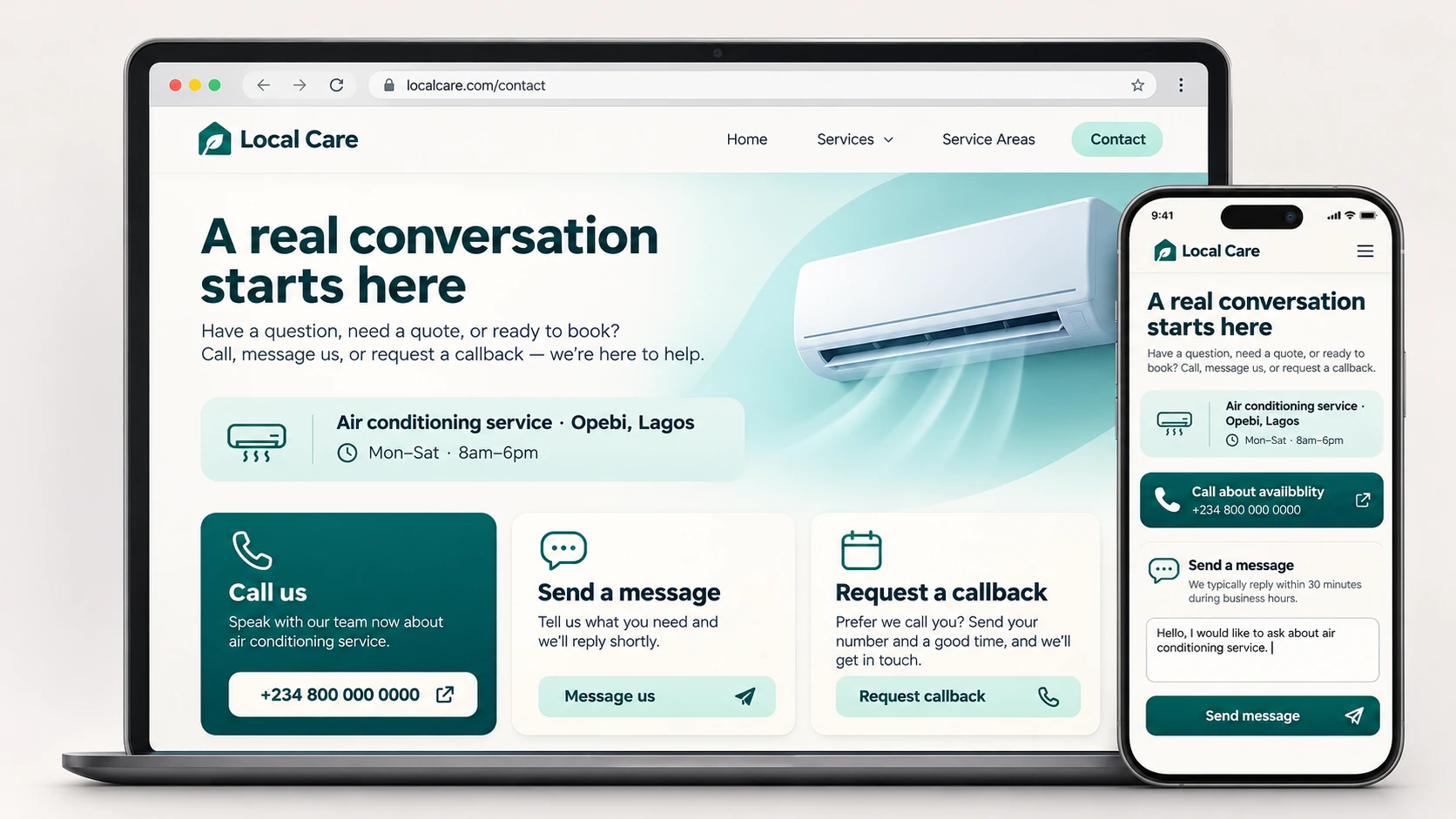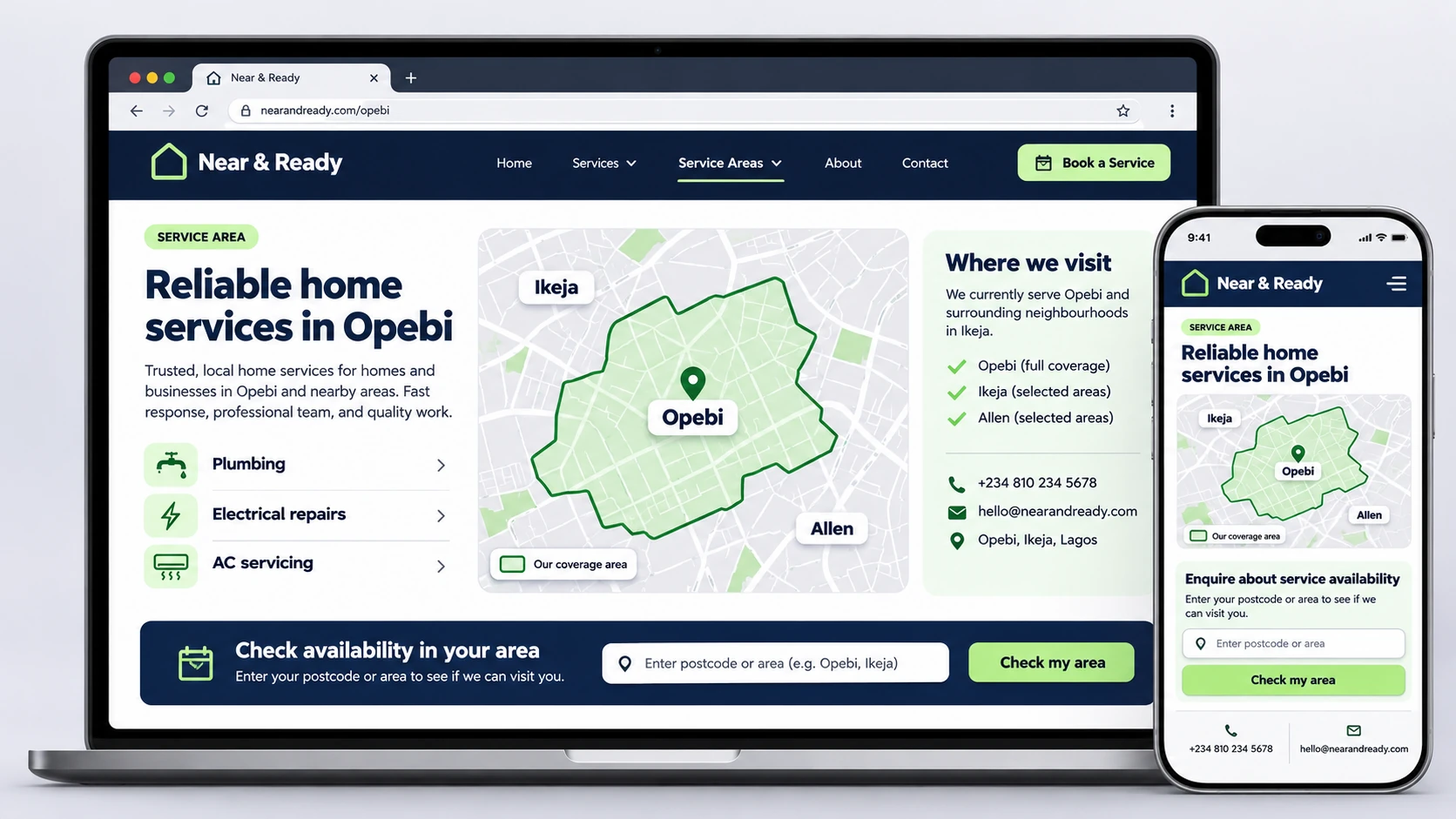
A visitor finds your business but cannot tell whether your team travels to their neighbourhood or whether a branch offers the service they need. Clear location pages could answer that practical question with actual coverage, relevant details and a route to check exceptions. The aim is a useful local explanation, not a collection of invented offices.
Visitors cannot distinguish your base, branches and travel area, so they call before knowing whether the relevant service can reach them.
Actual coverage, branch-specific details and a clear exception route help visitors understand the local fit before making contact.
Where it could
make a difference.
Local service providers
Explain real travel and coverage boundaries.
Multi-branch businesses
Show the services available at each location.
Delivery operators
Clarify areas and practical restrictions.
Useful on: Business website, Directory, Delivery website.
What this could mean
for your business.
Clear location information supports visibility and more relevant enquiries. It can help staff spend less time explaining boundaries, while customers arrive with better expectations. Review location-related questions and suitable enquiries alongside discovery, without promising a particular local search position.
Start with something
worth using.
Start with actual locations or meaningful coverage areas, relevant service details and correct contacts. Add an availability enquiry where the answer needs review. Avoid duplicating the same vague page for every place name.
- Actual coverage and contact details
- Relevant local service information
- A clear availability enquiry
Give the promise
something to stand on.
You need verified addresses or service areas and someone who keeps them current. Decide how to handle border areas, temporary restrictions and services that differ between branches.
Keep opening hours, addresses and coverage current. Avoid making a presence look local when the business cannot actually deliver the stated service there.
- Verified locations and coverage
- Local information owner
- A process for exceptions
How it fits what you already have
Check business addresses, map details, branch records and service availability. Assign an owner for changes and make sure forms or booking tools apply the same coverage rules described on the public pages.
Let a small beginning
teach you something.
Ask people from served and unserved areas to find the answer for their location. Review misdirected enquiries with staff and improve the boundary or exception wording where it caused confusion.
Can the visitor tell whether the relevant service covers their location and what to do when the answer needs checking?
Look for these signs
- Coverage matches the actual service.
- Branch contacts reach the right team.
- Exception enquiries include a useful location.
A little more
clarity.
Do we need an office in every area?
No. Describe service coverage honestly and distinguish it from a staffed physical location. Visitors should understand where you are based and where the team can actually work.
Can every location page use identical text?
Some shared details are natural, but each page should answer a real local question. Create additional pages when they have useful, accurate information rather than only a changed place name.
Could this work with my existing website?
We would check how your current website is built, what it already does and which services need to connect. That helps us choose a suitable addition and avoid paying twice for something you already have.
What would this change
in your business?
Your customers. Your working day. The part you would love to make easier. Answer a few questions and leave with a starting plan you can keep.
Free to explore. No account or email needed for your starting plan.