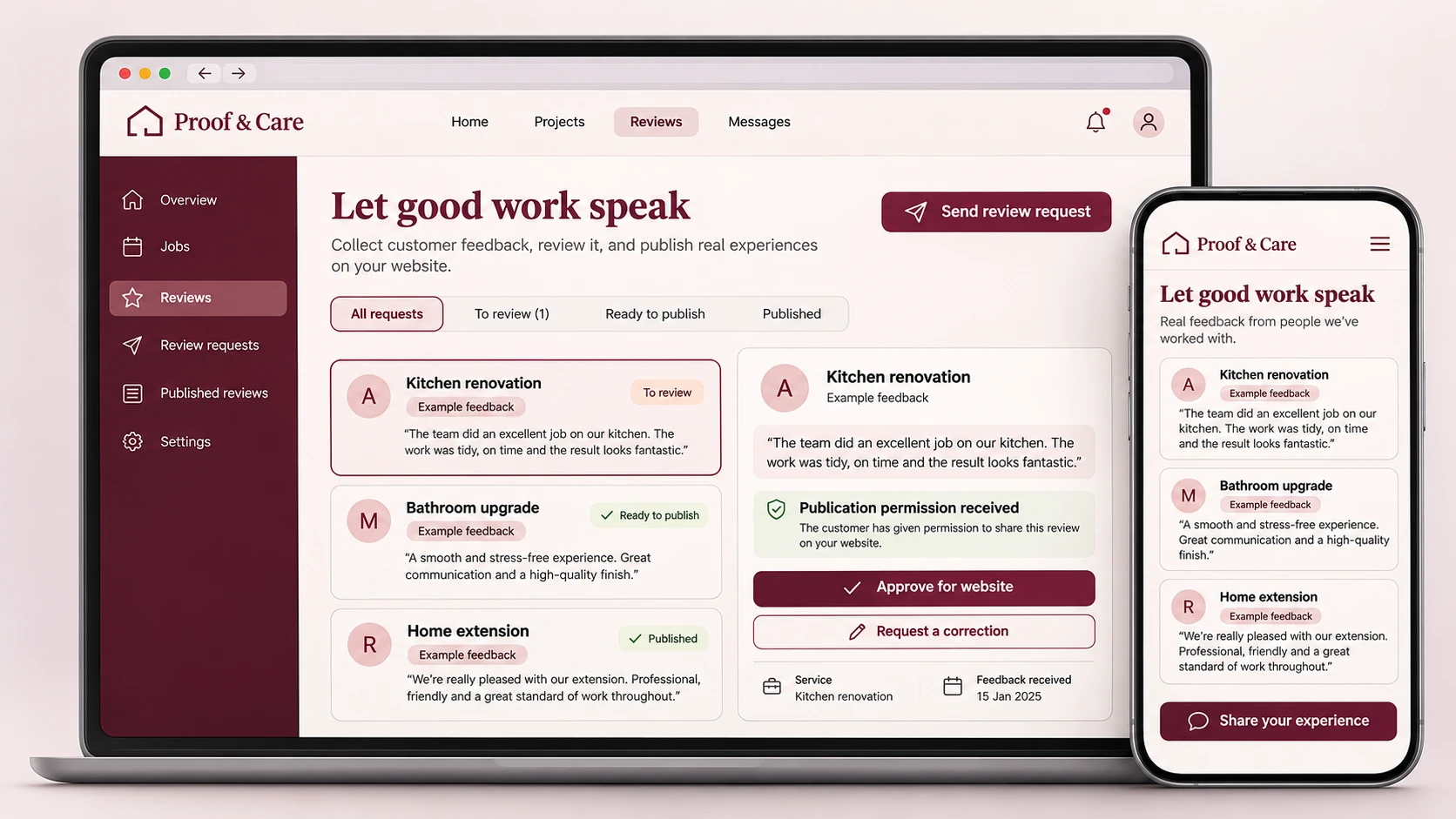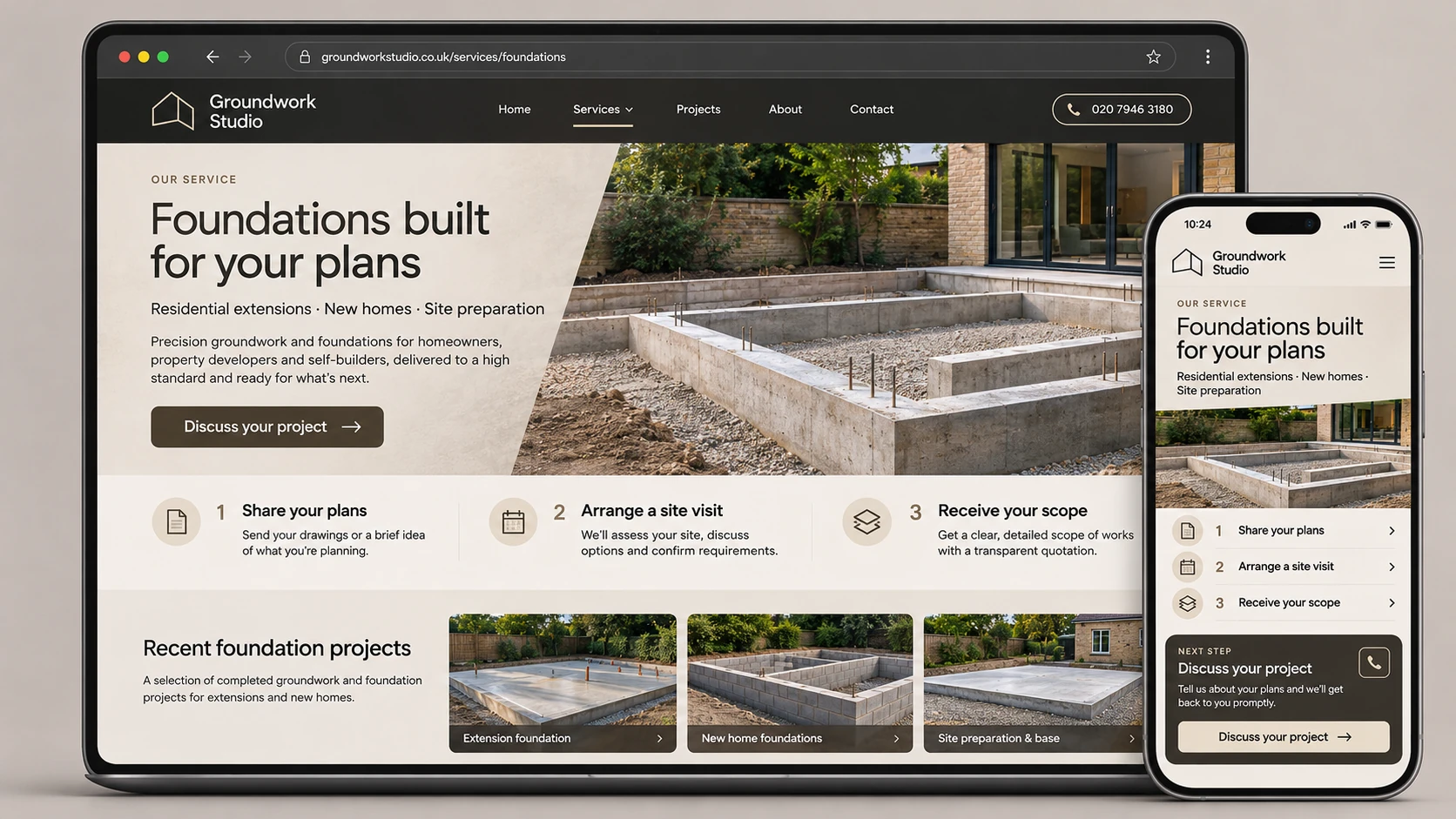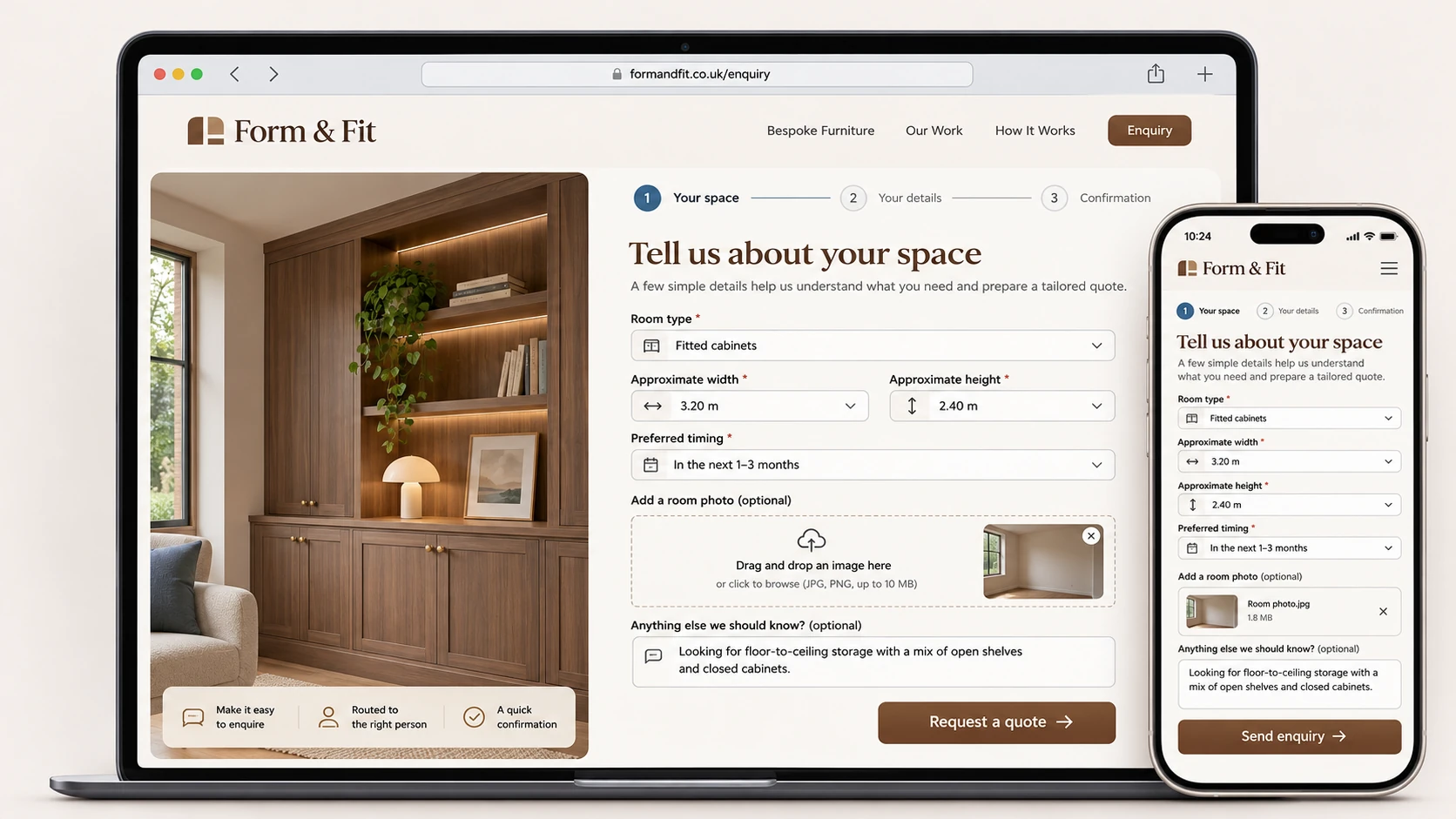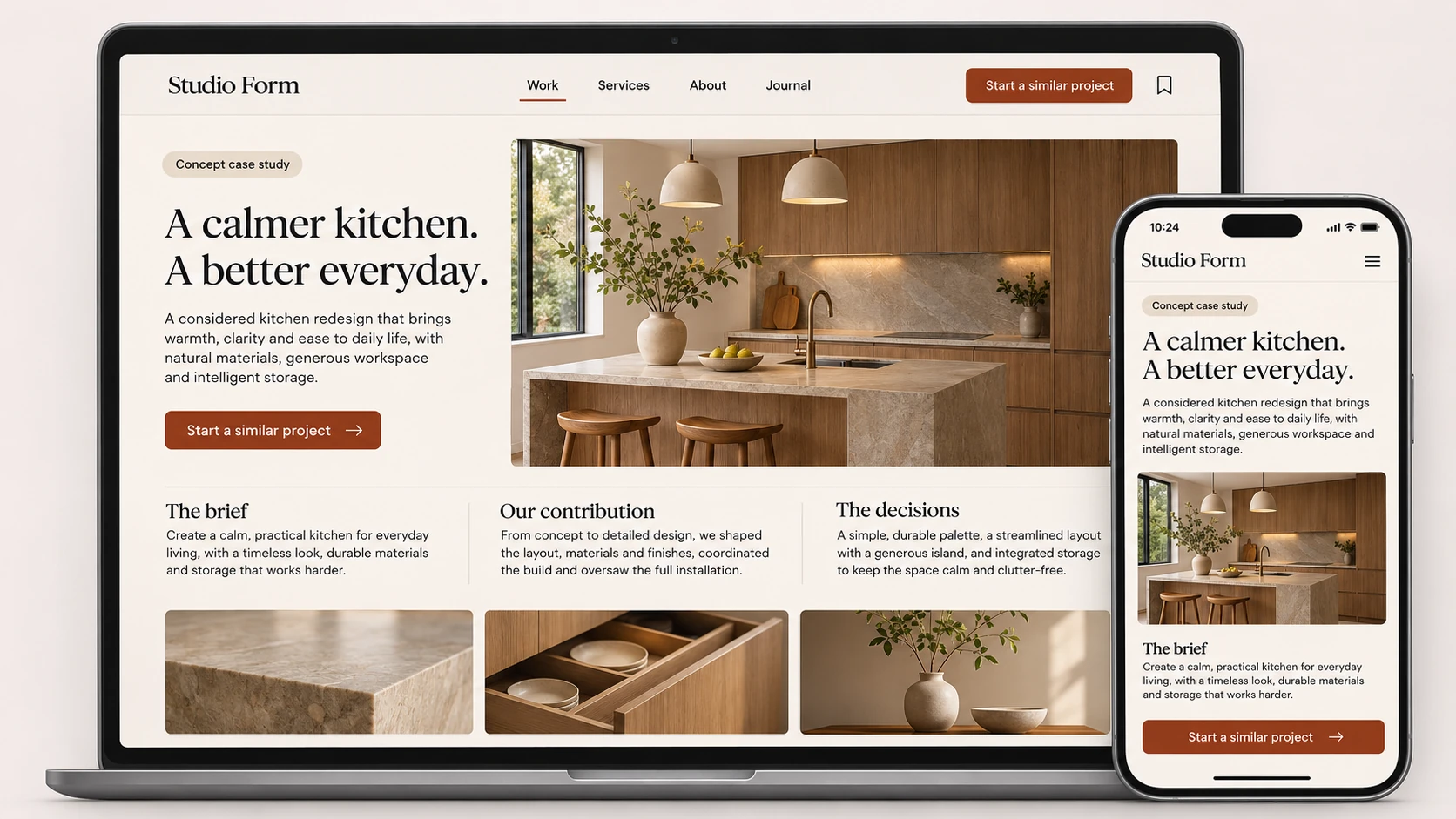
A contractor has striking completion photographs, but a visitor cannot see the brief, constraints or decisions behind them. A case study could connect the image to the work your team actually did. It helps a prospective customer recognise a relevant situation, while giving proper credit and keeping private project information out of view.
Visitors see finished images without enough context to understand the brief, your contribution or whether their own project is a suitable fit.
Each selected project explains the situation, your role and the delivered work, with a clear route to discuss a related need.
Where it could
make a difference.
Design studios
Explain the thinking behind a visual result.
Contractors
Show the scope and constraints of completed work.
Professional firms
Describe a relevant client problem and response.
Useful on: Business website, Creative portfolio, Service website.
What this could mean
for your business.
A portfolio can support suitable enquiries by making your experience more tangible. Its value comes from relevance and credibility, not the number of projects displayed. Review the questions and enquiries it generates, while allowing time for permissions, writing and updates as your work develops.
Start with something
worth using.
Start with a few projects, each with a clear brief, your role and a useful outcome description. Include suitable images and a related enquiry action. Add metrics only where records support them.
- Accurate project descriptions
- Suitable images and permissions
- A related enquiry action
Give the promise
something to stand on.
You need accurate project facts, appropriate client and image permissions and clear credits. Choose examples that represent the work you want to do, rather than implying responsibility for parts delivered by others.
Be precise about your role and obtain permission for private details and images. Explain concept work as concept work so visitors understand what has actually been delivered.
- Project facts and credits
- Image and client permissions
- A review process
How it fits what you already have
Check image rights, client permissions, project facts and content editing. Ensure galleries remain usable on phones and that enquiry forms can carry the project reference into the conversation with your team.
Let a small beginning
teach you something.
Ask a willing past client to review the factual account, then show it to prospective readers. Check whether they understand your contribution and can see how to discuss a similar need.
Can the reader identify your actual role and the kind of problem you helped address without relying on the photographs alone?
Look for these signs
- Projects explain the business's actual role.
- Permissions and credits are recorded.
- Enquiries refer to relevant project examples.
A little more
clarity.
Must every case study include numbers?
No. A clear account of the brief, decisions and delivered work can be useful. Include numerical results only when you can support them and explain what they measure.
Can we publish a client's name?
Use the permissions agreed with that client. An anonymised account may be possible where it remains accurate and does not reveal information the client expected to stay private.
Could this work with my existing website?
We would check how your current website is built, what it already does and which services need to connect. That helps us choose a suitable addition and avoid paying twice for something you already have.
What would this change
in your business?
Your customers. Your working day. The part you would love to make easier. Answer a few questions and leave with a starting plan you can keep.
Free to explore. No account or email needed for your starting plan.