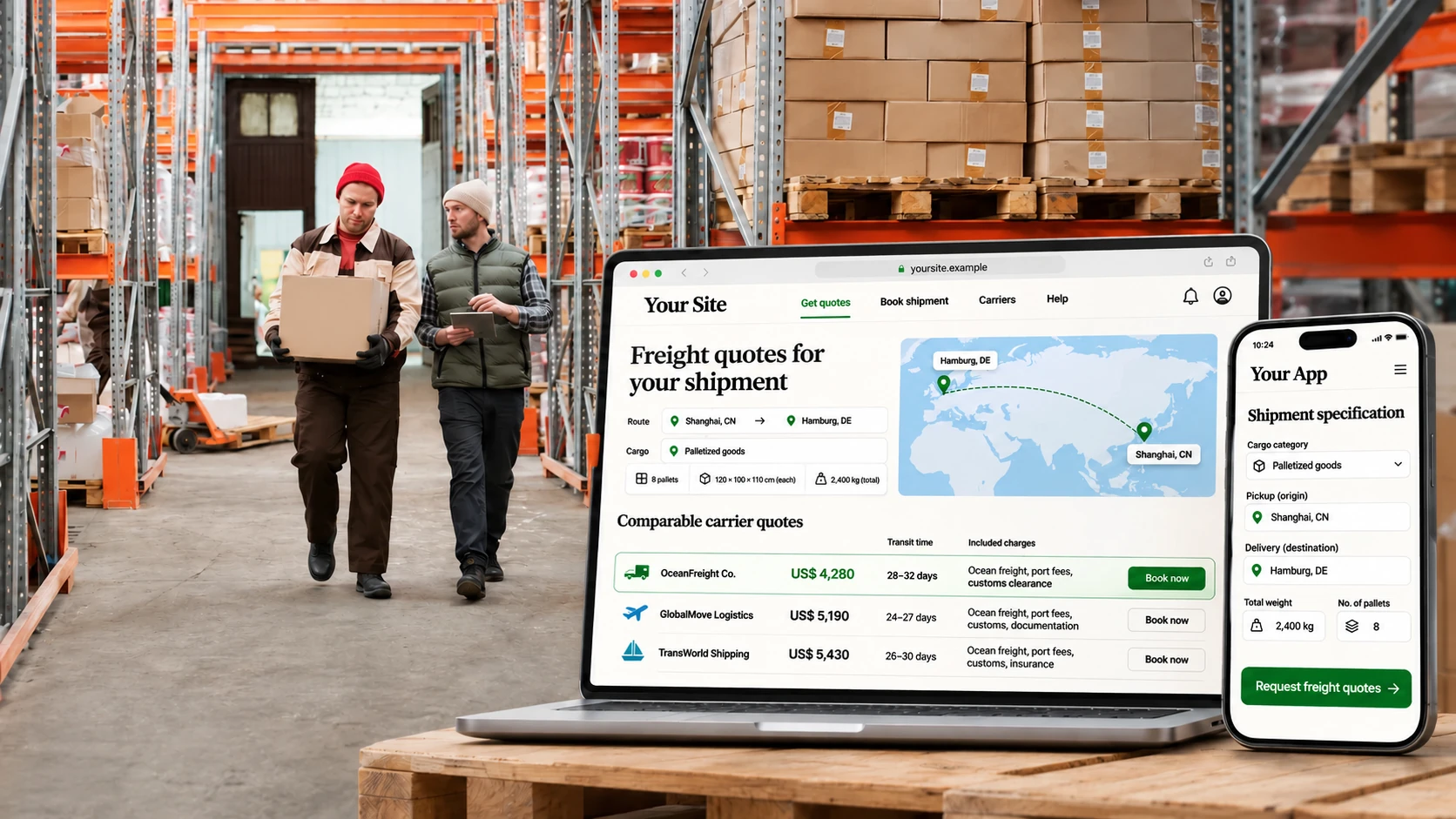
A business receives two shipping prices but one excludes a handling stage the other includes. The cargo dimensions were also described differently. Your marketplace could organise the shipment brief and quote scope, helping the sender understand what they are agreeing to before goods begin moving.
A business you can
picture.
Create a freight enquiry marketplace for a defined route or cargo category. Gather the shipment details and let suitable providers respond with comparable scope, timing and charges.
Who would be glad
you built it?
Businesses shipping goods
Prepare a complete freight enquiry.
Suitable logistics providers
Quote clearly defined cargo and routes.
Shipping coordinators
Compare scope and manage booking information.
Where the money
could come from.
A disclosed coordination or booking fee could fund the service under confirmed provider arrangements. Separate that fee from freight charges and explain the total payable scope. Quote review, document coordination, payment handling and shipment problems take work; cargo value or total transport spend is not platform revenue.
The part you could
make your own.
Comparable scope could be your edge. Clear cargo details, visible exclusions and named handover responsibilities may help a business more than an instant-looking price based on incomplete information. Test the quotation through an actual completed movement.
An angle to test with the people you want to serve.Start with something
worth using.
Focus on one route or cargo category. Capture dimensions, weight, handling requirements and timing, then compare provider scope and charges. Keep early quotations supervised and define who handles documentation and carriage before accepting bookings.
- Cargo details and document requests
- Comparable freight quotations
- Booking stages and provider communication
Give the promise
something to stand on.
You need logistics knowledge and a defined service role with suitable providers. Cargo suitability, documents, handovers and responsibility for problems must be clear; a booking interface cannot replace the operating arrangements behind the journey.
Carrier checks, customs responsibilities, insurance and restricted goods require specialist operations. A displayed arrival estimate should not imply a guaranteed delivery date without a supporting service commitment.
Let a small beginning
teach you something.
Review recent quotations with a sender and suitable freight provider. Use a real, well-defined shipment to test whether all parties interpret the same scope, then follow the booking through its agreed handovers.
Can the sender compare the full quoted service and identify who is responsible at each important shipment stage?
Look for these signs
- Cargo details use consistent units
- Quotes identify included and excluded stages
- Booking responsibilities are explicitly agreed
A little more
clarity.
Is the cheapest freight quote always comparable?
Not if routes, handling, timing or included charges differ. Show the scope alongside the price and ask providers to explain exclusions so the sender can assess the complete offer.
Does the marketplace carry the goods itself?
That depends on the operating model. Make the responsible carrier, forwarder or coordination service clear, including who handles documents and claims. An introduction platform should not imply that it operates the transport.
Freightos is a reference for freight quotation marketplaces.
Now picture it
with your name on it.
Your people. Your priorities. The version you keep thinking about. Answer a few questions and leave with a starting plan you can keep.
Free to explore. No account or email needed for your starting plan.