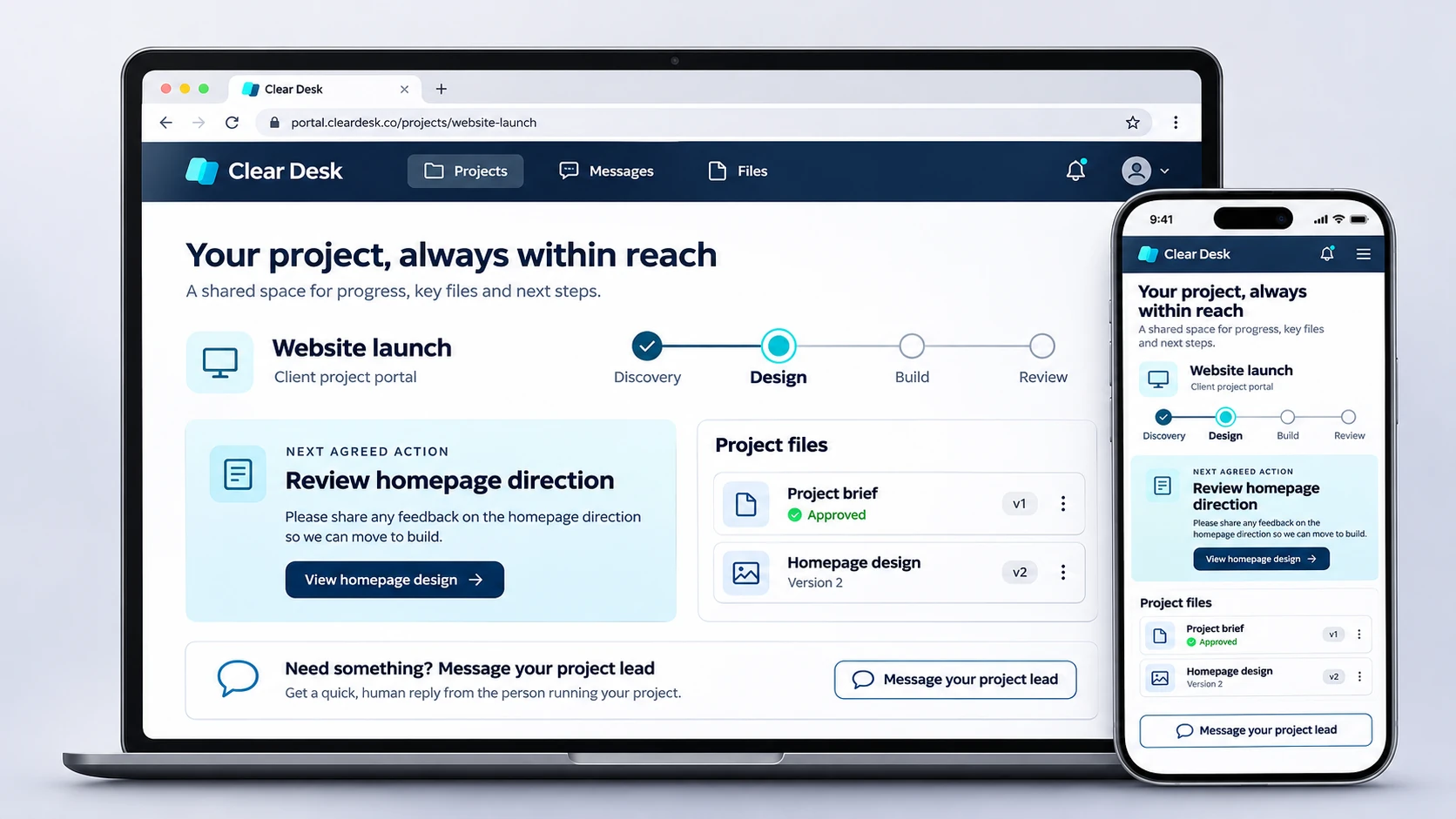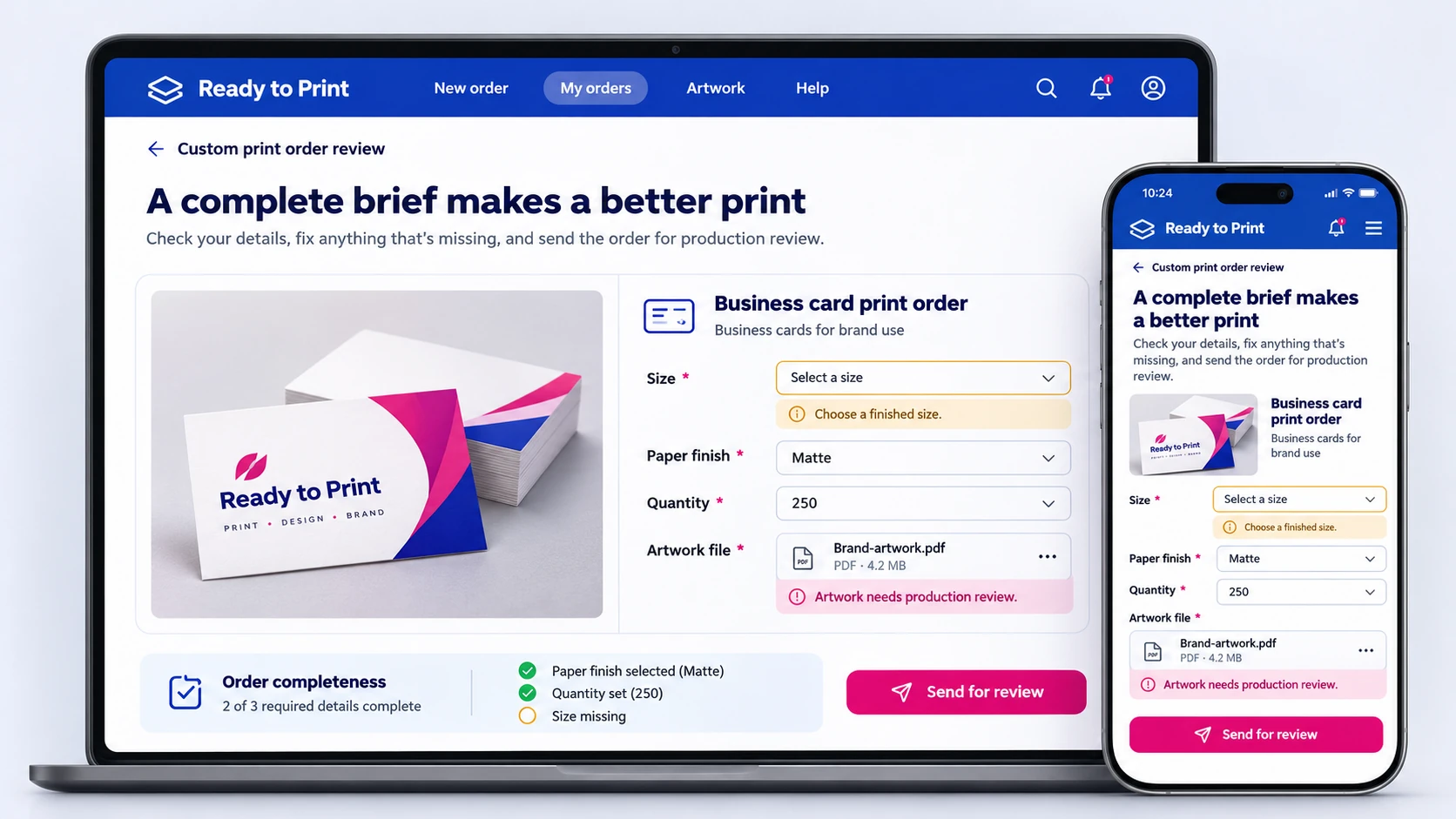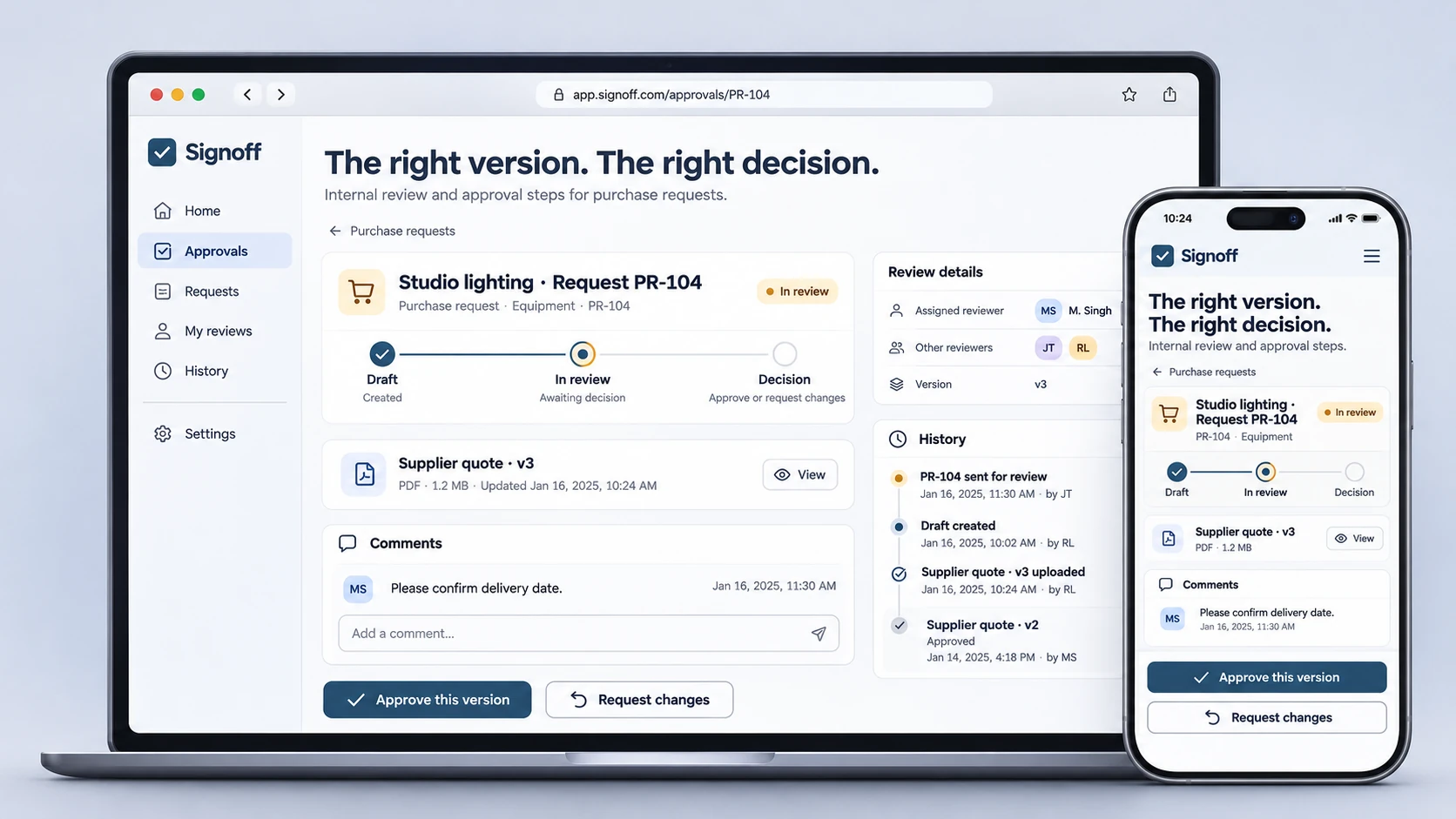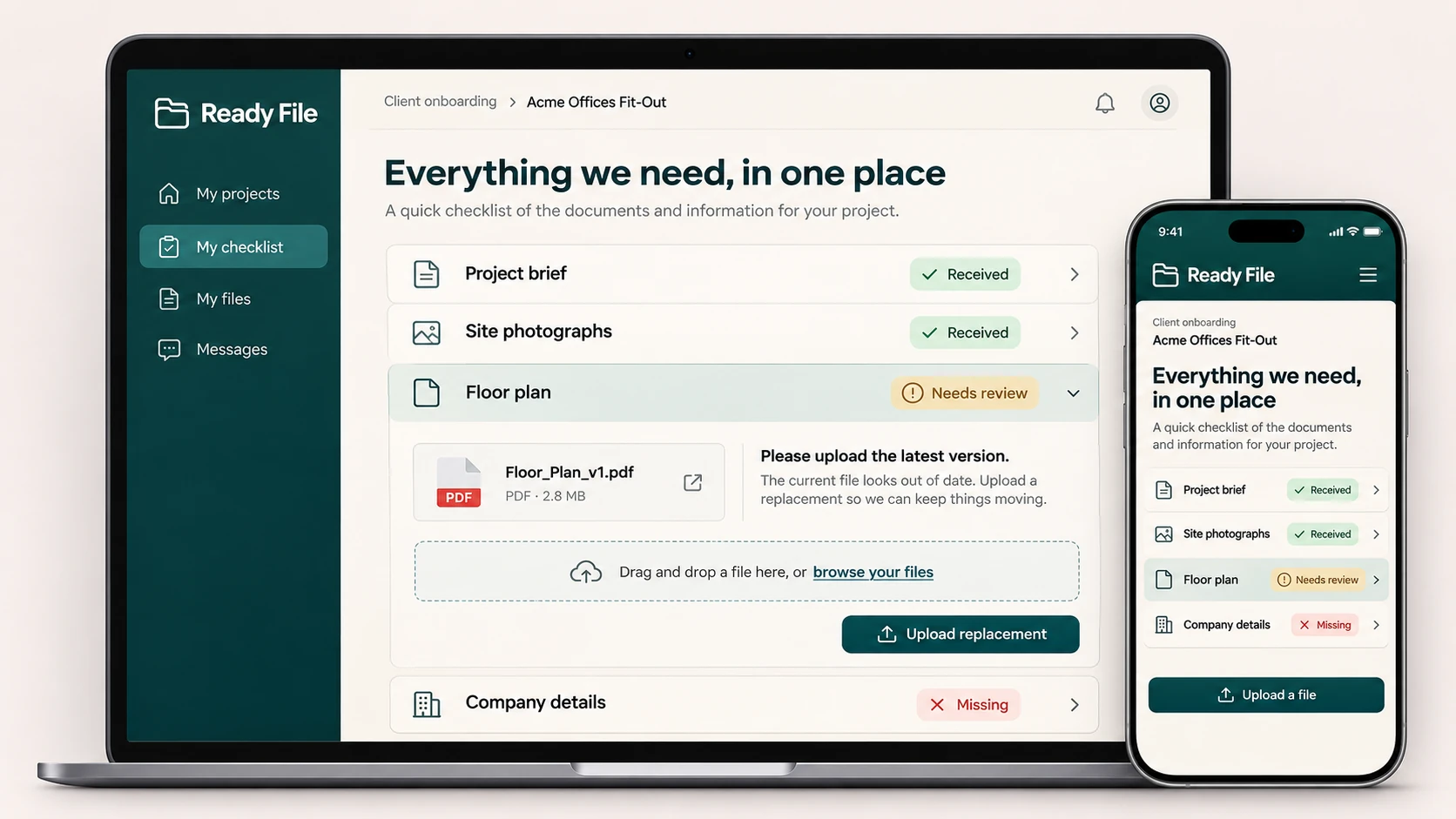
A project is ready to begin, but the measurements arrived by message and the required file is in an email nobody can find. A collection feature could turn that scattered preparation into a customer-specific checklist, reducing uncertainty about whether an item was merely uploaded or has actually been accepted by your team.
Customers send information through several channels, and your team repeatedly checks whether the right version has arrived and is usable.
A tailored checklist shows each required item, its submission and review state, and the exact correction needed before work proceeds.
Where it could
make a difference.
Professional firms
Collect the documents needed for a service.
Custom product businesses
Gather specifications and reference files.
Application teams
Track required information and review status.
Useful on: Client portal, Application website, Business portal.
What this could mean
for your business.
A clear collection process can help projects start with fewer missing details and less repeated chasing. The benefit depends on a useful checklist and timely review. Measure preparation delays, correction requests and staff effort, including storage and support costs, rather than simply counting uploaded files.
Start with something
worth using.
Start with one service's checklist, file submission and received, missing or review states. Give customers clear correction instructions. Test access and retrieval before adding reminders or complex document processing.
- A customer-specific checklist
- File and detail submission
- Received, missing and review states
Give the promise
something to stand on.
You need a precise checklist, secure storage and a named reviewer. Ask only for information required for the work, and decide how long records are retained and who may access them.
Define acceptable file types, appropriate access and how long information should be kept. Staff still need to verify whether a submitted document is suitable for the work.
- A clear information checklist
- Secure storage and access
- Review and retention responsibility
How it fits what you already have
Check file types, size limits, secure storage and client permissions. Decide how versions, deletion and retention work, and connect the checklist to the project record without exposing one customer's material to another.
Let a small beginning
teach you something.
Invite a few willing customers to prepare a suitable project through the checklist. Ask your team to locate each item and explain whether it is complete, readable and ready to use.
Can both sides distinguish a submitted file from information your team has reviewed and accepted for the work?
Look for these signs
- Missing items are easy to identify.
- Corrections explain what is needed.
- Authorised staff can retrieve the right file.
A little more
clarity.
Does uploading a document mean it is approved?
No. Use separate received and reviewed states. A customer should know whether your team still needs to check the file or ask for a clearer or different version.
Can we request every possible document upfront?
Keep the list tied to the current service and stage. Unnecessary requests create work and may expose information your business does not need to hold.
Could this work with my existing website?
We would check how your current website is built, what it already does and which services need to connect. That helps us choose a suitable addition and avoid paying twice for something you already have.
What would this change
in your business?
Your customers. Your working day. The part you would love to make easier. Answer a few questions and leave with a starting plan you can keep.
Free to explore. No account or email needed for your starting plan.