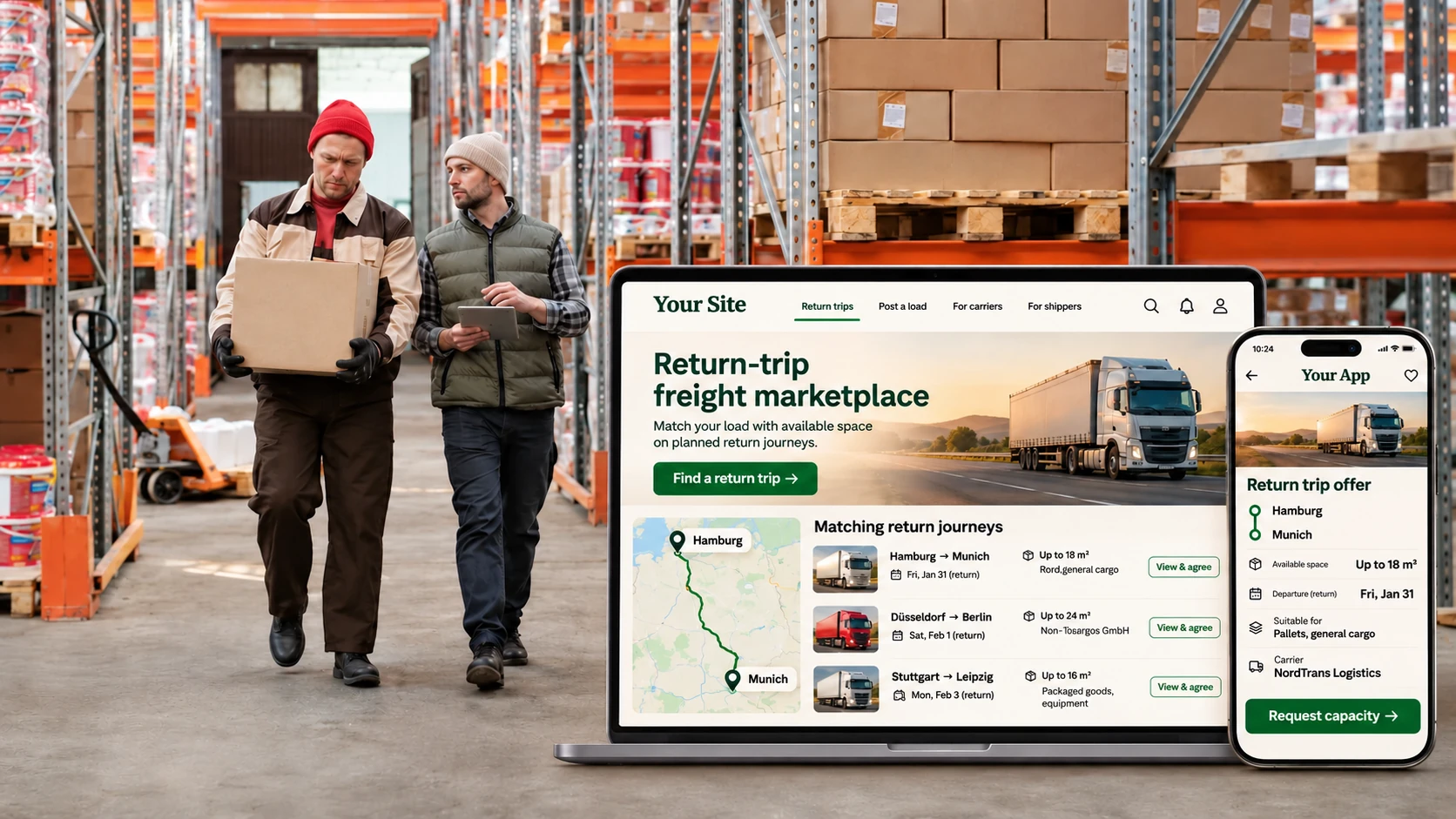
A carrier is returning from a delivery with unused capacity, while a supplier along the route is arranging a separate journey for a small load. Your exchange could turn that possible fit into an agreed booking, with timing, goods, handling and responsibility checked before anyone changes their plans.
A business you can
picture.
Begin with one recurring corridor, a small group of approved operators and a narrow goods category. Keep early matching supervised.
Who would be glad
you built it?
Regional carriers
Offer suitable spare return capacity.
Small suppliers
Find a practical route for limited loads.
Transport coordinators
Compare feasible matches and arrangements.
Where the money
could come from.
The shipper could pay a clearly disclosed coordination fee within a confirmed booking, with the carrier's charge shown separately or transparently included. Allow for operator checks, support, payment handling and failed matches. Only completed, suitable journeys can test whether the fee supports the work your exchange performs.
The part you could
make your own.
A repeat corridor with familiar goods could let you make more dependable matches than a broad open board. Test whether knowledge of timing, loading and local handovers gives both sides a reason to return.
An angle to test with the people you want to serve.Start with something
worth using.
Choose one recurring corridor and a narrow goods category. List verified operator details, load requirements and booking terms, then supervise matches manually. Keep unsuitable goods and uncertain timing out of the first pilot.
- List routes, dates, available space and permitted goods.
- Collect the shipper’s load and timing requirements.
- Agree the match, price and each party’s responsibilities.
- Record collection, delivery and any reported problem.
Give the promise
something to stand on.
You need transport relationships and the ability to judge whether a match is operationally sensible. Goods suitability, timing, responsibility and reliable communication matter more than simply showing empty space on a map.
Confirm operator identity and be clear about the checks performed. Permissions, insurance, goods restrictions and responsibilities must fit the route and market. Keep exact driver locations private and distinguish listed capacity from a confirmed booking.
Let a small beginning
teach you something.
Work with a few known carriers and businesses along their actual routes. Compare proposed matches against the full journey plan, and follow a small number of completed bookings before widening the exchange.
Does the matched load fit the carrier's journey and the customer's requirements after all extra handling is included?
Look for these signs
- Loads match stated vehicle conditions
- Pickup and handover details are agreed
- Operators accept repeat suitable bookings
A little more
clarity.
Is spare capacity automatically cheap?
The extra collection, waiting, handling and delivery can change the economics. Show the complete quote and conditions for each booking rather than treating unused vehicle space as a guaranteed saving.
Who is responsible if goods are damaged?
Agree the contracting parties, handling requirements, evidence and applicable cover before movement. The platform must make those arrangements understandable and provide a defined support route instead of leaving responsibility to a later argument.
Could AI find matches?
It could suggest options from the stated requirements. An operator should confirm the timing, capacity, permitted goods and final booking.
Is the lowest price always the best match?
No. Timing, load suitability, reliability and responsibilities also need to fit.
Uber Freight lets carriers search and book loads, including suggested reloads or backhauls. It is an adjacent reference. Your version would need its own local operating focus and carrier relationships.
Now picture it
with your name on it.
Your people. Your priorities. The version you keep thinking about. Answer a few questions and leave with a starting plan you can keep.
Free to explore. No account or email needed for your starting plan.