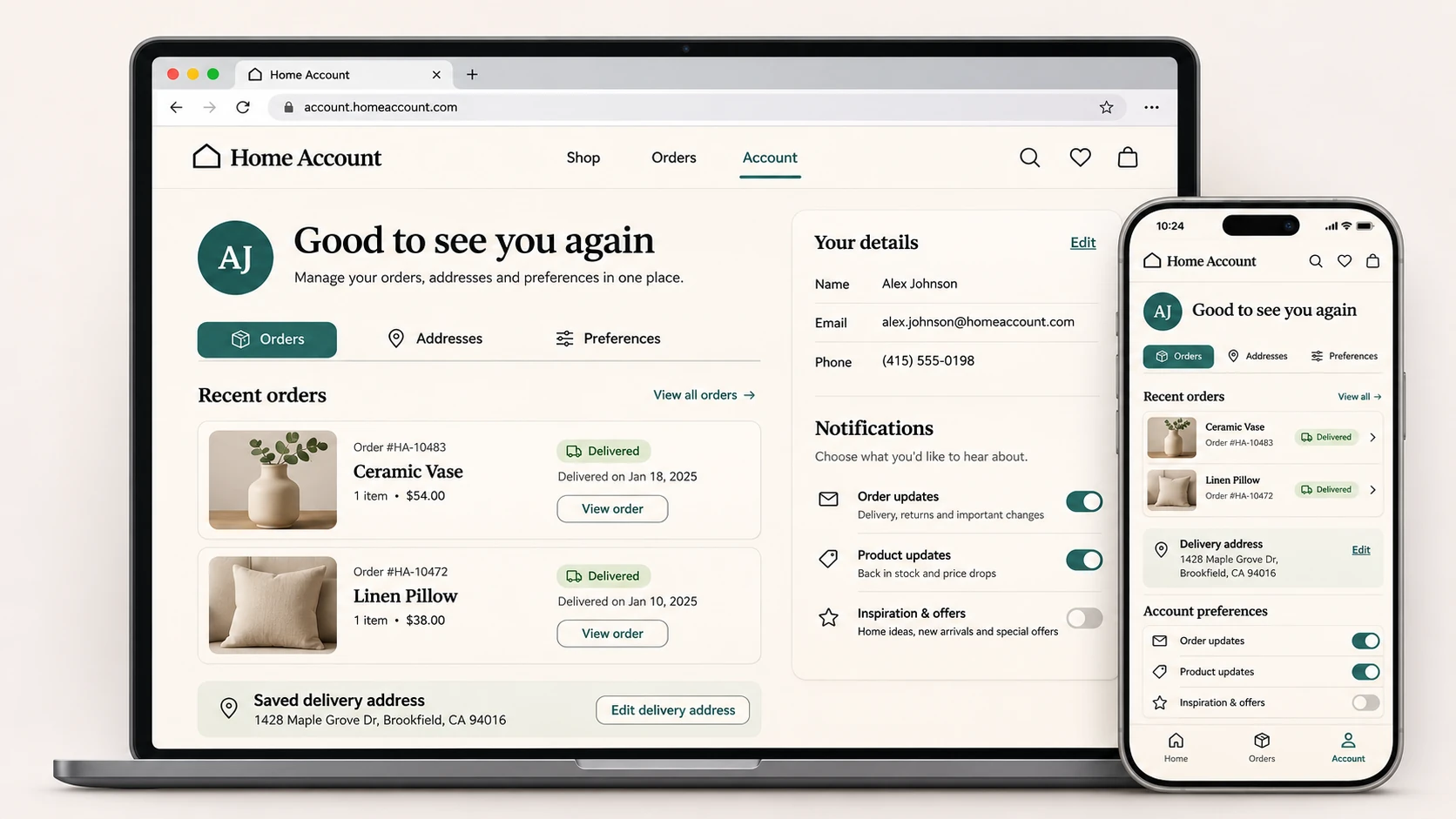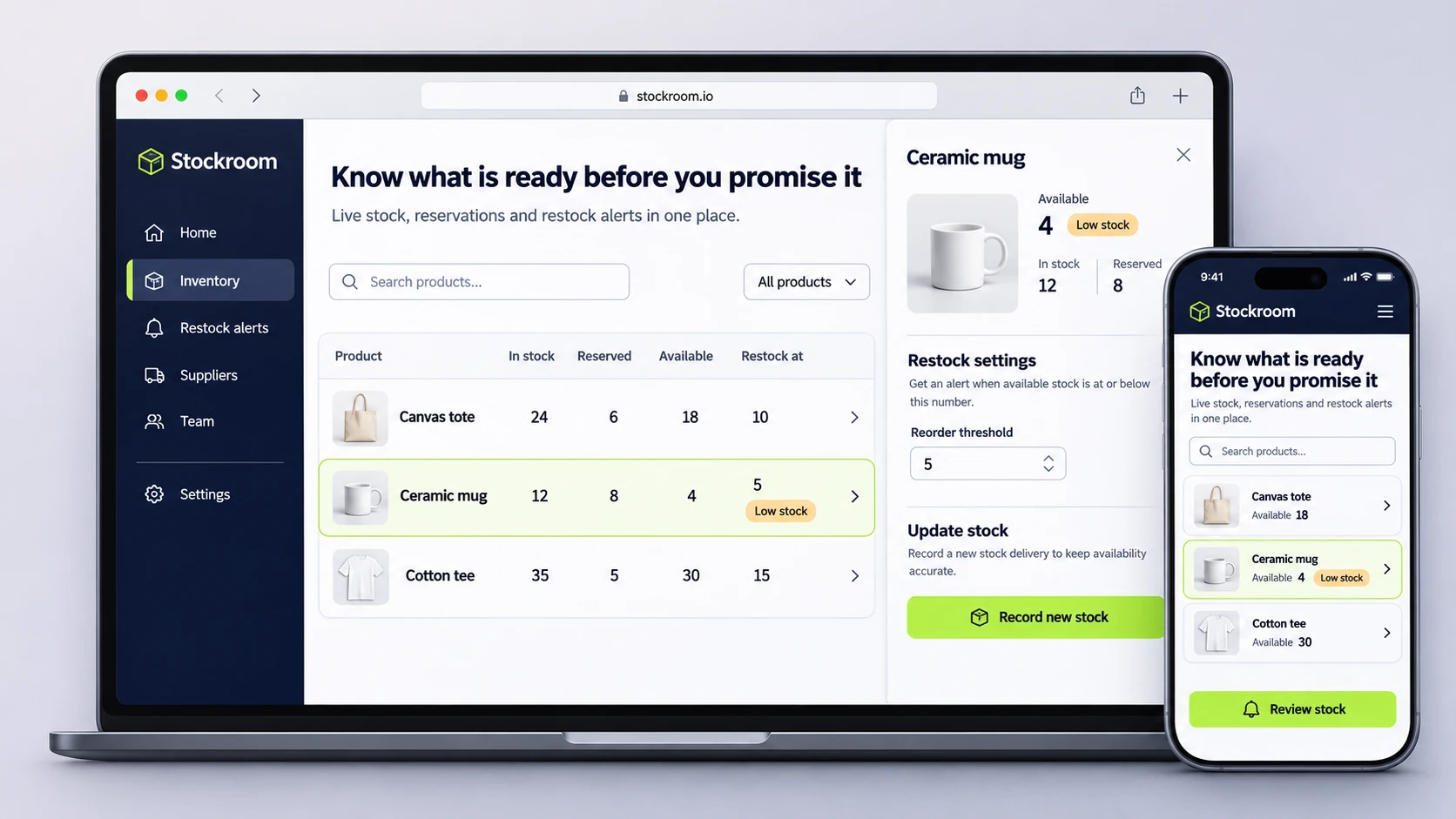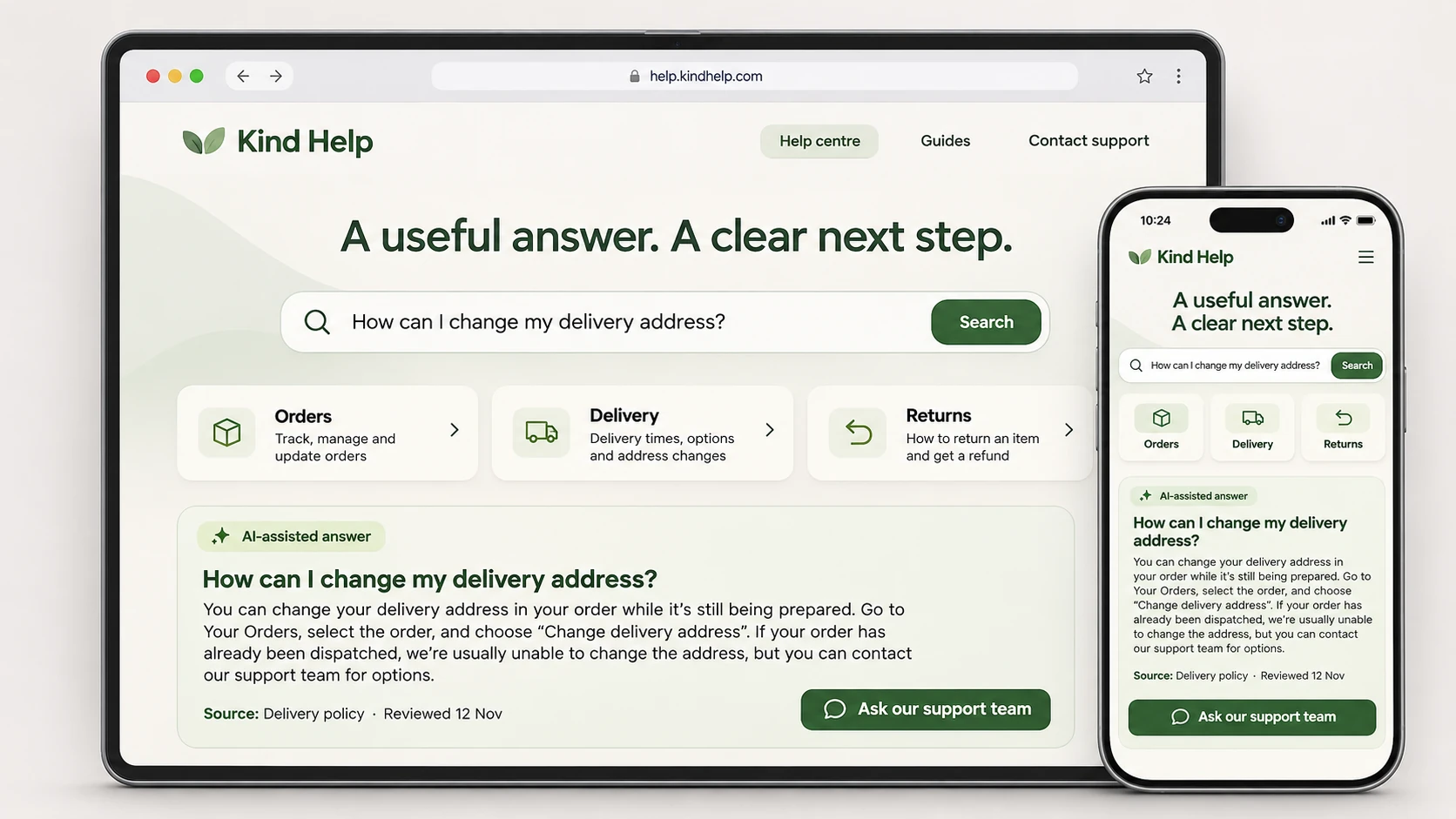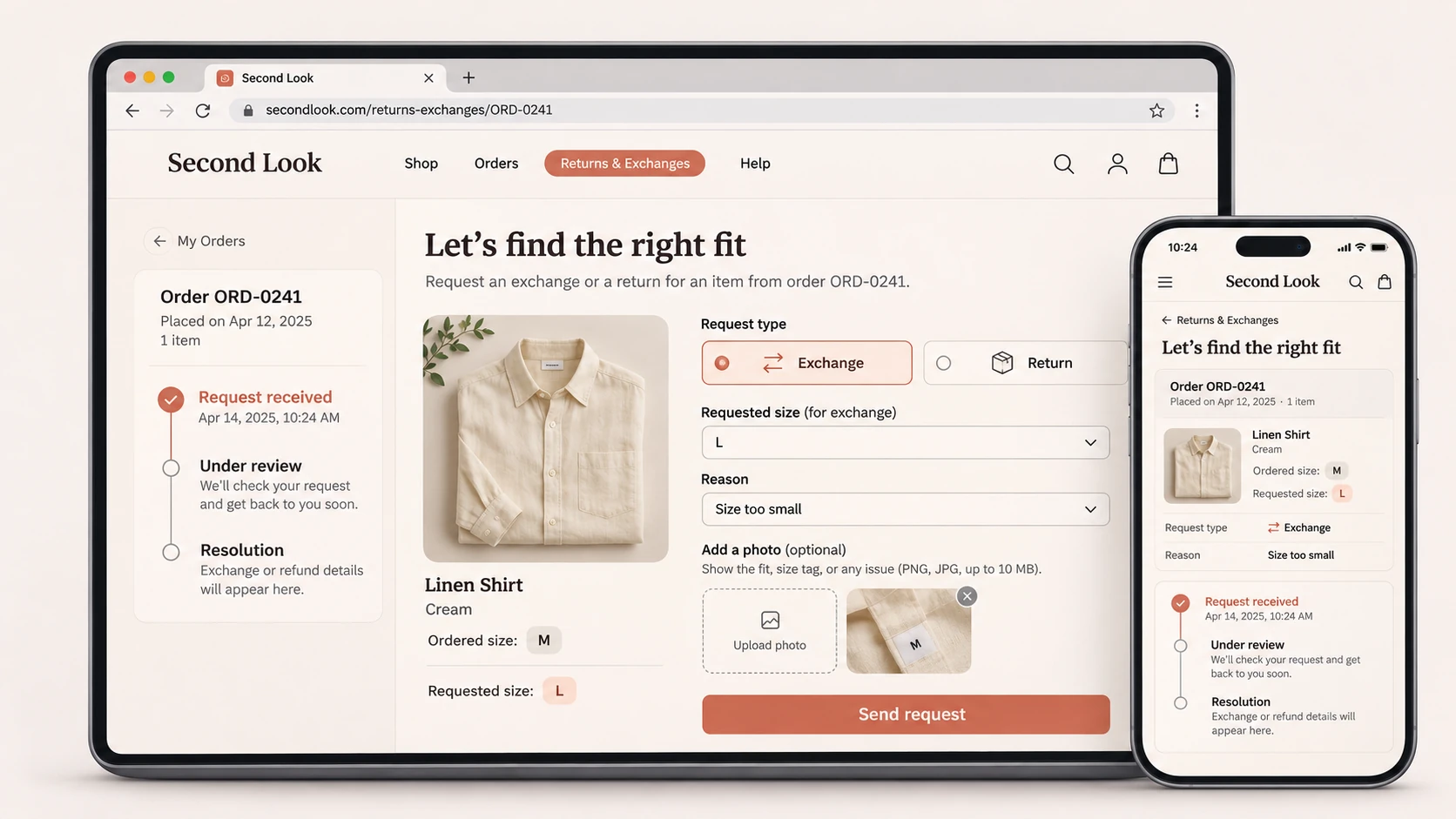
A customer receives the wrong size and sends photographs through several channels, unsure whether anyone has connected them to the order. A return or exchange feature could gather the request and relevant evidence in one place, showing what your team is reviewing and what the customer should do next.
Customers resend order details and photographs, while staff reconstruct the issue across messages and the next step remains unclear.
One order-linked request holds the evidence, review state and decision, with clear instructions and a separate record of the completed resolution.
Where it could
make a difference.
Retailers
Link return questions to the original order.
Product brands
Handle exchanges with clear stock information.
Marketplace operators
Route issues to the responsible seller or team.
Useful on: Online store, Marketplace, Customer portal.
What this could mean
for your business.
A consistent resolution process can support customer trust and reduce repeated handling of the same issue. Returns still involve goods, shipping, staff time and possibly refunds. Review resolution clarity, repeat contacts and completed exchanges alongside costs, rather than treating fewer requests as the only sign of success.
Start with something
worth using.
Start with order-linked requests, reason and relevant evidence, plus review states. Give clear next-step instructions. Add labels or automated exchanges only after stock and refund responsibilities are settled.
- Order-linked request details
- Evidence where relevant
- Clear review and resolution states
Give the promise
something to stand on.
You need published return information, a support owner and an actual resolution process. Decide what information is necessary and distinguish a submitted request from an approved return or completed refund.
Use the business’s applicable return policy and confirm what the payment and delivery services support. Avoid presenting an unreviewed request as an approved refund or exchange.
- Published return information
- Support ownership
- Order and stock connection
How it fits what you already have
Check order access, stock, payment refunds and support records. Decide which team or seller can authorise each outcome and ensure the website's status matches the actual return, exchange or repayment process.
Let a small beginning
teach you something.
Walk recent anonymised cases through the proposed process, then pilot suitable requests with staff oversight. Ask customers whether they know what is happening and what they should do while waiting.
Can the customer understand the request's current state and the next action without repeatedly resending the same evidence?
Look for these signs
- Requests retain the correct order context.
- Decisions explain the next step.
- Refund or exchange completion is recorded separately.
A little more
clarity.
Does submitting a request approve the return?
No. The interface should show receipt and review separately from approval. Your actual policy and staff decision determine what happens next, and the customer needs that distinction clearly explained.
Can an exchange be promised before stock is checked?
Avoid that assumption. The process should confirm the replacement's availability and explain alternatives if it cannot be supplied before the customer relies on the offer.
Could this work with my existing website?
We would check how your current website is built, what it already does and which services need to connect. That helps us choose a suitable addition and avoid paying twice for something you already have.
What would this change
in your business?
Your customers. Your working day. The part you would love to make easier. Answer a few questions and leave with a starting plan you can keep.
Free to explore. No account or email needed for your starting plan.