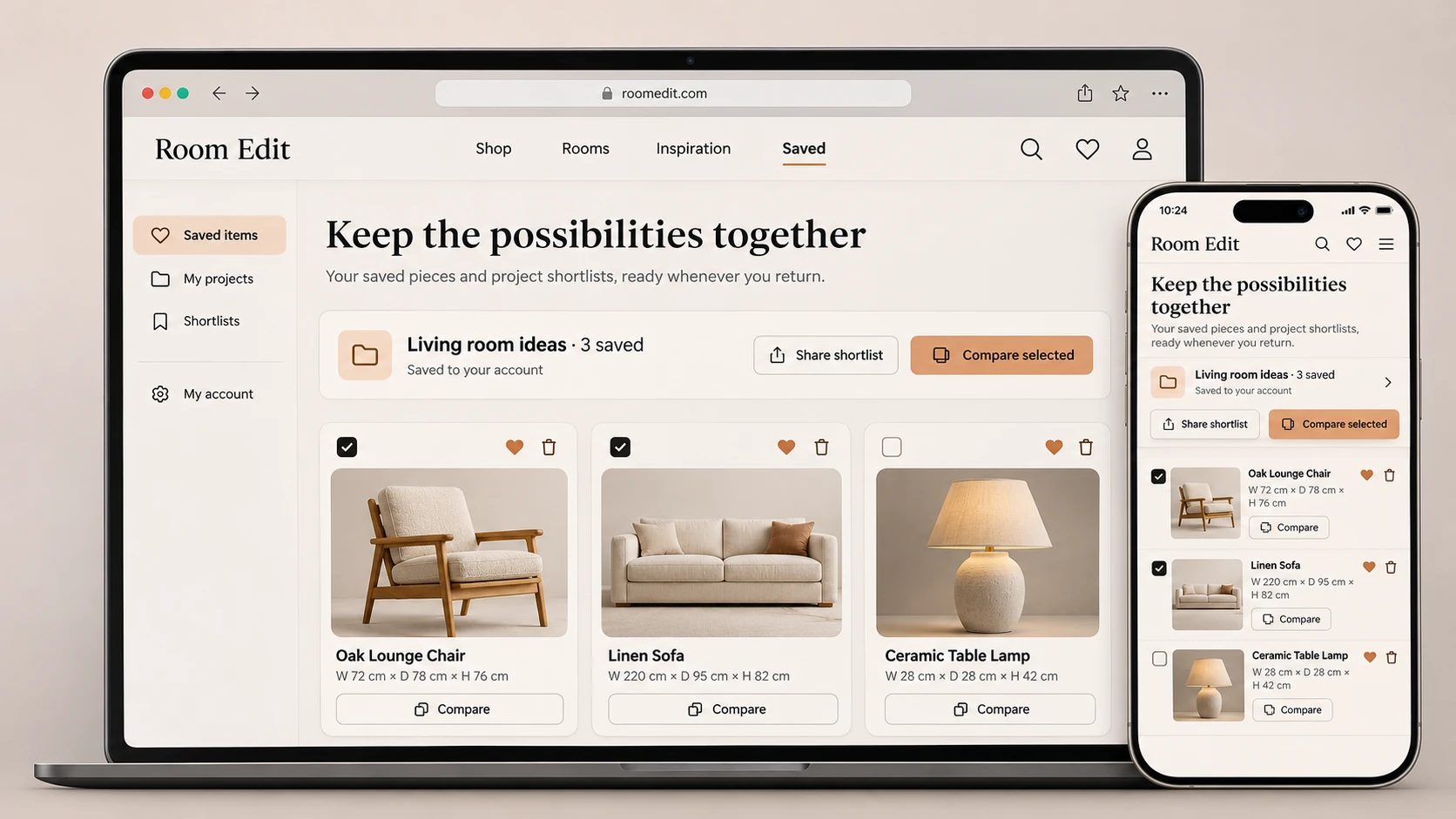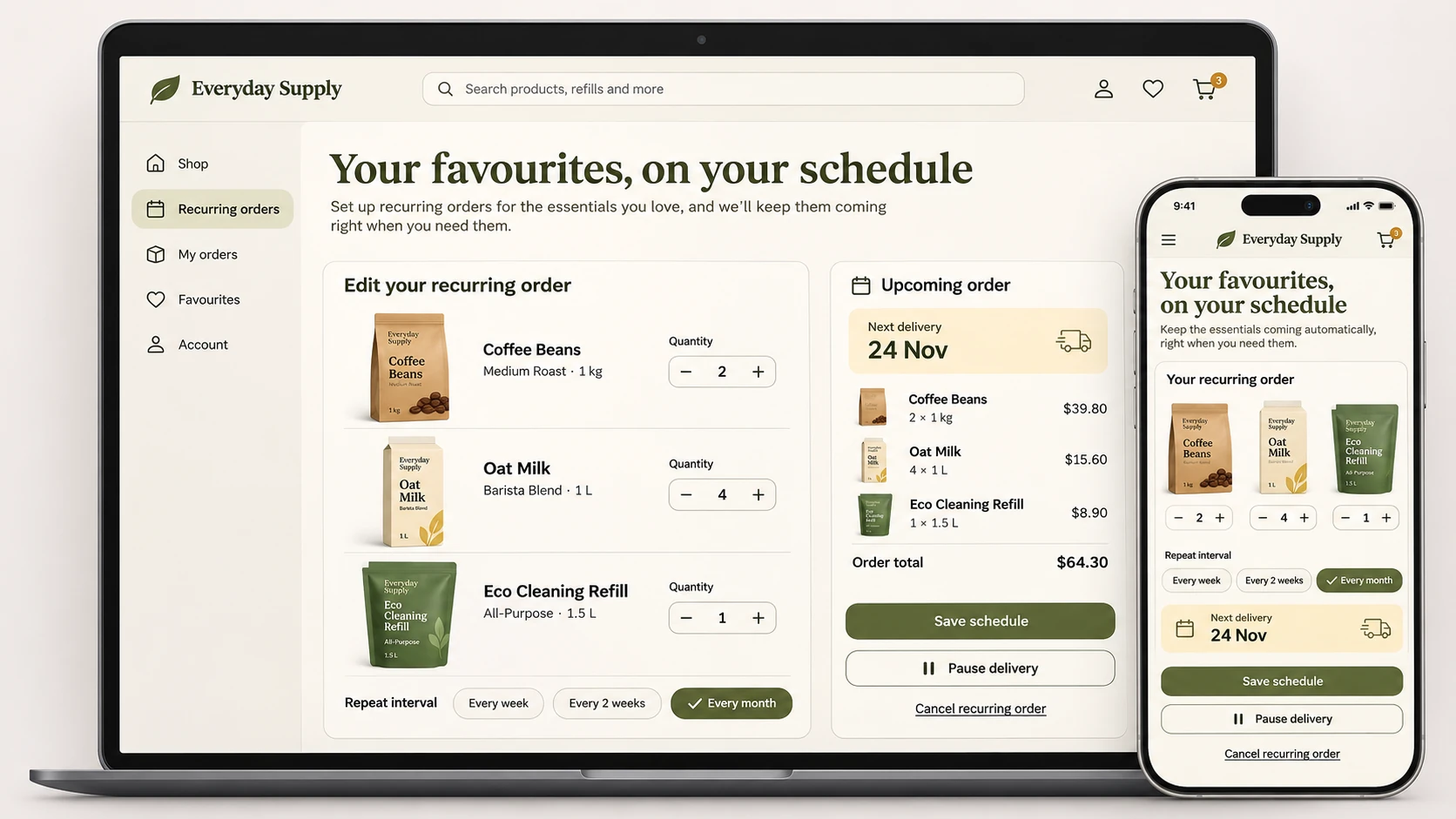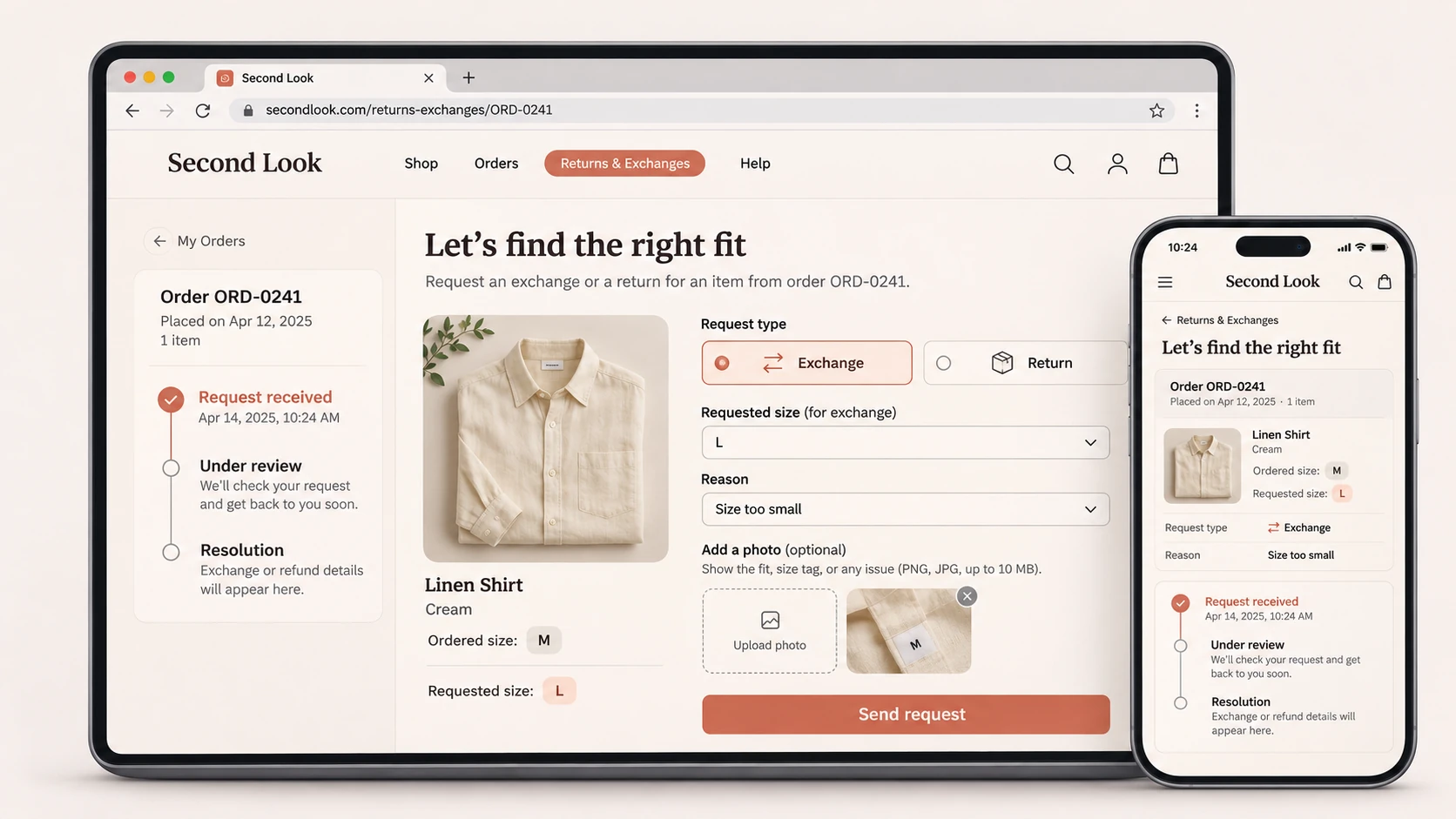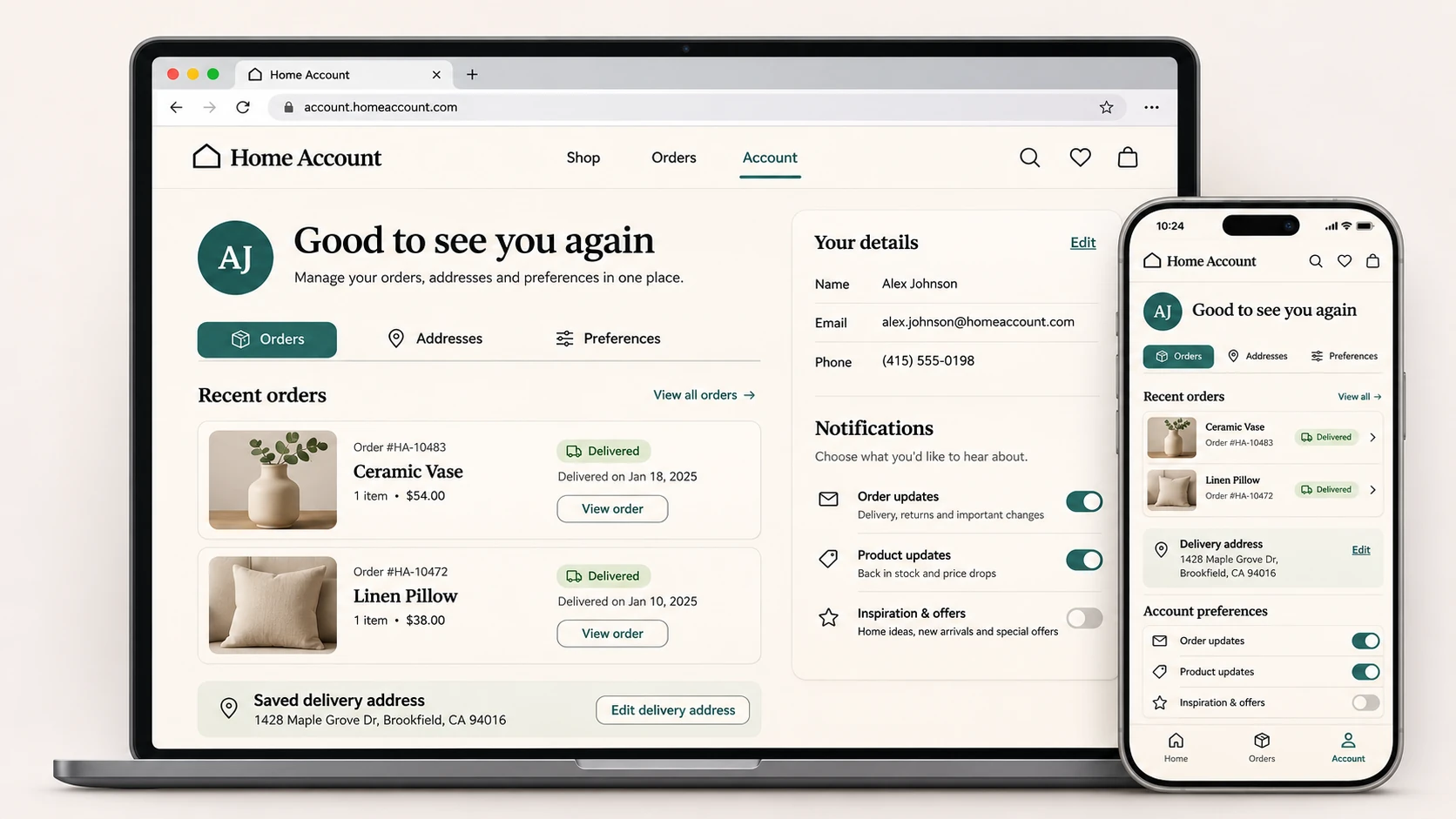
A customer has already ordered from you but must search old messages for the receipt and type the same details again. An account could bring useful records into one place. The strongest first version gives them a reason to sign in, while making access recovery and personal preferences straightforward.
Returning customers search old messages and re-enter details, while your team manually resends records that belong to the same person.
An authorised account brings relevant records and editable preferences together, with a clear recovery route when the customer cannot sign in.
Where it could
make a difference.
Retailers
Let customers retrieve orders and relevant preferences.
Service providers
Share client-specific records.
Learning businesses
Keep purchased access and progress together.
Useful on: Online store, Service website, Learning website, Membership website.
What this could mean
for your business.
Accounts can support repeat service and reduce requests to resend records. They also create ongoing responsibilities for access, recovery and personal information. Review useful sign-ins, successful record retrieval and support needs rather than treating the number of registered accounts as a business result by itself.
Start with something
worth using.
Start with secure sign-in, recovery and the records customers most often request. Let them update relevant details and preferences. Add saved payments or social features only for a demonstrated need.
- Secure sign-in and recovery
- Relevant customer records
- Editable details and preferences
Give the promise
something to stand on.
You need a reliable account service, clear access rules and support ownership. Decide which records a customer should see and whether a guest route remains useful for people making a simple first purchase.
Plan account recovery, access checks and how people can manage their information. Show each customer only their own records and keep sensitive actions protected on the server.
- A reliable account service
- Clear access rules
- Customer support ownership
How it fits what you already have
Check identity matching, existing orders or client records and account permissions. Define guest-to-account linking, recovery and deletion handling so records are attached to the correct person without exposing private information.
Let a small beginning
teach you something.
Ask willing returning customers to retrieve a record and change a detail in a test account. Include a forgotten-password scenario and check that one customer cannot see another's information.
Can the customer find a useful personal record and recover access without confusion or exposure of someone else's information?
Look for these signs
- Accounts show the correct customer's records.
- Recovery reaches the authorised person.
- Preference changes affect the relevant service.
A little more
clarity.
Should every visitor create an account?
Only when it serves the task. A guest purchase or enquiry can remain appropriate, with an account offered when repeat access provides a clear benefit.
Does an account automatically allow marketing messages?
No. Keep service access and communication preferences clear. Customers should understand what messages are necessary for their account and what they can choose to receive separately.
Could this work with my existing website?
We would check how your current website is built, what it already does and which services need to connect. That helps us choose a suitable addition and avoid paying twice for something you already have.
What would this change
in your business?
Your customers. Your working day. The part you would love to make easier. Answer a few questions and leave with a starting plan you can keep.
Free to explore. No account or email needed for your starting plan.