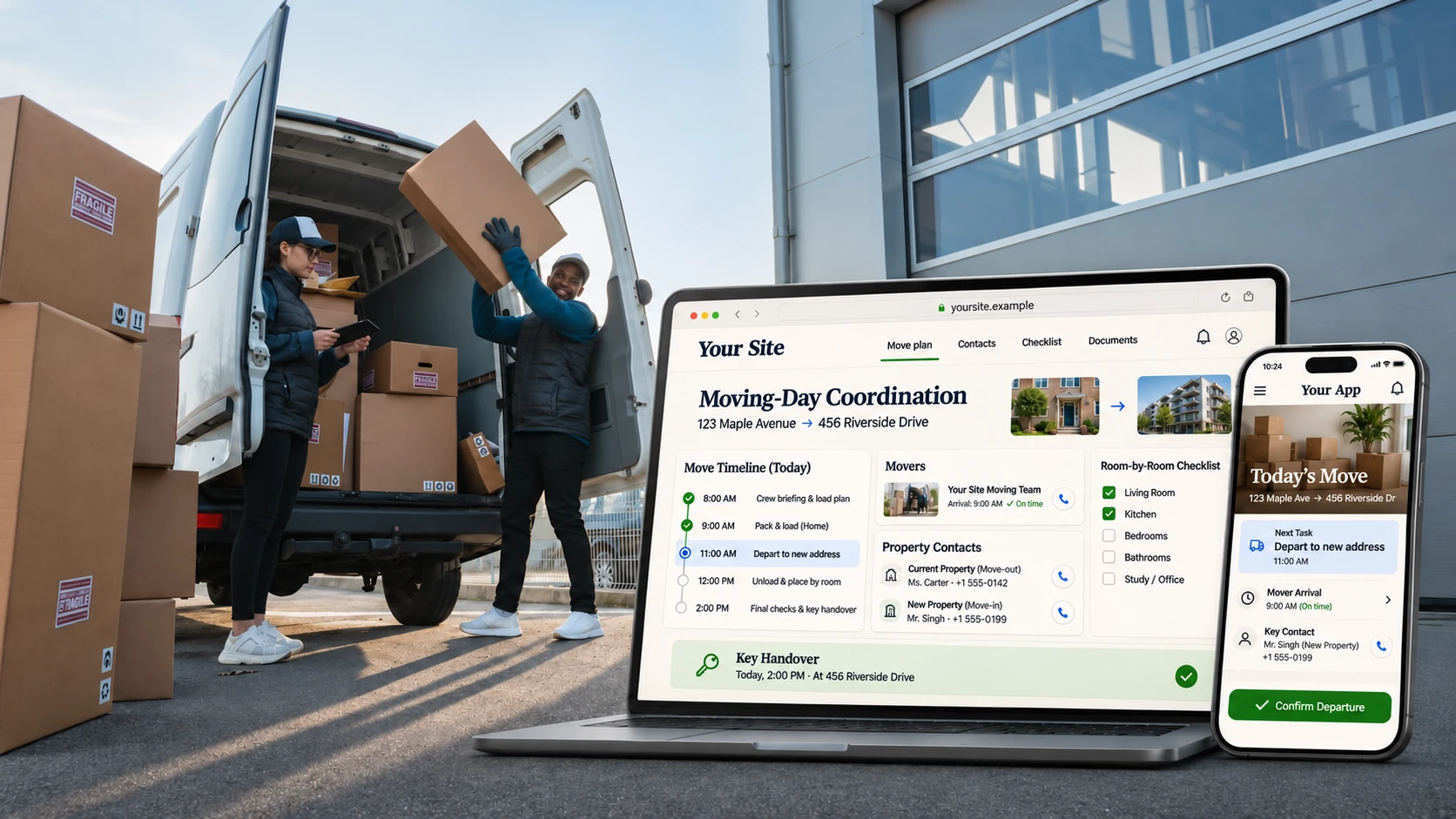
The van arrives, but the person with the key is still crossing town and the lift booking starts later. Everyone has been told part of the plan. Your service could connect those dependencies before the day begins, helping a household and its providers share the practical information that makes the next step possible.
A business you can
picture.
Start with a local moving partner and a defined move type. The customer confirms the sequence, each provider accepts its responsibility and the coordinator tracks changes through the day.
Who would be glad
you built it?
Households preparing a move
One understandable plan for the moving day
Moving and relocation firms
Clear access, contacts and dependencies
Property handover contacts
A specific role and timing in the shared arrangement
Where the money
could come from.
A household could buy a fixed coordination package covering preparation and clearly stated support hours. The fee pays for planning and follow-up, while moving, cleaning or storage services remain separately contracted. Do not price the offer as unlimited availability or promise that every provider will arrive on time; sell an organised process with realistic support boundaries.
The part you could
make your own.
Your proposed edge is showing what must happen before another task can begin. A key handover or lift booking may look minor until it blocks the whole move, making these links a useful focus for the product.
An angle to test with the people you want to serve.Start with something
worth using.
Offer one moving-day plan with access details, named contacts, dependencies and confirmed bookings. Let each responsible person review their part and provide a concise day-of view with change notifications.
- Build the sequence around actual access times.
- Confirm loading, parking and key handovers.
- Keep changed arrangements visible to affected people.
Give the promise
something to stand on.
You need coordination skills and reliable provider contacts. Protect addresses and personal details, distinguish estimates from commitments and keep a human route for changes that affect several people.
Protect addresses and contact details, define responsibility for changes and maintain a human support route. Estimates of timing should remain distinct from confirmed commitments.
Let a small beginning
teach you something.
Work with a household and willing moving provider on an upcoming move. Review the dependencies together in advance and record where the actual day differed, then use those observations to improve the planning process.
Can each participant identify their next task, the condition it depends on and the person to contact when that condition changes?
Look for these signs
- Access arrangements are confirmed before arrival
- Participants understand their own dependencies
- Changes reach affected people with a clear owner
A little more
clarity.
Does the service provide the moving van?
Only if that is explicitly part of a separately defined offer. The initial coordination package can organise existing providers while making each provider’s contract and responsibility clear.
Can every estimated time be guaranteed?
No. Label estimates and confirmed commitments differently. A useful plan includes a way to respond when timing changes instead of presenting a precise-looking schedule as certainty.
What should my first version focus on?
Start with the first test described here, then build around the part people actually use and would pay to keep.
Now picture it
with your name on it.
Your people. Your priorities. The version you keep thinking about. Answer a few questions and leave with a starting plan you can keep.
Free to explore. No account or email needed for your starting plan.