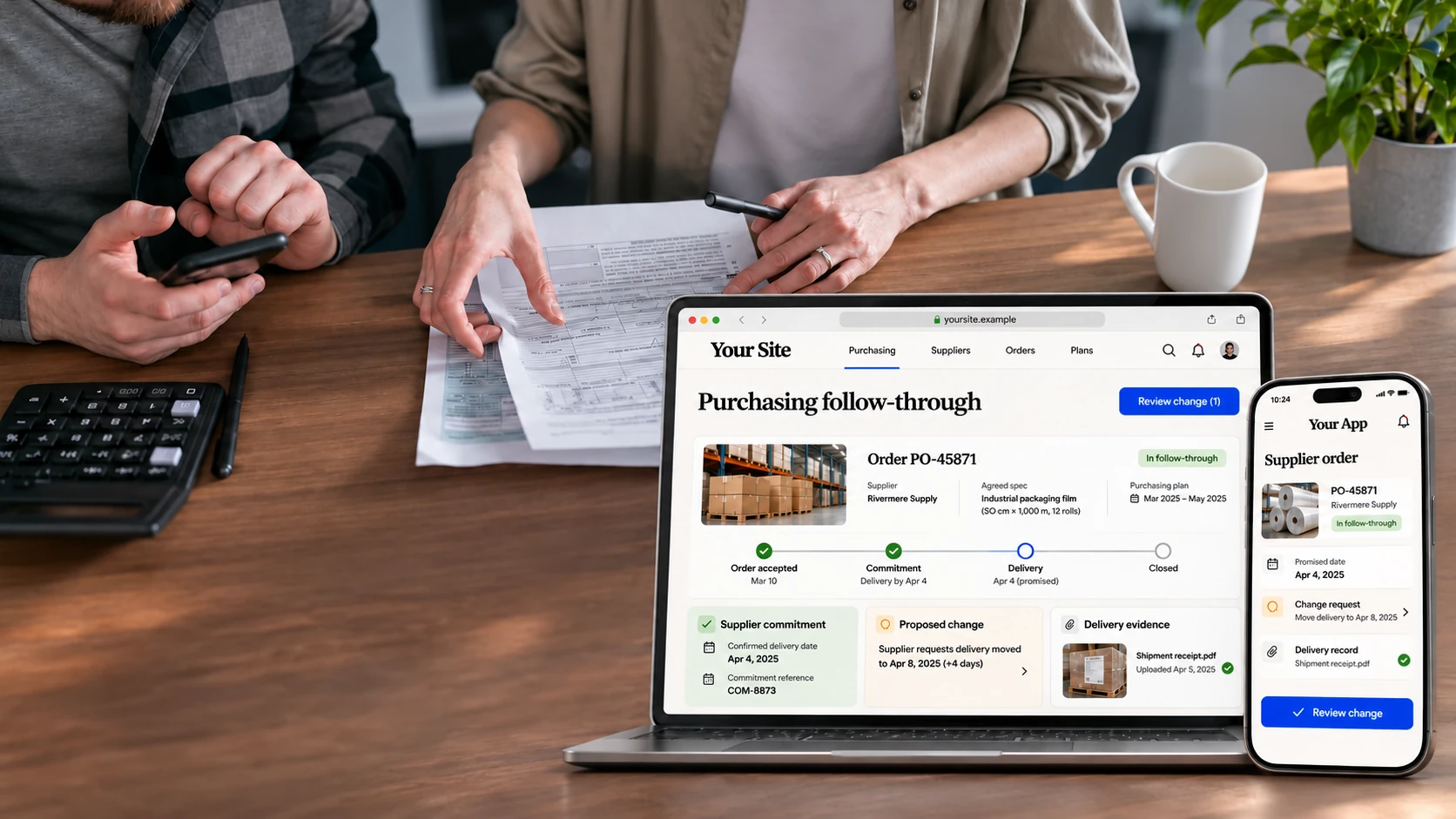
A buyer hears that part of an order will arrive late, but the production team is still working from the original date. A small update becomes a much larger surprise. Your service could connect each supplier commitment to the people waiting on it, with the source, change and next decision kept visible.
A business you can
picture.
Begin with an accepted purchase order or recurring supply agreement. The buyer and supplier record the commitments, identify dependent tasks and keep proposed changes separate from the accepted plan.
Who would be glad
you built it?
Small buying teams
A clear view of supplier promises and exceptions
Operations coordinators
Early visibility of changes affecting planned work
Supplier contacts
A structured way to confirm or revise commitments
Where the money
could come from.
A buying team could pay for a workspace plus a defined managed follow-up service. The recurring fee covers update collection, exception tracking and support, with a clear limit on the suppliers or commitments handled. The product earns from coordination work; it does not guarantee supplier performance or take authority over payment decisions.
The part you could
make your own.
Your proposed difference is showing the consequence of a change, not only its new date. Connecting a delayed component to a specific installation or customer promise could help the buyer choose a more useful response.
An angle to test with the people you want to serve.Start with something
worth using.
Start with one purchasing programme. Record agreed quantities and dates, request updates from named contacts and flag exceptions. Link each exception to the affected plan and the person who decides what happens next.
- Record agreed quantities, dates and responsibilities.
- Show which business tasks depend on each commitment.
- Review changes before updating the shared plan.
Give the promise
something to stand on.
You need practical purchasing knowledge and a disciplined follow-up process. Every update should have a source and time, and only authorised people should accept a change to an agreement.
Updates need a named source and time. Keep disagreements visible, define who may approve a change and leave payment decisions with authorised staff using their existing arrangements.
Let a small beginning
teach you something.
Ask a small buying team to trial the service on current orders with known follow-up work. Include the operations colleague who depends on the goods and review whether exceptions reach the right person early enough to discuss.
Does a supplier change reach the person responsible for the affected plan with enough context to choose a response?
Look for these signs
- Updates identify their source and time
- Exceptions have a named decision-maker
- Accepted changes remain distinct from proposed changes
A little more
clarity.
Can the system accept a revised delivery date?
It can record a proposal and route it for review. Acceptance should remain with the person authorised by the buyer, with the decision preserved alongside the original commitment.
What if a supplier will not use another portal?
A managed first version can collect authorised updates through agreed channels and record their source. Test the follow-up value before requiring every supplier to adopt a new login.
What should my first version focus on?
Start with the first test described here, then build around the part people actually use and would pay to keep.
Now picture it
with your name on it.
Your people. Your priorities. The version you keep thinking about. Answer a few questions and leave with a starting plan you can keep.
Free to explore. No account or email needed for your starting plan.