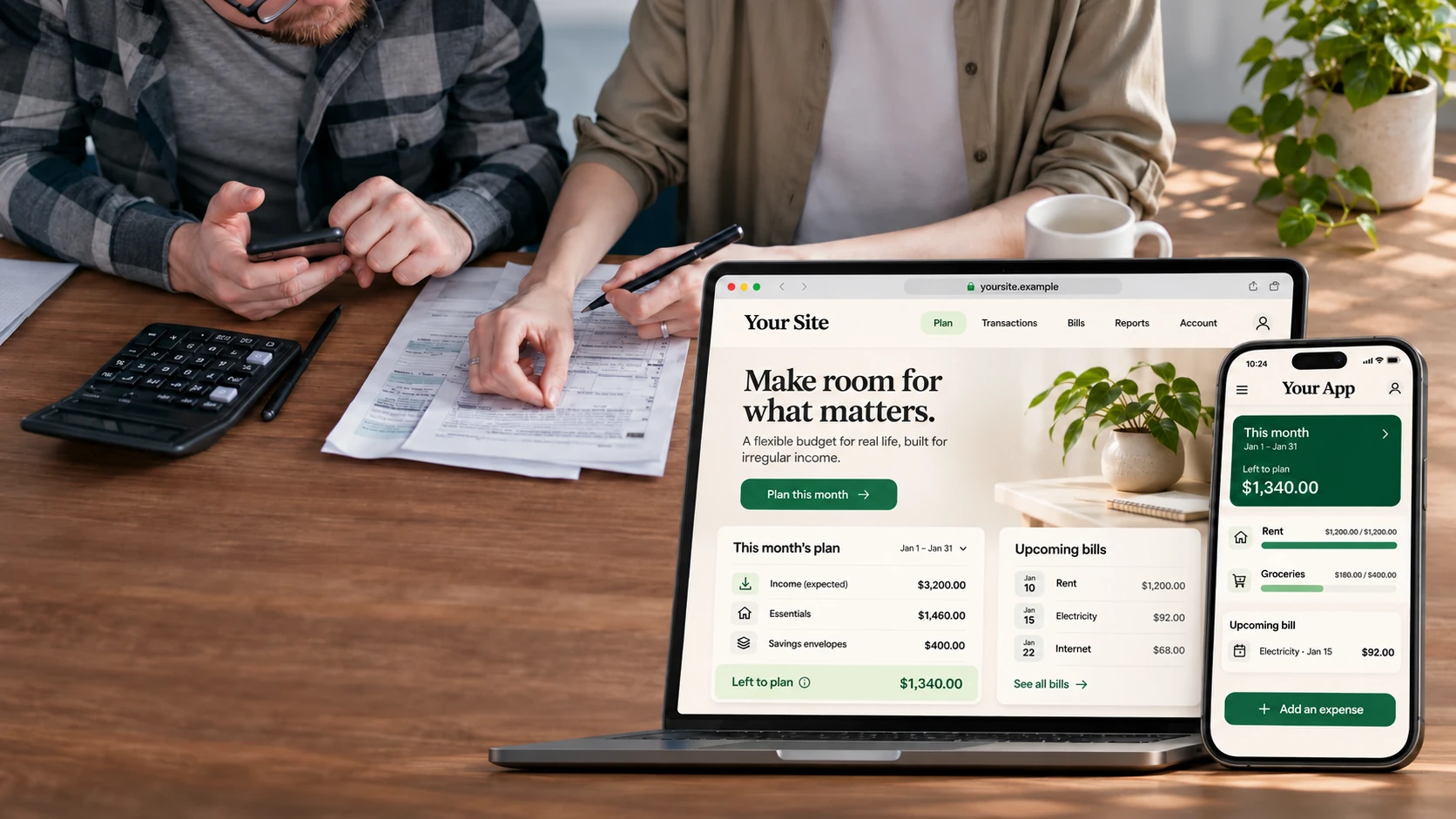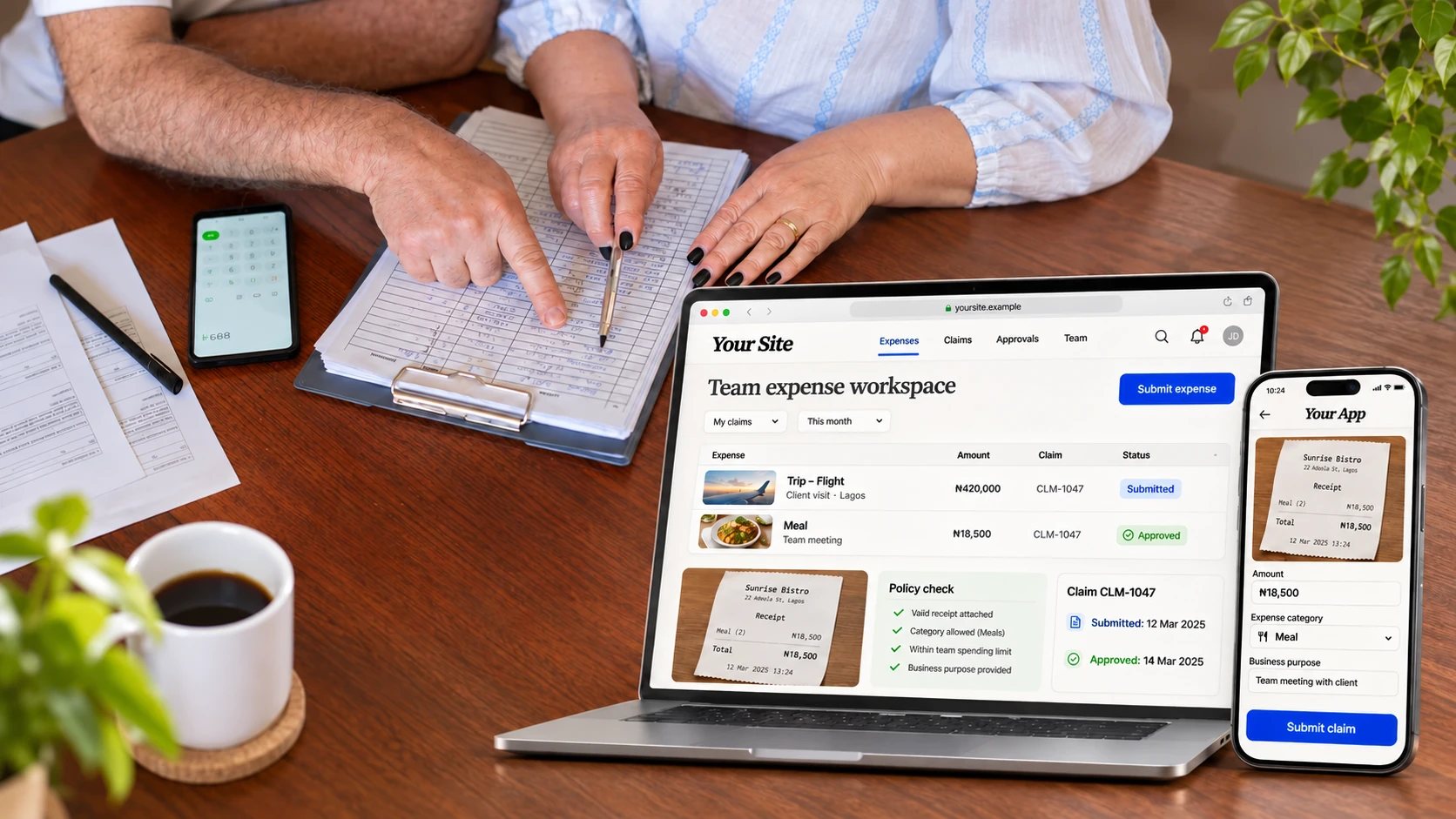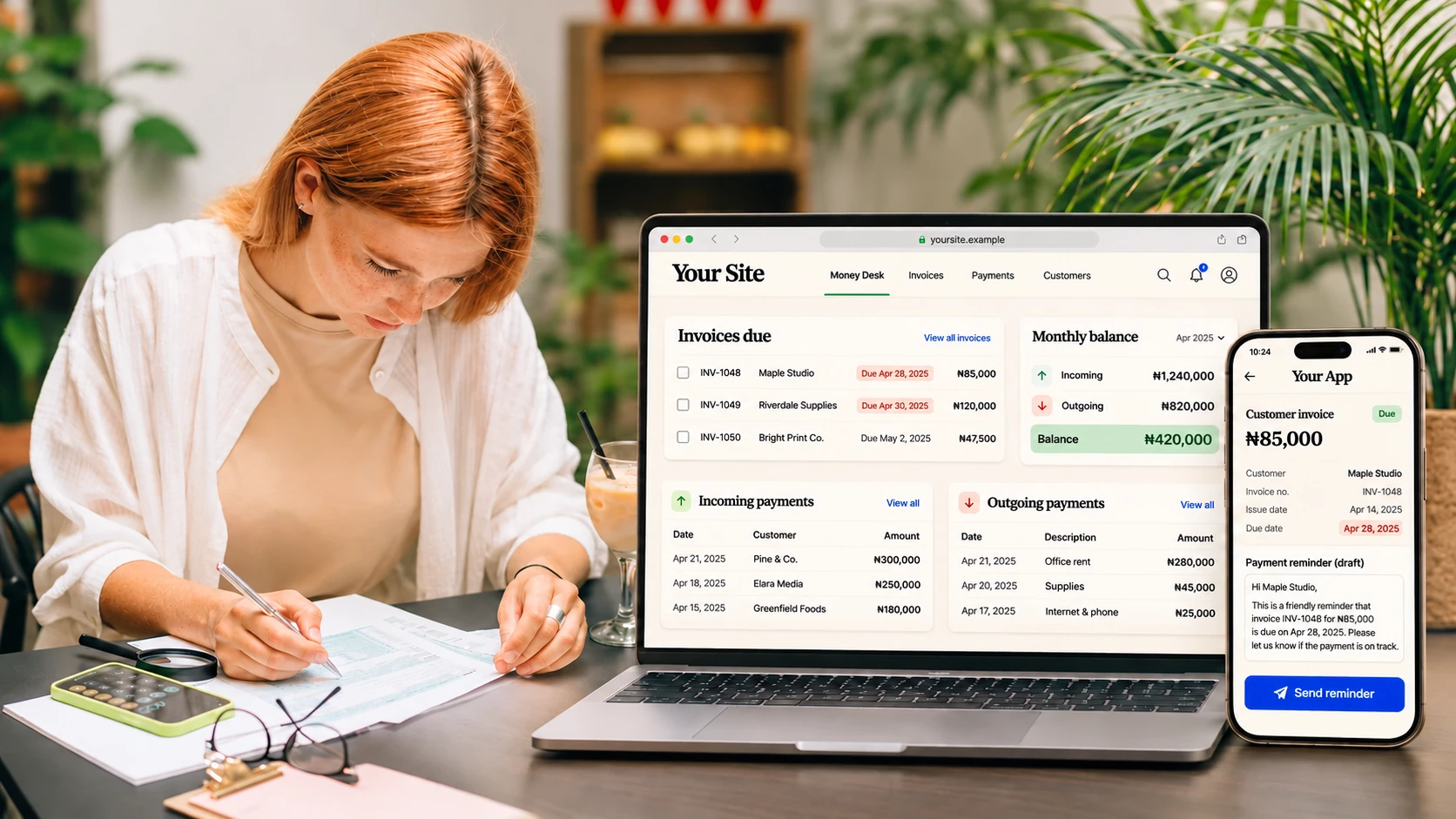
Picture a decorator who has completed three jobs but cannot tell which customer still owes a balance. The information exists across messages, receipts and memory. Your product could turn that uneasy evening into a short review: money expected, bills approaching and a clear follow-up for tomorrow.
A business you can
picture.
Begin with a trade you understand: contractors, small agencies or businesses paid in stages. Give each owner a clear view they can use before the day gets busy.
Who would be glad
you built it?
Independent contractors
See deposits and final balances together.
Small agencies
Follow staged invoices across client projects.
Bookkeepers
Help clients keep usable everyday records.
Where the money
could come from.
The owner could pay a monthly subscription for an active business workspace. Begin with one clear plan that covers record keeping, reminders and exports. Your price must support customer help, secure storage and maintenance; handling actual payments would add separate provider costs and operational responsibilities.
The part you could
make your own.
A trade-specific payment timeline could make this feel personal. A contractor may need deposit, materials and completion stages in plain language. Test that fit against the spreadsheet or messaging routine the owner already trusts.
An angle to test with the people you want to serve.Start with something
worth using.
Start with manual invoice entry, payment status, upcoming commitments and a weekly overview for one trade. Let owners export their records. Add account connections only after the basic routine proves useful.
- Create invoices and record their status.
- Keep expenses and expected payment dates together.
- See upcoming bills beside money expected.
- Export records for the owner or their accountant.
Give the promise
something to stand on.
This could suit you if you understand how a particular trade gets paid and can translate that routine into simple records. Reliable support matters when an owner is already worried about money.
Accurate calculations, protected records, backups and helpful support are part of what customers would buy. Start with manual entries or imported files. Bank access and moving money need a separate provider and market review.
Let a small beginning
teach you something.
Invite a few owners from the same trade to walk through a recently completed job. Use their real record-keeping steps, with permission, to test whether they can spot an unpaid balance without your explanation.
Can an owner find the next money action without searching through a second set of records?
Look for these signs
- Balances are kept current
- Follow-ups have clear owners
- Owners return for weekly reviews
A little more
clarity.
Does this replace an accountant?
The first product helps organise day-to-day records. Tax treatment, formal accounts and individual advice still need the appropriate professional. A useful export can make that relationship easier instead of creating another isolated system.
Must it connect to a bank from day one?
Manual entry can test the central habit first. Connections bring additional reliability, permission and support work; introduce them when customers can explain what they would gain from having them.
Must I connect it to a bank?
No. A clear, useful first version can begin with records people enter or import themselves.
Wave provides invoice creation and payment tracking. Explore the workflow as a reference while finding your own audience and reason for that audience to switch.
Now picture it
with your name on it.
Your people. Your priorities. The version you keep thinking about. Answer a few questions and leave with a starting plan you can keep.
Free to explore. No account or email needed for your starting plan.