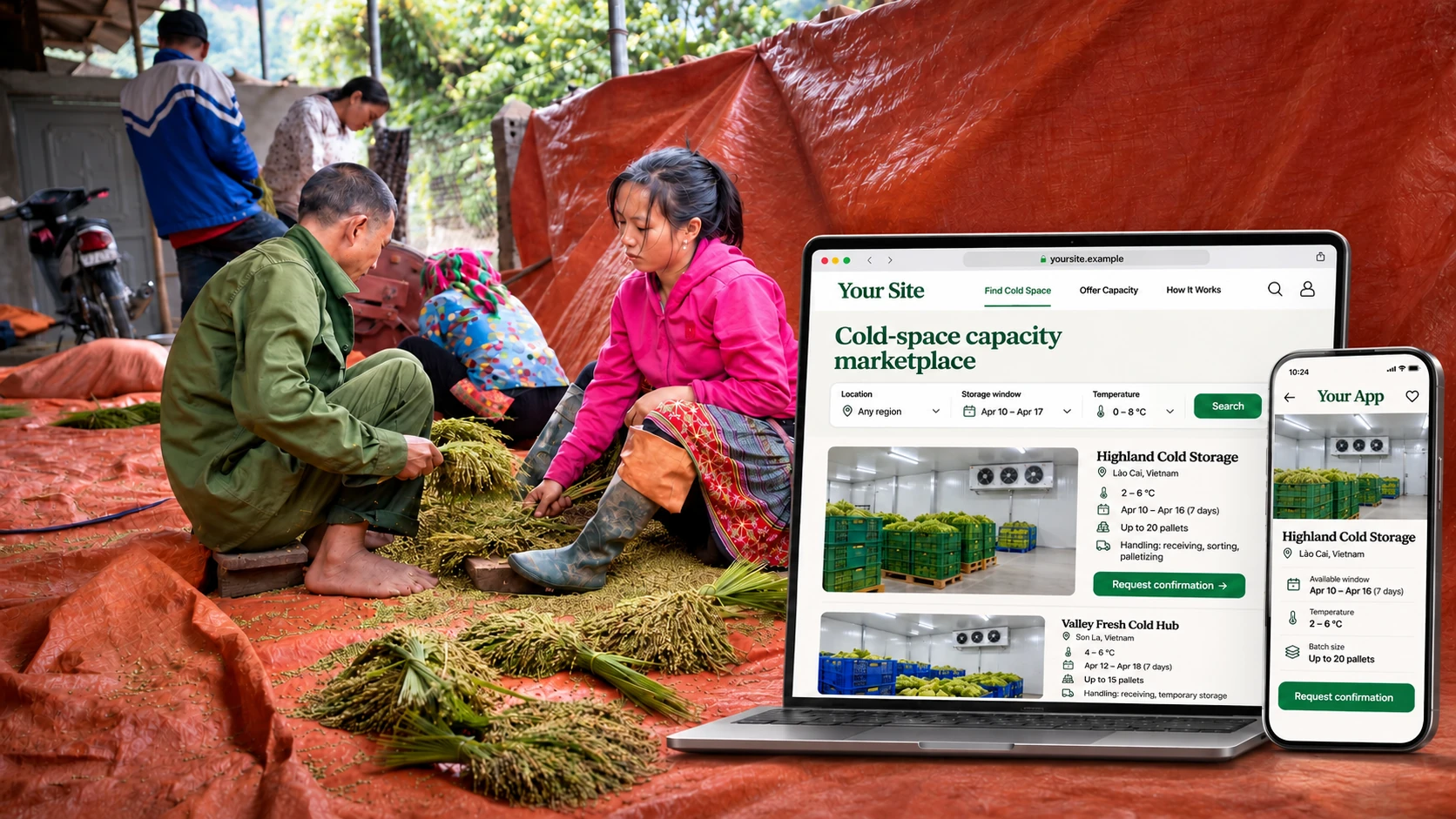
A producer has goods ready before the buyer’s collection date and needs temporary storage that matches the product’s requirements. An operator has space, but capacity alone does not answer the question. Your service could help both sides exchange the conditions, timing and handling details needed for a responsible booking.
A business you can
picture.
Begin with one product category and reviewed storage partners. The requester provides batch requirements, the operator confirms suitability and both sides agree access, handling and collection details.
Who would be glad
you built it?
Producers needing temporary storage
A specific window with suitable conditions
Cold-storage operators
Well-described enquiries and a clear capacity schedule
Collection coordinators
Agreed arrival and release information for the goods
Where the money
could come from.
A disclosed booking fee on confirmed storage windows could fund the service. The fee supports availability coordination, documentation and support; the operator’s storage and handling charges remain explicit. Include the cost of changes and failed handovers in the pilot. Do not sell any available cold space as suitable without the responsible operator’s informed confirmation.
The part you could
make your own.
Your proposed edge is precise temporary availability with practical conditions attached. A producer could understand the actual intake time, release deadline and handling limits before building another plan around the storage.
An angle to test with the people you want to serve.Start with something
worth using.
Choose one product category and a small operator group. Capture storage requirements, confirm a suitable time window and record receiving and release conditions. Keep proposals distinct from accepted storage commitments.
- Show actual available windows and capacity.
- Require operator confirmation of batch suitability.
- Record check-in, collection and agreed handling.
Give the promise
something to stand on.
You need competent storage partners and knowledge of the selected product category. Suitability, monitoring and handling require appropriate review, with the platform’s coordination role clearly separated from the operator’s responsibilities.
Storage suitability, monitoring and product handling require competent operators and applicable compliance. The platform should not infer that any available cold space meets a particular product's needs.
Let a small beginning
teach you something.
Work with competent operators and producers in one product chain. Trial a small number of reviewed bookings and follow the goods through intake and release, checking whether the stated conditions match the actual arrangement.
Do the producer and operator agree on the product requirements, storage period and handling responsibilities before the goods arrive?
Look for these signs
- Suitability is confirmed by responsible operators
- Booked windows match actual capacity
- Intake and release records remain traceable
A little more
clarity.
Does a cold room suit every chilled product?
No. Requirements vary by product and handling context. Appropriate operators must assess the actual conditions needed; the platform should not infer suitability from a generic temperature label.
What if collection is delayed?
Agree the extension and escalation process before booking. The producer should understand whether more time is available, how it is charged and who decides when the original window can no longer be honoured.
What should my first version focus on?
Start with the first test described here, then build around the part people actually use and would pay to keep.
Now picture it
with your name on it.
Your people. Your priorities. The version you keep thinking about. Answer a few questions and leave with a starting plan you can keep.
Free to explore. No account or email needed for your starting plan.