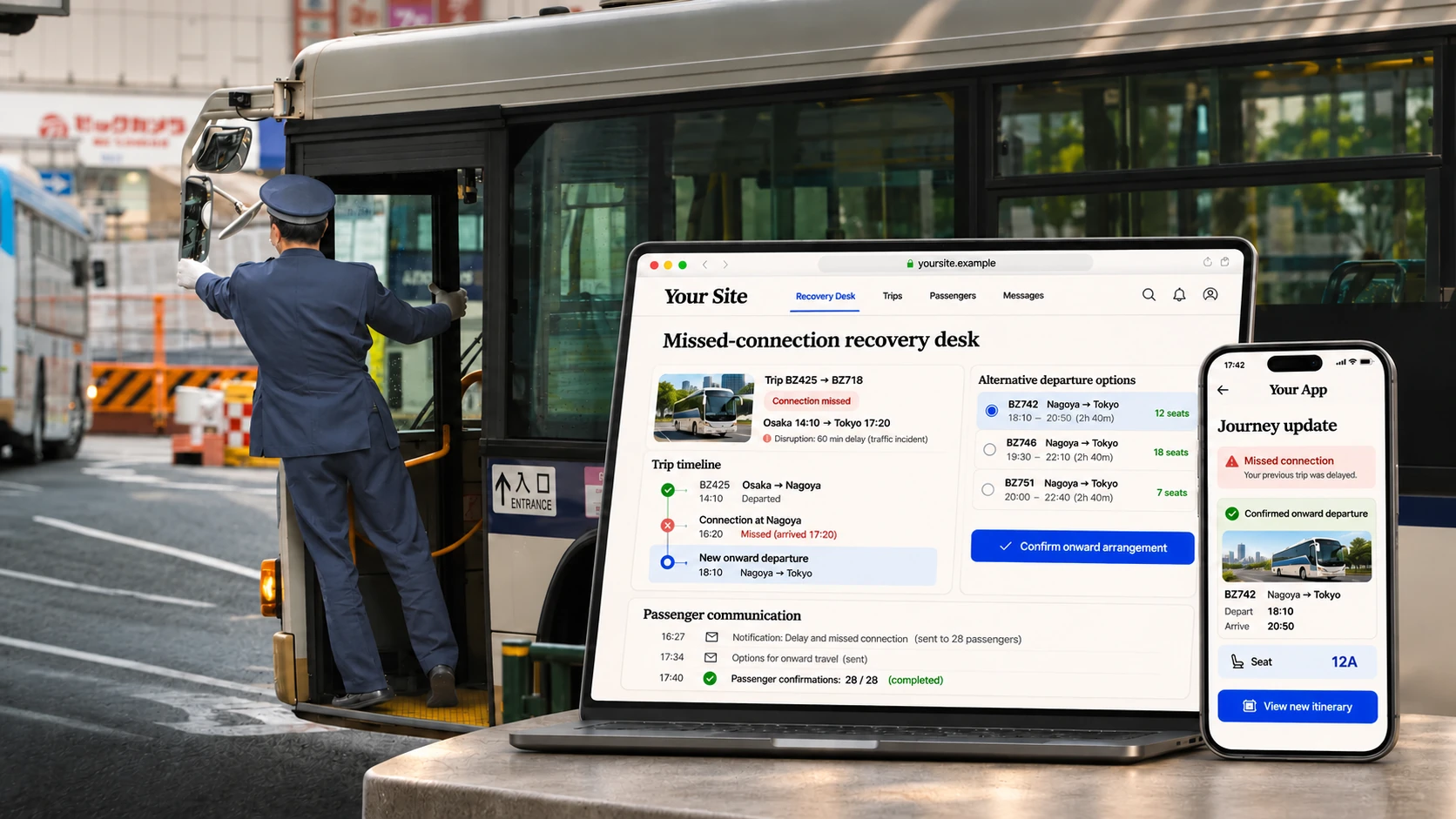
A delayed arrival means a passenger misses the next connection. They repeat the same story to several desks while each provider sees only its own booking. Your service could help participating operators share the authorised context, explain actual options and confirm what happens next before the passenger relies on another uncertain promise.
A business you can
picture.
Start with a limited network of operators and agreed disruption scenarios. Staff open a case, record the affected journey and request alternatives from partners who can confirm actual availability.
Who would be glad
you built it?
Transport operators handling disrupted journeys
A shared record for coordinated next steps
Passengers affected by a missed connection
Clear options and confirmed arrangements
Support teams
Relevant history without repeated manual retelling
Where the money
could come from.
Operators could pay for a coordination workspace and defined managed support coverage. The fee must fund trained staff, information handling and operational support. If passengers face a new booking charge, explain it before acceptance. The service should not claim to guarantee onward travel or override the assistance responsibilities and terms of the providers involved.
The part you could
make your own.
Your proposed edge is continuity across a handover. The next operator could understand the situation and its own agreed role without making the passenger reconstruct the entire journey again.
An angle to test with the people you want to serve.Start with something
worth using.
Choose a small participating operator group and one disruption pattern. Record the original journey and confirmed issue, obtain authorised options and present a reviewable next arrangement. Keep unverified availability clearly provisional.
- Keep the passenger's situation in one case.
- Separate possible alternatives from confirmed places.
- Record chosen arrangements and responsible contacts.
Give the promise
something to stand on.
You need operator agreements and experienced human support. Assistance, refunds and new bookings must follow the actual terms, with protected passenger information and a clear route for urgent situations.
Transport terms, refunds and assistance responsibilities require appropriate agreements. Keep personal information protected, avoid invented live availability and give urgent situations a clear human route.
Let a small beginning
teach you something.
Work with participating operators on a controlled set of real or carefully rehearsed disruption cases. Check whether each option has an authorised source and whether the passenger can explain the confirmed next arrangement.
Does the passenger receive an understandable, provider-confirmed next step without relying on invented availability or repeated retelling?
Look for these signs
- Options have an authorised current source
- Passengers understand any new charges
- Each provider sees its actual agreed responsibility
A little more
clarity.
Can the desk promise a replacement journey immediately?
Only when a participating provider confirms the arrangement. Show provisional options honestly and keep a human support route when the situation cannot be resolved through a simple choice.
Does the desk decide refund entitlement?
It can organise the relevant terms and route the question to the responsible provider. Refund and assistance decisions need the appropriate agreement and review rather than an unsupported automatic answer.
What should my first version focus on?
Start with the first test described here, then build around the part people actually use and would pay to keep.
Now picture it
with your name on it.
Your people. Your priorities. The version you keep thinking about. Answer a few questions and leave with a starting plan you can keep.
Free to explore. No account or email needed for your starting plan.