A community organiser finds a promising grant the evening before it closes, then discovers a missing document and an eligibility condition they overlooked. Your desk could bring opportunities, source details and application tasks together, giving a small team a calmer way to decide where to invest its effort.
A business you can
picture.
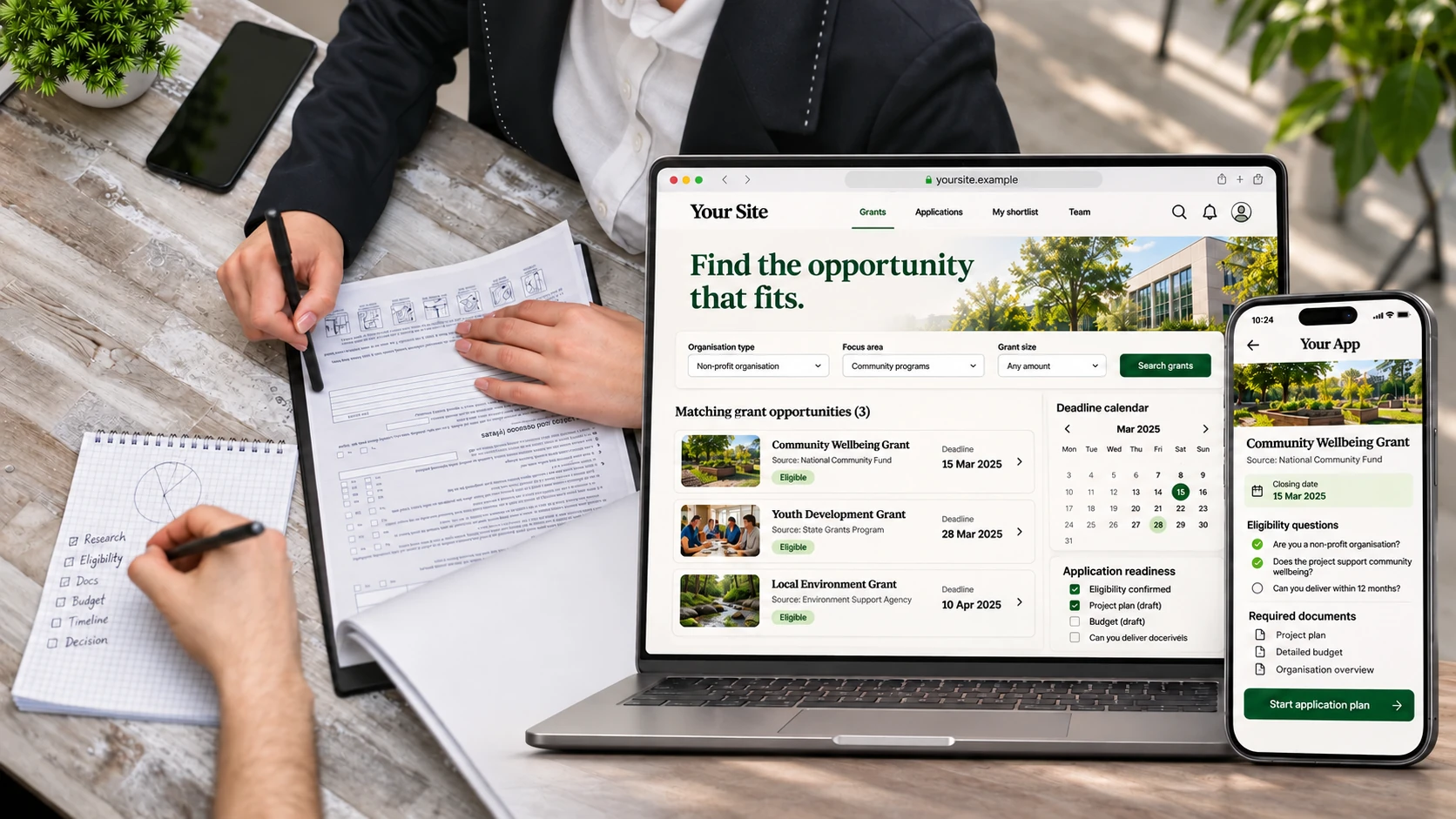
Build a grant research and application workspace for one kind of organisation. Show the source, eligibility and deadline, then help a team decide whether the opportunity deserves its limited time.
Who would be glad
you built it?
Community organisations
Find opportunities suited to their work.
Grant consultants
Coordinate applications across clients.
Small nonprofit teams
Assign documents and deadlines clearly.
Where the money
could come from.
Organisations or consultants could pay for maintained research access and an application workspace. Optional review or writing assistance can be a separate, clearly described service. Research upkeep, source checking and support need funding; the subscription pays for those activities regardless of whether a funder approves an application.
The part you could
make your own.
Specialising in one kind of organisation could improve relevance. A clear explanation of why an opportunity might fit, and what still needs checking, could be more useful than a very large list of loosely matched funding notices.
An angle to test with the people you want to serve.Start with something
worth using.
Start with one organisation type and a maintained opportunity list. Include source links, dates, stated eligibility and a simple application checklist. Separate confirmed facts from the team's own interpretation of fit.
- Searchable funding opportunities
- Eligibility and deadline checklists
- Shared application tasks and documents
Give the promise
something to stand on.
You need careful research habits and a process for keeping opportunities current. Good judgement includes saying an opportunity may not fit, rather than making every funding notice look like a reason to subscribe.
Keep opportunity details current and link to the funder. Permission settings matter when budgets and project documents are shared. Applications should remain under the organisation’s control and final approval.
Let a small beginning
teach you something.
Ask a few organisations to review recently considered opportunities with you. Test whether the service helps them rule out poor fits earlier and assemble a realistic application plan for a suitable one.
Can the team decide whether to apply before spending substantial time gathering documents for an unsuitable opportunity?
Look for these signs
- Opportunity details remain traceable
- Teams assign required documents early
- Poor-fit applications are declined sooner
A little more
clarity.
Does subscribing improve the chance of a grant?
The service offers research and organisation, not a funding decision. A clearer, timely application may still be declined. Describe the work you provide without implying that paying creates preferential access to a funder.
Can AI write the whole application?
It may help organise a draft if the team permits it, but claims, budgets and project details need human verification. The organisation should approve its own application and understand any funder rules about assisted writing.
Instrumentl is an example of grant discovery and management software.
Now picture it
with your name on it.
Your people. Your priorities. The version you keep thinking about. Answer a few questions and leave with a starting plan you can keep.
Free to explore. No account or email needed for your starting plan.