Logistics & mobilityNew concept
Delivery readiness checkpoint

Help a delivery arrive to someone ready to receive it.

A vehicle reaches the address, but the gate is locked, the contact is unavailable or nobody arranged unloading. You could build a service that helps everyone confirm the practical details before a delivery leaves, giving the driver and recipient a clearer plan for the handover.

Make this fit me
You could also build this as a mobile app
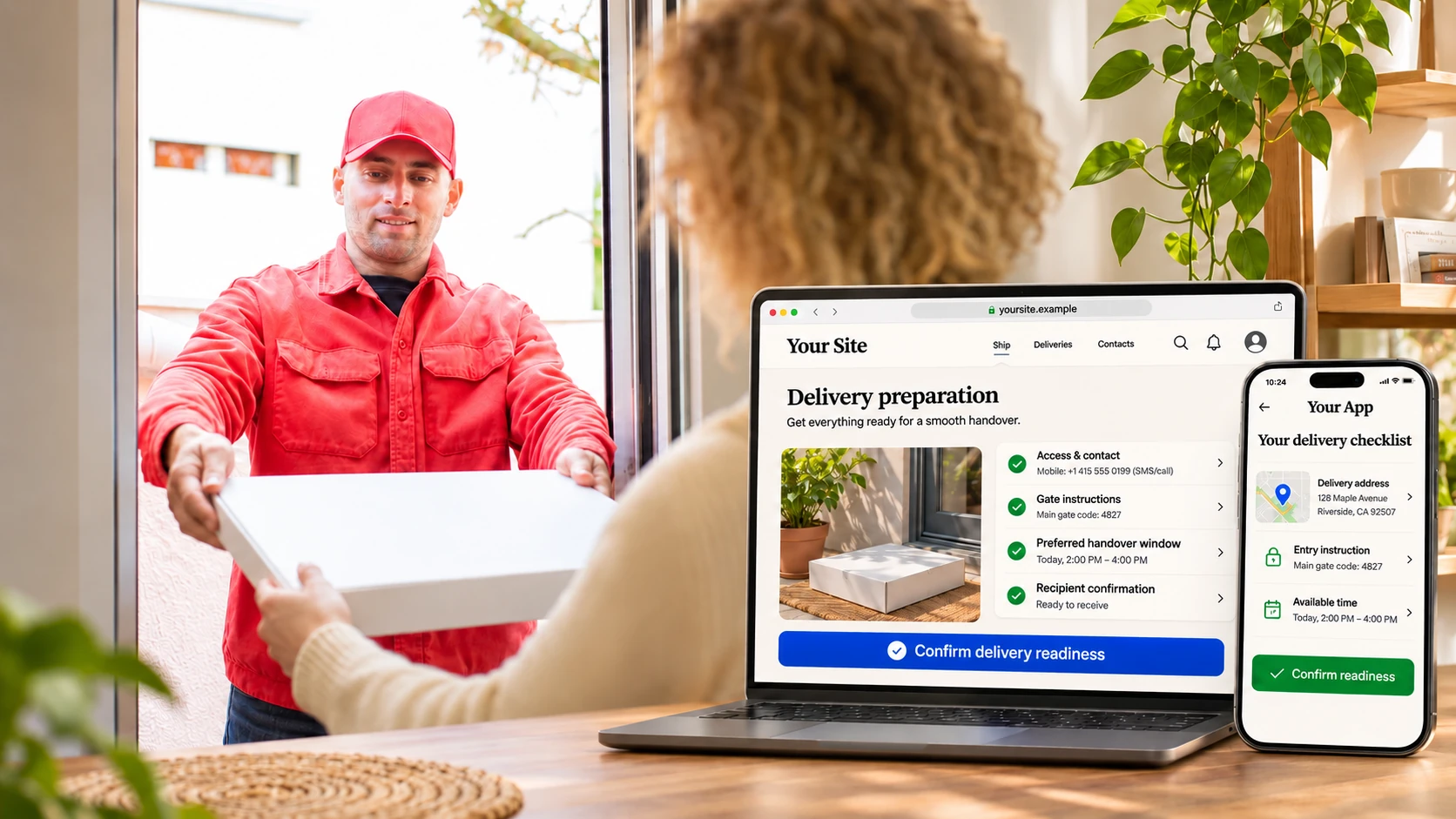
Delivery readiness checkpoint concept: A delivery person in red uniform handing over a package at a doorway. A desktop website and matching phone show the digital business.Illustrative concept
IMAGINE THIS MOMENT

A van arrives with a bulky order, but the gate is locked and nobody arranged help unloading. The address was correct; the handover was not ready. Your service could make those practical conditions visible before dispatch, giving the seller, driver and recipient a chance to resolve missing details while there is still a choice.

A business you can
picture.

Start with one delivery type, such as bulky business orders. The seller prepares the shipment, the recipient confirms the receiving arrangements and the carrier sees the approved information.

Who would be glad
you built it?

Sellers dispatching bulky or coordinated deliveries

A clear receiving-readiness check

Carriers and drivers

Practical access and handover information

Recipients

An understandable plan for what they need to arrange

Where the money
could come from.

A seller could pay for the workspace by delivery volume, with managed recipient follow-up priced separately. The fee covers checks, communication and support. Test the actual value in the seller’s operation rather than promising a fixed reduction in failed deliveries. The service should organise readiness, not silently guarantee access based on an old confirmation.

The part you could
make your own.

Your proposed edge is focusing on what happens at the destination rather than only the route. A recipient’s confirmation of an open gate or unloading help could expose a practical issue that a validated address misses.

An angle to test with the people you want to serve.

Start with something
worth using.

Choose one delivery category. Confirm access, contact availability, unloading needs and agreed timing before dispatch. Show incomplete answers to authorised staff and preserve a clear distinction between requested and confirmed arrangements.

  • Confirm access, contact and receiving window.
  • Record equipment or help needed for unloading.
  • Flag unanswered questions before dispatch approval.

Give the promise
something to stand on.

WHAT YOU BRING

You need knowledge of a specific delivery pattern and a dependable confirmation process. Keep recipient information limited, timestamp replies and assign a person who can deal with changed arrangements.

Keep recipient information limited to the people who need it. A confirmation should have a timestamp, and changed arrangements need an accountable person rather than a silent automated promise.

Let a small beginning
teach you something.

Work with a seller handling a repeated delivery problem. Trial the checks on a small set of upcoming orders, then compare the confirmed receiving conditions with what drivers actually encounter.

THE QUESTION TO TEST

Do the readiness answers reveal practical handover problems early enough for the authorised team to discuss a workable change?

Look for these signs

  • Confirmations have visible times and sources
  • Incomplete arrangements reach responsible staff
  • Drivers receive relevant current handover details
WHEN THE FIRST VERSION HAS TAUGHT YOU MORE
Where you could take it next

Add customer reminders, access photographs with permission and connections to dispatch tools. Reporting could reveal the recurring information gaps in a business's own deliveries.

A little more
clarity.

Does a confirmed checklist guarantee access?

No. Conditions can change after a reply. Show when confirmation occurred and provide a clear update route so staff can review information before relying on it.

Can the first version work without carrier integrations?

Yes. It can prepare a clear readiness record and hand it to the existing dispatch process. Add integrations only when the pilot shows which information needs to move automatically.

What should my first version focus on?

Start with the first test described here, then build around the part people actually use and would pay to keep.

WHAT COULD GO INSIDE

A few additions
to explore.

Order completeness checksHelp a custom order arrive with the details your team needs, before one missing measurement interrupts the whole job.Automatic reminders and updatesLet a timely update carry the routine reassurance, so your team can give more attention to the questions that need a person.Customer accounts and preferencesMake a returning customer's next visit feel familiar, with the records they need and control over the details they share.
MAKE ROOM FOR YOUR VERSION

Now picture it
with your name on it.

Your people. Your priorities. The version you keep thinking about. Answer a few questions and leave with a starting plan you can keep.

Free to explore. No account or email needed for your starting plan.
PICTURE THE MOBILE APPDelivery readiness app

Resolve the small question before the driver arrives.

A delivery can become difficult because one practical detail was never confirmed. You could build an app that lets the recipient check the address, access instructions and readiness window before dispatch. Give merchants and delivery teams a clear record of what has been confirmed and what still needs a human follow-up.

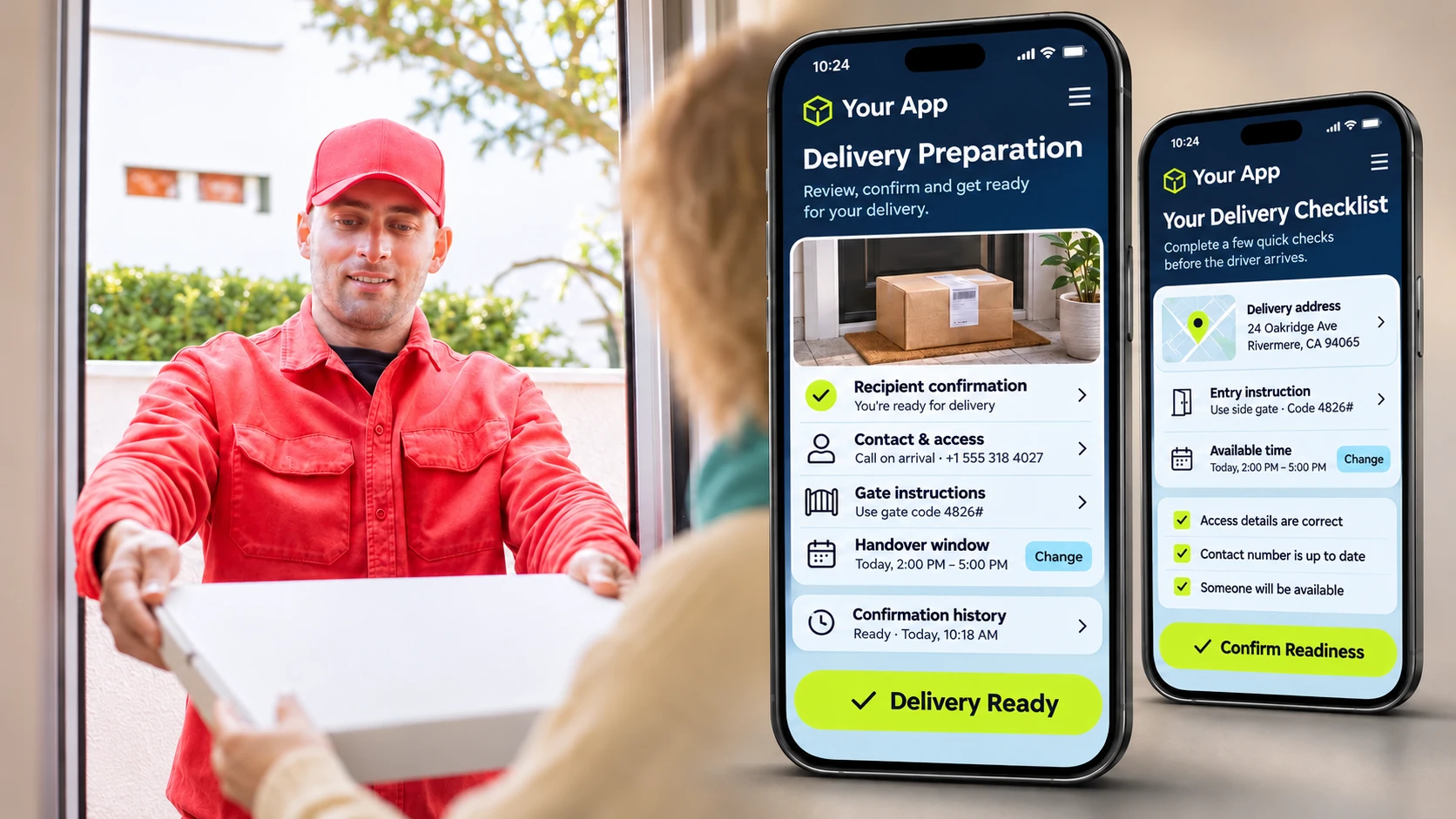
A delivery person in red uniform handing over a package at a doorway. Two phone screens preview the delivery readiness app, with no desktop view.App concept
IMAGINE THIS MOMENT

A bulky order reaches a building where the access arrangement was never confirmed. The recipient is available, but the delivery team cannot complete the handover as planned. Your app could collect the practical details early and show the operator which questions still need a person, before dispatch commits the resources.

One useful moment.
A reason to open it.

The recipient checks the delivery details, adds the requested access information and confirms or requests a change. The dispatcher sees which issues still need a human decision.

Who would be glad
you built it?

Merchants with planned deliveries

Check readiness before releasing an order.

Recipients

Confirm access and an appropriate receiving window.

Delivery coordinators

See exceptions that need a call.

A place in their life.
At the right moment.

Why it belongs on a phone

The recipient may need to respond while away from home, and a driver needs the latest agreed details on the move. Timely prompts and private access notes make the phone central.

A reason to come back

Recipients return when a delivery is approaching or their plan changes. Merchants return before dispatch to understand which orders have usable details and which still need attention.

Timely remindersLive coordinationOn-the-go records

Where the money
could come from.

A merchant or delivery operator could pay for a defined readiness workflow, priced by team or supported usage. The fee covers communication and records. Notifications, support, data handling and exception review create costs. Evaluate useful confirmations before claiming reductions in failed deliveries or operating expense.

The part you could
make your own.

Focus on one difficult handover, such as large items needing access preparation. A short relevant check may prove more useful than a generic delivery survey sent to every recipient.

An angle to test with the people you want to serve.

Start with something
worth using.

Start with one delivery category, recipient confirmation and change requests. Show confirmation history and unresolved questions. Keep the dispatcher responsible for deciding whether the delivery is ready to proceed.

  • Recipient-controlled delivery details check
  • Private access and contact instructions
  • Readiness window and change request
  • Clear confirmation history for authorised teams

Give the promise
something to stand on.

WHAT YOU BRING

You need an operator willing to define what readiness means for its delivery type. Keep access instructions private and decide who may view them and how long they are retained.

Keep recipient information limited to the people who need it. A confirmation should have a timestamp, and changed arrangements need an accountable person rather than a silent automated promise.

Let a small beginning
teach you something.

Review recent anonymised delivery exceptions with an operator, then trial the checklist on suitable upcoming orders. Ask whether the answers arrive early enough to change the plan usefully.

THE QUESTION TO TEST

Does the confirmation reveal an actionable delivery issue before dispatch, and does the right person respond to it?

Look for these signs

  • Recipients understand the questions asked.
  • Exceptions reach the dispatcher before release.
  • Access details stay restricted to authorised teams.
WHEN THE FIRST VERSION HAS TAUGHT YOU MORE
Where you could take it next

Add customer reminders, access photographs with permission and connections to dispatch tools. Reporting could reveal the recurring information gaps in a business's own deliveries.

A little more
clarity.

Does confirmation guarantee successful delivery?

No. Conditions can change and other issues can arise. The service records agreed information and unresolved questions; it should not promise that every confirmed delivery will succeed.

Should every delivery need a long checklist?

No. Choose the few details that affect your operator's actual handover. Extra questions can create friction without helping the team make a better dispatch decision.

What should my first version focus on?

Start with the first test described here, then build around the part people actually use and would pay to keep.

WHAT COULD GO INSIDE

A few additions
to explore.

Order completeness checksHelp a custom order arrive with the details your team needs, before one missing measurement interrupts the whole job.Automatic reminders and updatesLet a timely update carry the routine reassurance, so your team can give more attention to the questions that need a person.Customer accounts and preferencesMake a returning customer's next visit feel familiar, with the records they need and control over the details they share.
MAKE ROOM FOR YOUR VERSION

Now picture it
with your name on it.

Your people. Your priorities. The version you keep thinking about. Answer a few questions and leave with a starting plan you can keep.

Free to explore. No account or email needed for your starting plan.
KEEP THE POSSIBILITIES OPEN

Something else
might speak to you.