A community organiser remembers the day a project finally came together, but the photographs are on one volunteer’s phone and the receipts are in another person’s bag. A reporting deadline turns meaningful work into a scramble. Your service could help groups gather that story as they go, including setbacks as well as achievements.
A business you can
picture.
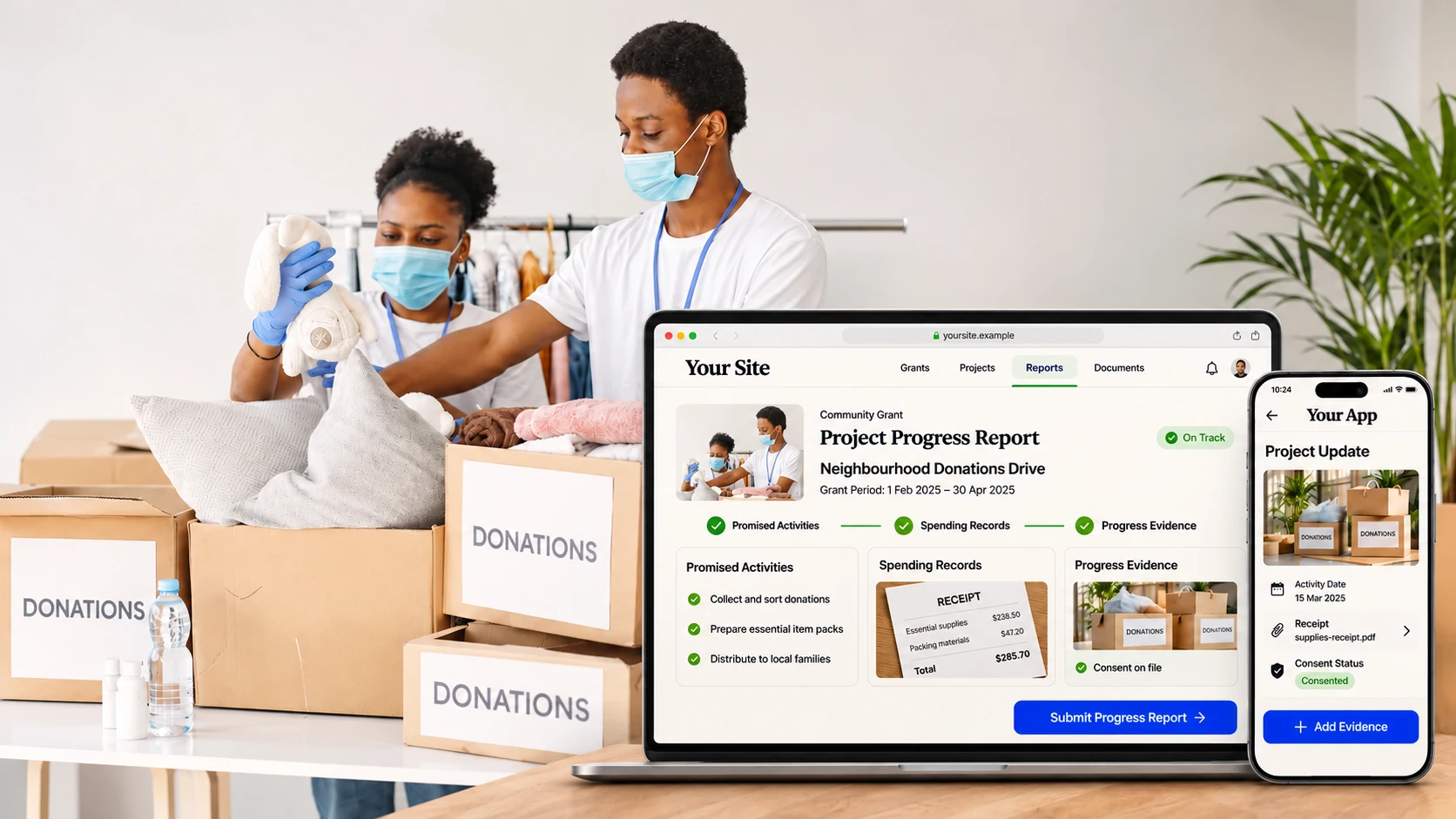
Build a reporting workspace around an organisation's actual commitments. Each activity connects to its agreed budget, responsible person and suitable evidence, ready for a human to review.
Who would be glad
you built it?
Community project organisers
A manageable record of activities and evidence
Small grant recipients
A clear place to prepare required updates
Funders supporting local groups
Consistent access to agreed project reporting
Where the money
could come from.
An organisation could pay per active project, or a funder could purchase access for named participating groups. Choose one clear initial buyer and define the support included. The fee covers setup, storage and reporting coordination, while financial review remains the organisation’s responsibility. Do not sell polished language as evidence that a project achieved its intended impact.
The part you could
make your own.
Your difference could be preserving honest context alongside documents. A missed session and the reason it changed may tell a more useful story than a report that hides every difficulty behind a positive summary.
An angle to test with the people you want to serve.Start with something
worth using.
Start with one active project. Organise dated activities, receipts, consented images and short reflections against the agreed reporting questions. Let the responsible organiser review a draft before sharing it with a funder.
- Link activities to agreed reporting questions.
- Collect receipts and consented project evidence.
- Prepare a report with traceable source material.
Give the promise
something to stand on.
You need empathy for volunteer workloads and a careful approach to participant information. Permissions for photographs, original documents and responsibility for reviewing financial statements must be explicit.
Protect participant information, record permissions for images and keep original documents. Financial reporting and funder requirements need appropriate review by the organisation's responsible people.
Let a small beginning
teach you something.
Work with a small funded group and its reporting contact on the next scheduled update. Use the funder’s actual questions, then check whether volunteers can maintain the record without creating a second reporting burden.
Can the organiser produce a truthful update with supporting records without reconstructing the project from scattered personal messages?
Look for these signs
- Activities link to original evidence
- Shared images have recorded permission
- Draft reports distinguish observations from claims
A little more
clarity.
Can the system write our impact claims?
It can help organise a draft, but claims must match the evidence and be reviewed by the responsible organisation. A moving story does not by itself demonstrate a measured outcome.
Who should see participant photographs?
Only the people and purposes covered by the relevant permission. Keep access and sharing choices explicit, especially when images reveal children or sensitive personal circumstances.
What should my first version focus on?
Start with the first test described here, then build around the part people actually use and would pay to keep.
Now picture it
with your name on it.
Your people. Your priorities. The version you keep thinking about. Answer a few questions and leave with a starting plan you can keep.
Free to explore. No account or email needed for your starting plan.