Logistics & mobilityEstablished model
Bus and coach seat booking portal

Help a traveller know which journey is theirs.

A traveller wants to compare routes, understand the departure point and know whether a seat is confirmed. Build a booking service that brings those practical details together before the travel day.

Make this fit me
You could also build this as a mobile app
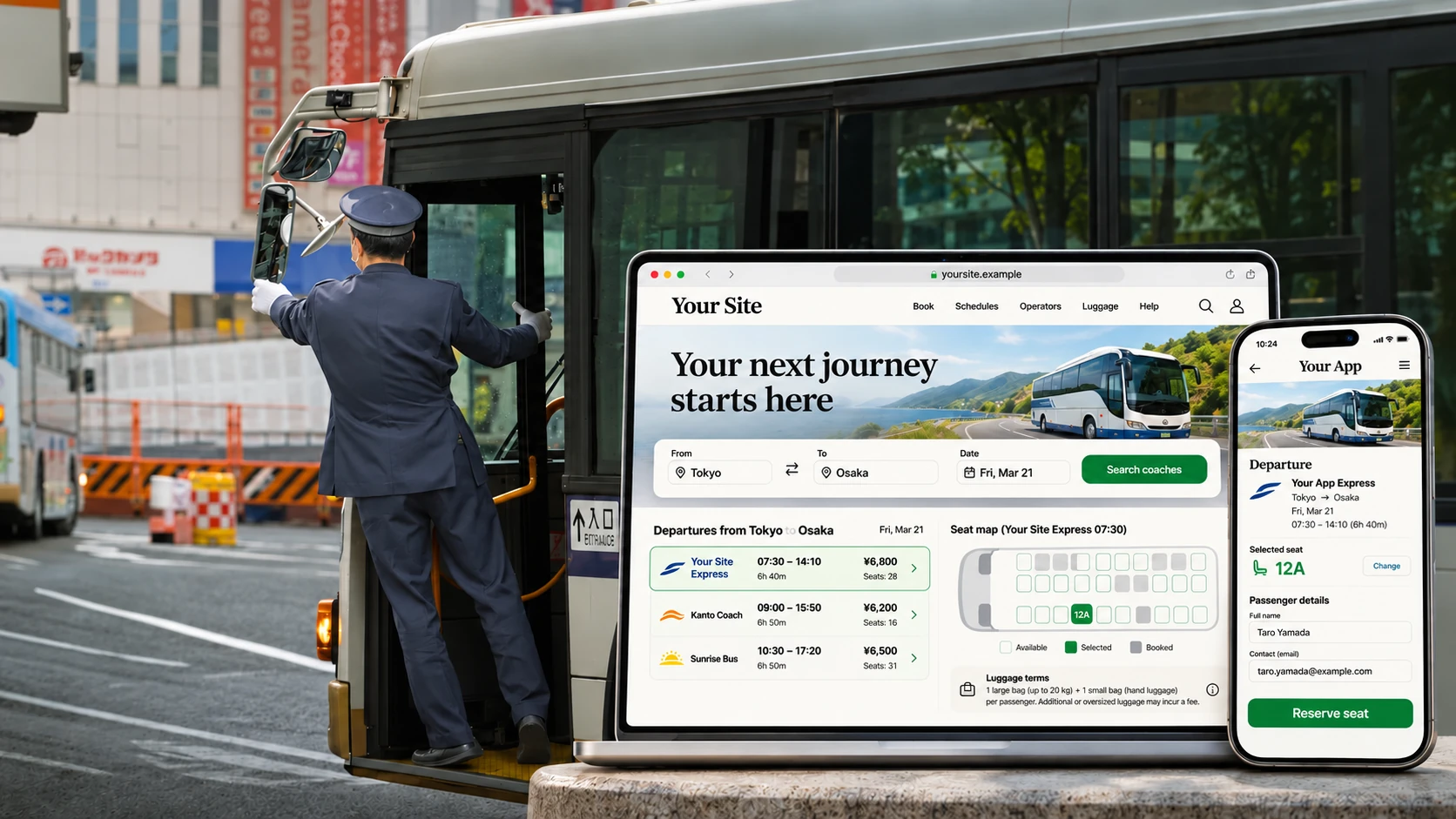
Bus and coach seat booking portal concept: Bus conductor in uniform oversees passenger boarding in a busy city street. A desktop website and matching phone show the digital business.Illustrative concept
IMAGINE THIS MOMENT

Picture someone carrying a bag between two unfamiliar coach parks, checking a payment message that says little about where to board. Your service could make the booking feel complete before travel day: the right departure point, a confirmed seat and a clear person to contact if the journey changes.

A business you can
picture.

Create a coach or bus booking portal with suitable operators. Present schedules, fares, luggage terms and seat availability in a consistent format that passengers can understand.

Who would be glad
you built it?

Regular intercity travellers

A dependable booking record for a familiar route

First-time passengers

Boarding instructions they can follow without local knowledge

Small coach operators

A manageable way to receive and confirm online bookings

Where the money
could come from.

A practical starting route is a disclosed fee on an operator-confirmed booking, agreed with the operator or paid by the traveller. Your fee must support payment processing, confirmation work and journey-change support. A booking request alone should not trigger an invented seat guarantee or an unexplained charge.

The part you could
make your own.

You could specialise in passengers who struggle with the boarding experience. A photograph of the pickup entrance, clear luggage information and a useful change notice may matter more to them than another list of fares.

An angle to test with the people you want to serve.

Start with something
worth using.

Begin with one operator and a small set of routes. Show departure points, available services, complete fares and an operator-backed confirmation. Keep seat changes and refund requests visible in one support queue.

  • Routes, departure points and schedules
  • Seat reservations and ticket records
  • Operator changes and passenger support

Give the promise
something to stand on.

WHAT YOU BRING

You would bring relationships with operators and attention to departure-day details. Someone must keep schedules accurate, reconcile confirmations and help when a passenger’s paid journey changes.

Operator agreements and live inventory need dependable coordination. Handle cancellations and schedule changes with clear support. A requested seat must not appear confirmed until the operator’s booking process accepts it.

Let a small beginning
teach you something.

Work with an operator willing to trial one route. Observe willing passengers booking and finding the departure point, then compare their questions with the information the booking actually supplied.

THE QUESTION TO TEST

Can a first-time passenger book, find the correct boarding point and travel using the information your service provides?

Look for these signs

  • Confirmed bookings match operator records
  • Passengers find their boarding point
  • Changed journeys reach the affected traveller
WHEN THE FIRST VERSION HAS TAUGHT YOU MORE
Where you could take it next

Expand into return journeys and business accounts when the first routes have a reliable booking and support process.

A little more
clarity.

Do I need my own coaches?

You can build a booking business around participating operators. You still need an agreement covering available seats, confirmations, payments, cancellations and who helps a stranded or delayed passenger.

Can I display every route immediately?

Only display a service as bookable when you can support its availability and confirmation. A smaller accurate route selection is a useful first test of the actual booking relationship.

SOMETHING TO LEARN FROM

Busbud is a reference for bus and train ticket booking.

WHAT COULD GO INSIDE

A few additions
to explore.

Online shop and checkoutGive the customer who already likes your product a clear way to choose it, pay and know what happens next.Maps and local availabilityHelp a visitor connect a useful offer to a real place, with the coverage and arrival details that matter beyond the map pin.Automatic reminders and updatesLet a timely update carry the routine reassurance, so your team can give more attention to the questions that need a person.
MAKE ROOM FOR YOUR VERSION

Now picture it
with your name on it.

Your people. Your priorities. The version you keep thinking about. Answer a few questions and leave with a starting plan you can keep.

Free to explore. No account or email needed for your starting plan.
PICTURE THE MOBILE APPBus booking app

Keep the journey details close when it is time to go.

A traveller wants to know the route, the seat and where to stand when departure approaches. You could build a bus booking app with suitable transport partners, bringing the ticket and practical journey updates together. Start with routes whose inventory and operating information you can keep accurate.

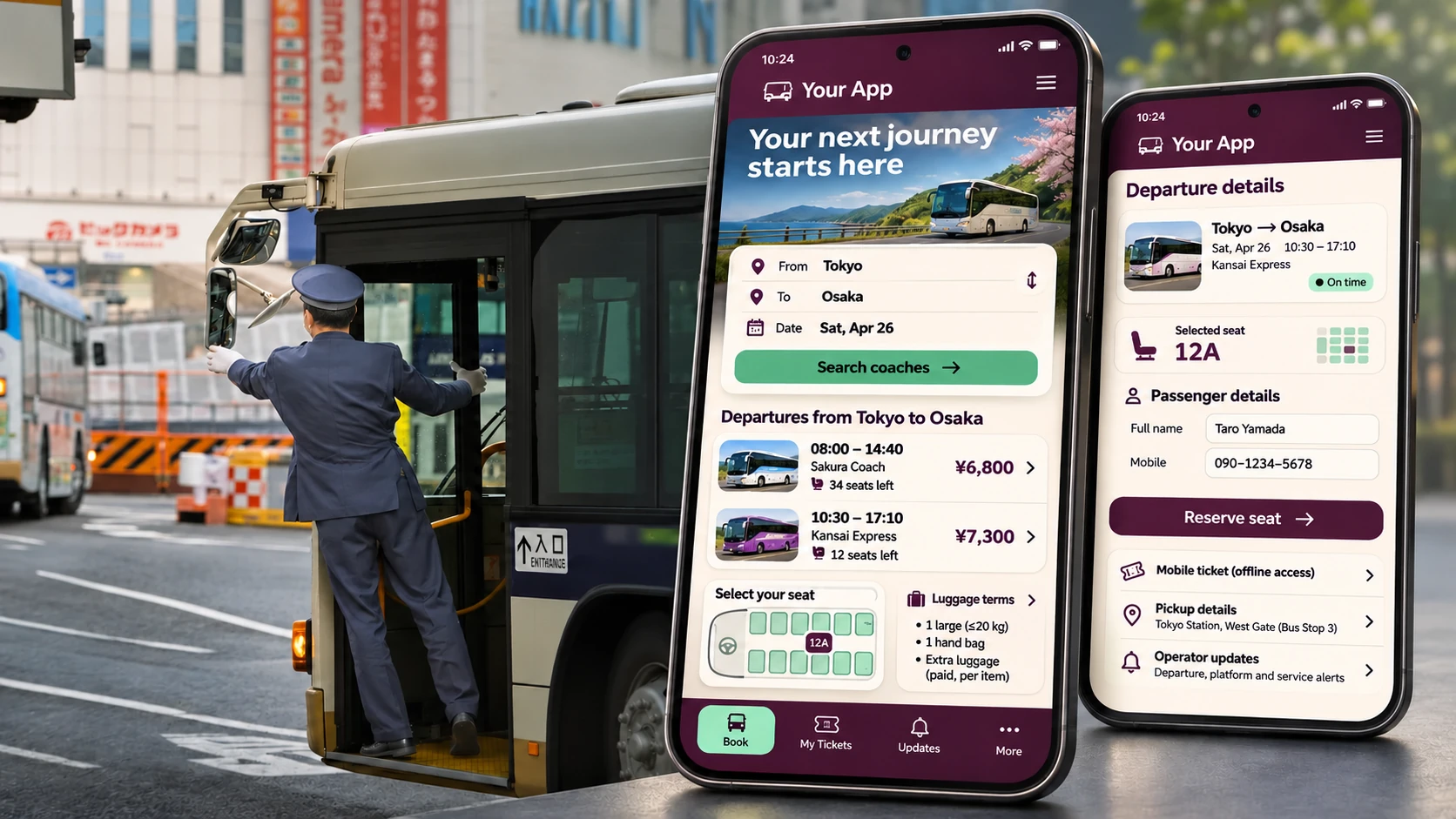
Bus conductor in uniform oversees passenger boarding in a busy city street. Two phone screens preview the bus booking app, with no desktop view.App concept
IMAGINE THIS MOMENT

A traveller has paid for a seat but is still unsure which roadside pickup point the operator means. The ticket is in an email they cannot load. Your app could give one dependable route group a clearer booking experience, with an offline record and operator-owned updates that reflect the real journey.

One useful moment.
A reason to open it.

A traveller selects a supported departure, checks the fare and luggage terms, and receives a confirmed seat record with pickup instructions available offline.

Who would be glad
you built it?

Route passengers

Keep the booking and pickup instructions together.

Bus operators

Sell seats against dependable inventory.

Booking support teams

Resolve changes using the same journey record.

A place in their life.
At the right moment.

Why it belongs on a phone

Travellers need the ticket and departure information while moving. Offline access to confirmed booking details, timely updates and directions to the pickup point make the phone useful after the purchase.

A reason to come back

Travellers return before departure and when booking another trip. The service must explain changes clearly and give them a usable way to contact the responsible operator.

Works offlineTimely remindersLocation & maps

Where the money
could come from.

A disclosed booking fee or agreed commission could support completed ticket sales. The operator receives the agreed fare share. Payment costs, inventory connections, customer support and refunds affect the business. Start with routes whose records and responsibilities you can maintain rather than assuming a large timetable creates a workable service.

The part you could
make your own.

Focus on the practical departure experience for one route group. Clear pickup photographs, luggage terms and offline tickets could help travellers feel prepared if the operator keeps them accurate.

An angle to test with the people you want to serve.

Start with something
worth using.

Begin with a small supported route group, clear fares and offline booking records. Include luggage terms and pickup details. Expand inventory only after avoiding duplicate seat sales and unclear confirmations in the pilot.

  • Supported routes and seat availability
  • Clear fares, luggage and cancellation terms
  • Mobile booking record with offline access
  • Pickup details and operator updates

Give the promise
something to stand on.

WHAT YOU BRING

You need transport partners who can maintain seat availability and departure information. Agree who confirms bookings, handles refunds and supports passengers when a journey changes.

Operator agreements and live inventory need dependable coordination. Handle cancellations and schedule changes with clear support. A requested seat must not appear confirmed until the operator’s booking process accepts it.

Let a small beginning
teach you something.

Test the booking and departure instructions with a willing operator and passengers on agreed routes. Ask travellers to find their pickup point and terms, then review the support questions that remain.

THE QUESTION TO TEST

Can a passenger tell whether the seat is confirmed and find the correct pickup point without searching several messages?

Look for these signs

  • Seat records match operator inventory.
  • Passengers understand departure instructions.
  • Journey changes show a clear source.
WHEN THE FIRST VERSION HAS TAUGHT YOU MORE
Where you could take it next

Expand into return journeys and business accounts when the first routes have a reliable booking and support process.

A little more
clarity.

Does a payment automatically confirm the seat?

Only if the operator's inventory and booking process support immediate confirmation. Otherwise show the pending state and explain when confirmation or a refund will follow.

Can we list routes without agreements?

Reliable booking needs an authorised supply arrangement and clear responsibilities. Public timetable information alone does not give the service control over seats, refunds or departure changes.

SOMETHING TO LEARN FROM

Busbud is a reference for bus and train ticket booking.

WHAT COULD GO INSIDE

A few additions
to explore.

Online shop and checkoutGive the customer who already likes your product a clear way to choose it, pay and know what happens next.Maps and local availabilityHelp a visitor connect a useful offer to a real place, with the coverage and arrival details that matter beyond the map pin.Automatic reminders and updatesLet a timely update carry the routine reassurance, so your team can give more attention to the questions that need a person.
MAKE ROOM FOR YOUR VERSION

Now picture it
with your name on it.

Your people. Your priorities. The version you keep thinking about. Answer a few questions and leave with a starting plan you can keep.

Free to explore. No account or email needed for your starting plan.
KEEP THE POSSIBILITIES OPEN

Something else
might speak to you.