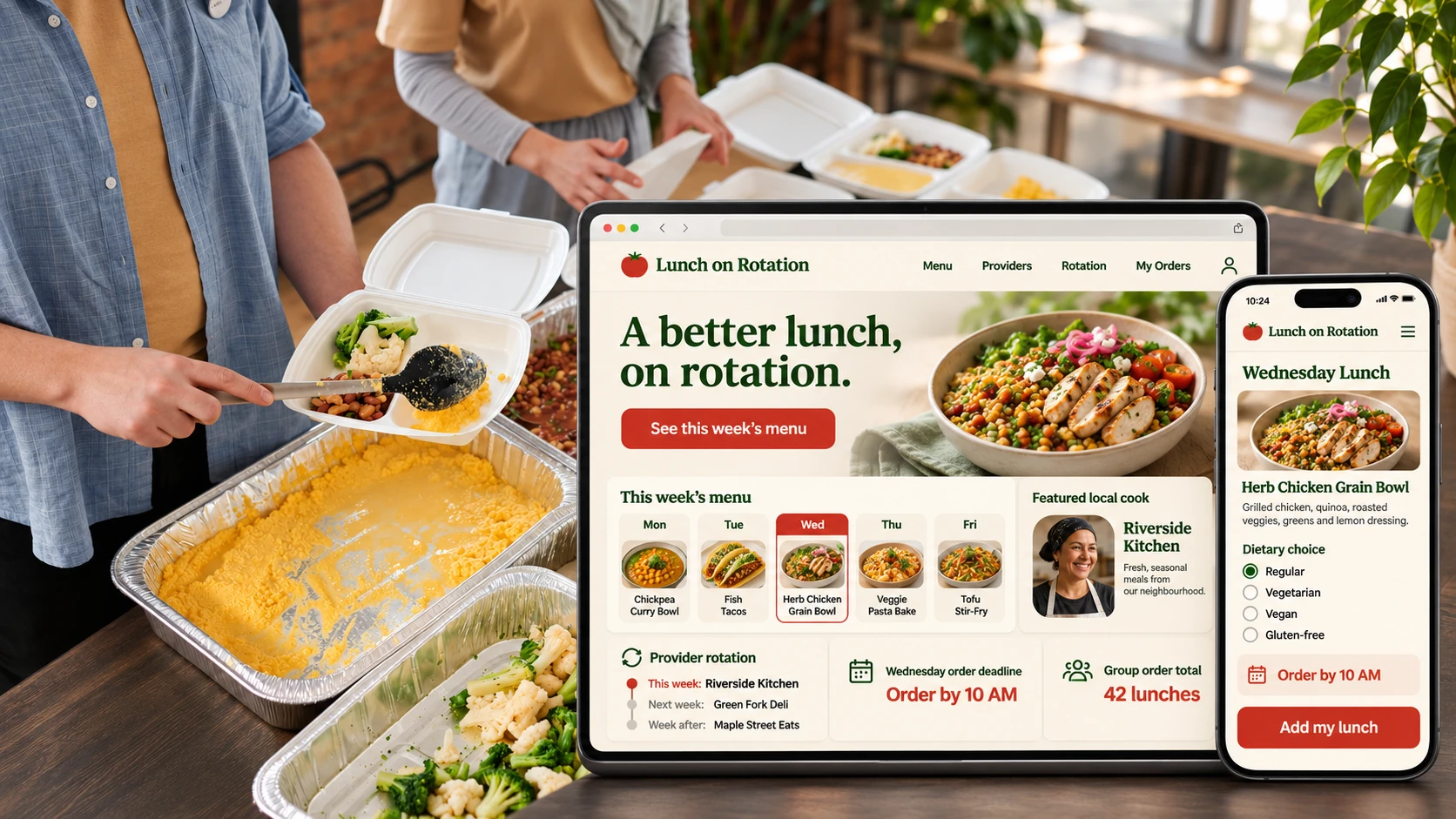
An office wants lunch variety without another scattered ordering chat. A nearby kitchen would like to serve the team but cannot plan from vague expressions of interest. Your network could connect a weekly choice with a dependable cutoff, confirmed quantities and a handover everyone understands.
A business you can
picture.
Start with a few workplaces on one manageable route. The operator agrees a provider rotation, publishes confirmed menus and coordinates order cut-offs, delivery points and feedback.
Who would be glad
you built it?
Workplace organisers
A manageable recurring lunch arrangement
Employees choosing lunch
Clear menus, deadlines and collection details
Independent kitchens
Confirmed orders that match their capacity
Where the money
could come from.
A workplace could pay a recurring coordination subscription while employees pay the kitchen’s stated meal price. That gives the first model a clear service buyer. The subscription covers menu scheduling, order administration and issue handling. If provider fees are added later, disclose them and consider how they affect the meal price and kitchen’s willingness to participate.
The part you could
make your own.
Your possible advantage is dependable variety without restarting the process each week. A common ordering routine could let different kitchens participate while employees know where to choose and when lunch will arrive.
An angle to test with the people you want to serve.Start with something
worth using.
Start with one workplace and a small kitchen rotation. Publish provider-confirmed menus, collect choices by a clear cutoff and send an accurate order summary. Coordinate one agreed delivery or collection point.
- Show the week's providers and ordering deadlines.
- Separate individual orders from employer-funded meals.
- Keep delivery and collection instructions clear.
Give the promise
something to stand on.
You need suitable food providers and a practical ordering rhythm. Confirm capacity, menu information, fulfilment responsibilities and the response when an order changes or a delivery cannot be completed.
Confirm provider capacity, food information and fulfilment responsibilities. The service needs a clear response when an order changes, arrives late or cannot be supplied.
Let a small beginning
teach you something.
Invite one workplace and a few capable kitchens to trial a short rotation. Track confirmations, handovers and changed orders, then ask employees and providers whether the routine is worth continuing at its real cost.
Can the workplace receive the confirmed meals through a repeatable routine that employees and kitchens both understand?
Look for these signs
- Order totals match provider confirmations
- Employees know collection and change rules
- Kitchens can plan within agreed capacity
A little more
clarity.
Can employees change an order after the cutoff?
Use a clear policy agreed with the kitchen. Some changes may be possible, but the service should not promise flexibility that leaves prepared food or costs unexplained.
Will every dietary requirement be supported?
Only offer what providers directly confirm they can supply. Keep ingredient and dietary questions explicit and avoid inferring suitability from a general menu category.
What should my first version focus on?
Start with the first test described here, then build around the part people actually use and would pay to keep.
Now picture it
with your name on it.
Your people. Your priorities. The version you keep thinking about. Answer a few questions and leave with a starting plan you can keep.
Free to explore. No account or email needed for your starting plan.