Food & hospitalityEstablished model
Food ordering & delivery

Let a customer’s favourite meal be easier to order again.

A restaurant’s regular customers already know what they love. Give them a direct place to see the menu, choose their meal and understand when it will be ready, with fewer messages between hunger and an order.

Make this fit me
You could also build this as a mobile app
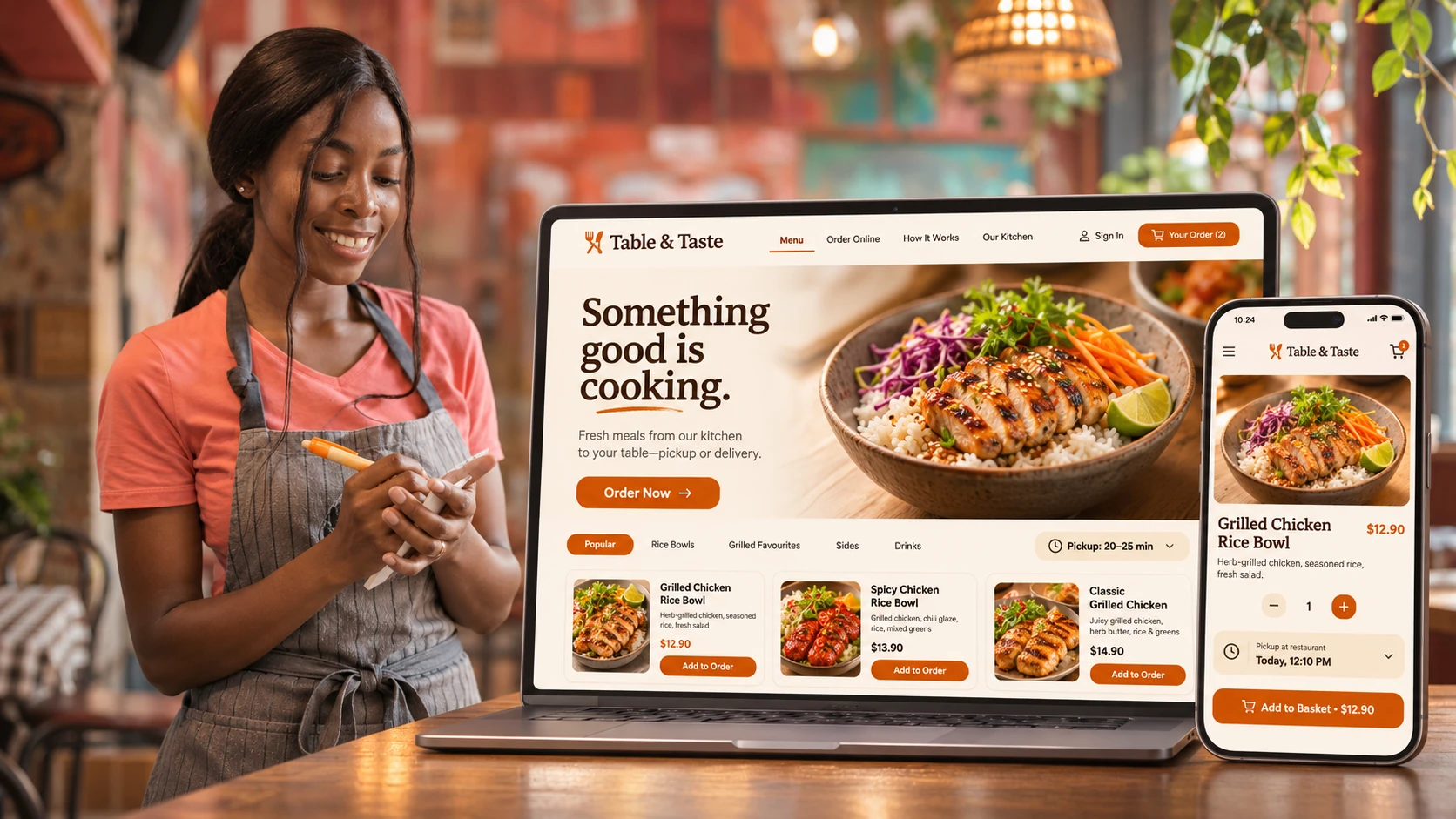
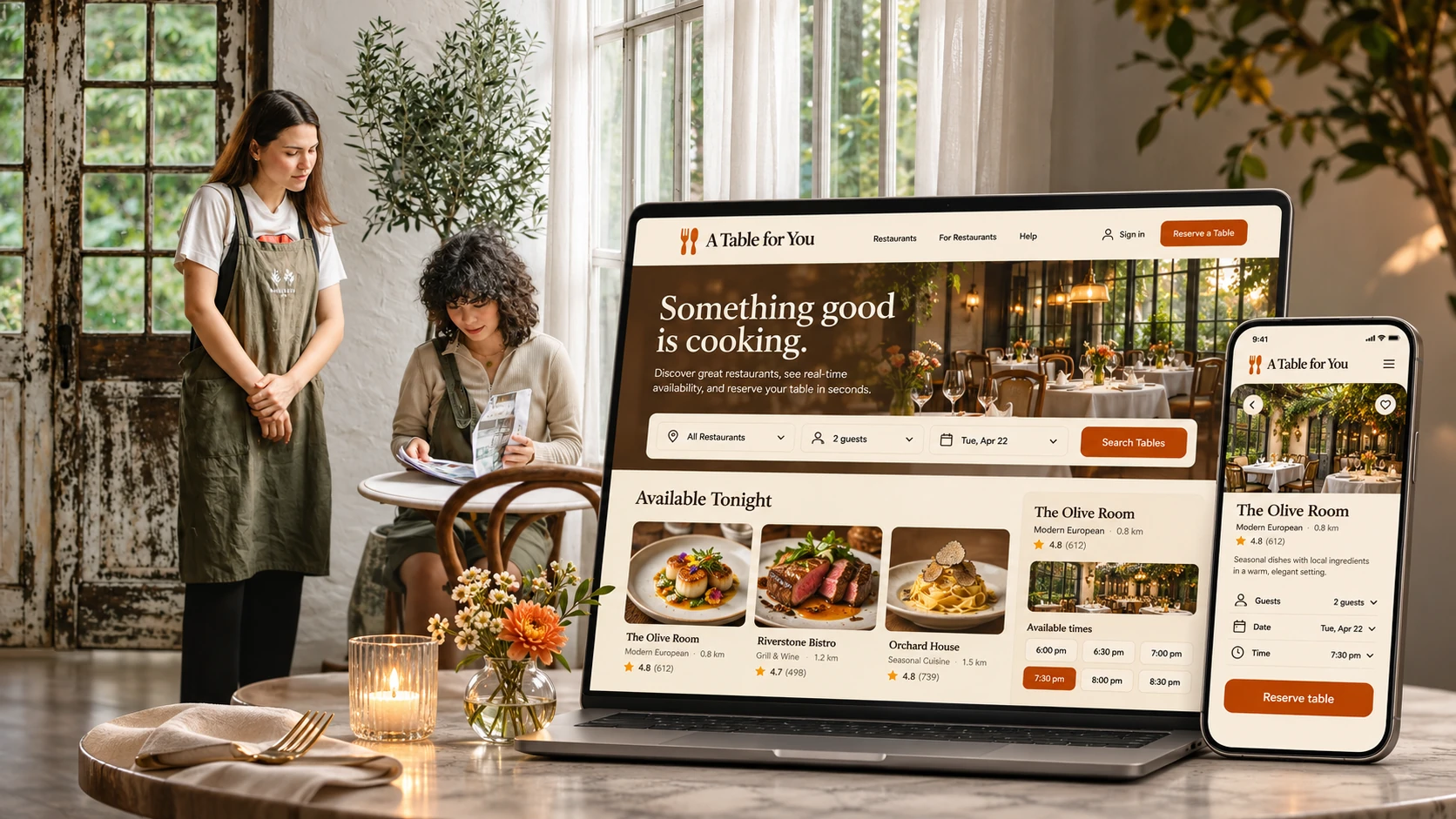
Food ordering & delivery concept: real human activity with a bespoke website and matching phone interface.Illustrative concept
IMAGINE THIS MOMENT

A customer knows exactly which meal they want, but ordering means asking for the menu, checking the price and waiting for a reply. Your direct-ordering service could bring those steps together, while the restaurant sees a clear order it can accept, prepare and hand over under realistic arrangements.

A business you can
picture.

Build an ordering business for a restaurant or sell ordering software to a focused restaurant group. Connect the public menu to the kitchen’s actual capacity and fulfilment process.

Who would be glad
you built it?

Regular diners

Reorder a favourite meal with clear choices.

Customers planning collection

Understand preparation and pickup arrangements.

Small workplace groups

Place a coordinated order with accurate details.

Where the money
could come from.

For a restaurant-owned service, customers pay for fulfilled food orders. Food, labour, packaging, payments and any delivery costs come from that revenue. If you later sell the software to restaurants, use a distinct subscription or disclosed order fee so the platform's income is not confused with the restaurants' sales.

The part you could
make your own.

A dependable repeat-order experience could be the difference. Saved favourites, honest menu availability and clear preparation updates may give regulars a reason to use your direct channel. Test whether convenience holds up during an ordinary busy service.

An angle to test with the people you want to serve.

Start with something
worth using.

Start with one restaurant, a focused menu and collection or a limited delivery area. Include item choices, availability, order confirmation and meaningful status updates. Make the kitchen handover work before expanding to many restaurants or complex promotions.

  • Current menus and item choices
  • Collection or delivery time slots
  • Order confirmation and kitchen updates

Give the promise
something to stand on.

WHAT YOU BRING

You need a restaurant operation or close restaurant partners that can maintain the menu and fulfil orders. Kitchen capacity, packaging, payment confirmation and delivery responsibility must connect to the website's promises.

Keep availability, allergy information and preparation times accurate. The kitchen needs a way to pause orders or contact a customer when something changes. Confirmation should reflect real acceptance of the order.

Let a small beginning
teach you something.

Invite regular customers to try a few direct orders during manageable service periods. Watch the journey from menu choice through kitchen acceptance and handover, then ask where customers still needed to call or repeat details.

THE QUESTION TO TEST

Can the customer place a clear order that the kitchen can fulfil within the arrangements shown before payment?

Look for these signs

  • Menus reflect current kitchen availability
  • Orders reach the responsible staff
  • Customers understand collection or delivery status
WHEN THE FIRST VERSION HAS TAUGHT YOU MORE
Where you could take it next

Add saved favourites, loyalty benefits and recurring office orders once the basic kitchen handover is reliable.

A little more
clarity.

Should the first version serve many restaurants?

One reliable restaurant can reveal the core workflow. A multi-restaurant marketplace adds onboarding, menus, payment arrangements and support complexity, so expand when the operating process is understood rather than simply duplicating listings.

Will direct orders remove delivery costs?

No. Collection and delivery each have real operating needs. Show relevant charges clearly and agree who handles transport, failed handovers and complaints; a direct website changes the ordering route, not the physical work.

SOMETHING TO LEARN FROM

Toast is a reference for restaurant ordering software.

WHAT COULD GO INSIDE

A few additions
to explore.

Online shop and checkoutGive the customer who already likes your product a clear way to choose it, pay and know what happens next.Stock visibility and restock alertsHelp your team say what is available with more confidence, while keeping reservations and physical stock checks in view.Automatic reminders and updatesLet a timely update carry the routine reassurance, so your team can give more attention to the questions that need a person.
MAKE ROOM FOR YOUR VERSION

Now picture it
with your name on it.

Your people. Your priorities. The version you keep thinking about. Answer a few questions and leave with a starting plan you can keep.

Free to explore. No account or email needed for your starting plan.
PICTURE THE MOBILE APPFood ordering app

Be the app they open when they know what they want.

That favourite meal should not require another long exchange of messages. You could build a direct ordering app for a restaurant or a focused group of kitchens, letting regular customers choose their food, understand the wait and follow the order from the same familiar place.

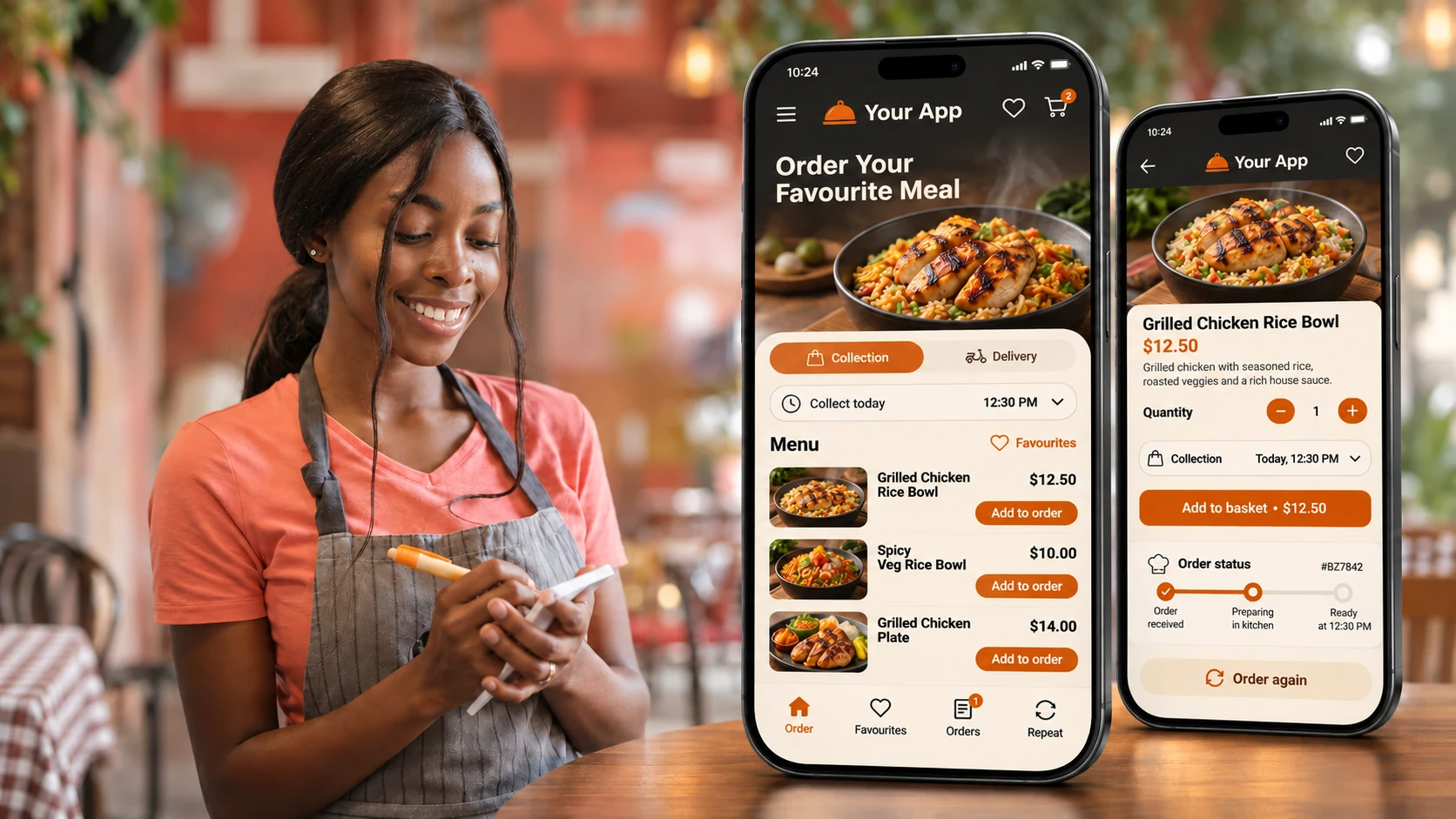
A joyful waitress writing down orders in a bustling cafe setting. Two phone screens preview the food ordering app, with no desktop view.App concept
IMAGINE THIS MOMENT

A regular customer knows what they want, but ordering still means asking for today's menu and waiting for a reply. Meanwhile, the kitchen is answering messages between meals. Your app could carry the available choices, preparation expectations and order status in one place, keeping the restaurant's real capacity at the centre.

One useful moment.
A reason to open it.

A diner chooses an available meal, confirms the required options and selects collection or delivery. The kitchen accepts the order and provides an understandable next update.

Who would be glad
you built it?

Regular diners

Repeat a familiar meal with the current options.

Kitchen teams

Receive complete orders they can fulfil.

Restaurant owners

Keep a direct relationship with returning customers.

A place in their life.
At the right moment.

Why it belongs on a phone

Food orders often happen while someone is busy or on the move. Saved preferences, timely order updates and an optional delivery location help the app fit that moment with fewer steps.

A reason to come back

Regular customers return when they want another meal. Accurate availability and a dependable fulfilment experience matter more than sending frequent promotional notifications to everyone.

Location & mapsTimely remindersPersonal routines

Where the money
could come from.

For a restaurant owner, revenue comes from fulfilled food orders. Customers pay for the meal and any disclosed delivery service. Ingredients, packaging, kitchen labour, payment processing and delivery affect the margin. A separate software business could instead charge kitchens a defined subscription, but the first model should be chosen clearly.

The part you could
make your own.

Try a focused dining occasion, such as repeat office lunches, with dependable menu choices and honest timing. Test whether the complete experience gives diners a reason to choose the direct app again.

An angle to test with the people you want to serve.

Start with something
worth using.

Begin with one kitchen, a manageable menu and collection or clearly bounded delivery. Include item choices, kitchen acceptance and status updates. Make unavailable items and realistic preparation times easy to change.

  • Available menu and item choices
  • Collection or delivery time slots
  • Order status and kitchen updates
  • Favourite meals and repeat ordering

Give the promise
something to stand on.

WHAT YOU BRING

You need a restaurant or kitchen partner that can maintain availability and honour agreed order slots. Decide who handles changes, refunds and customer questions before inviting more diners.

Keep availability, allergy information and preparation times accurate. The kitchen needs a way to pause orders or contact a customer when something changes. Confirmation should reflect real acceptance of the order.

Let a small beginning
teach you something.

Invite willing regular customers to place selected orders through the pilot. Follow each order into the kitchen and through collection, asking where staff still needed to clarify the request.

THE QUESTION TO TEST

Can a regular customer place a complete order that the kitchen understands and fulfils within the expectation shown?

Look for these signs

  • Orders contain the kitchen's required choices.
  • Unavailable meals stop appearing as orderable.
  • Diners understand collection or delivery updates.
WHEN THE FIRST VERSION HAS TAUGHT YOU MORE
Where you could take it next

Add saved favourites, loyalty benefits and recurring office orders once the basic kitchen handover is reliable.

A little more
clarity.

Should the app serve many restaurants immediately?

One dependable kitchen is a useful starting point. Multiple restaurants introduce separate menus, preparation schedules, support responsibilities and potentially split deliveries that need deliberate handling.

Can it replace delivery marketplaces?

It can offer a direct route for your restaurant's customers. Whether they choose it depends on the experience, fulfilment and offer; an app alone does not create an audience.

SOMETHING TO LEARN FROM

Toast is a reference for restaurant ordering software.

WHAT COULD GO INSIDE

A few additions
to explore.

Online shop and checkoutGive the customer who already likes your product a clear way to choose it, pay and know what happens next.Stock visibility and restock alertsHelp your team say what is available with more confidence, while keeping reservations and physical stock checks in view.Automatic reminders and updatesLet a timely update carry the routine reassurance, so your team can give more attention to the questions that need a person.
MAKE ROOM FOR YOUR VERSION

Now picture it
with your name on it.

Your people. Your priorities. The version you keep thinking about. Answer a few questions and leave with a starting plan you can keep.

Free to explore. No account or email needed for your starting plan.
KEEP THE POSSIBILITIES OPEN

Something else
might speak to you.