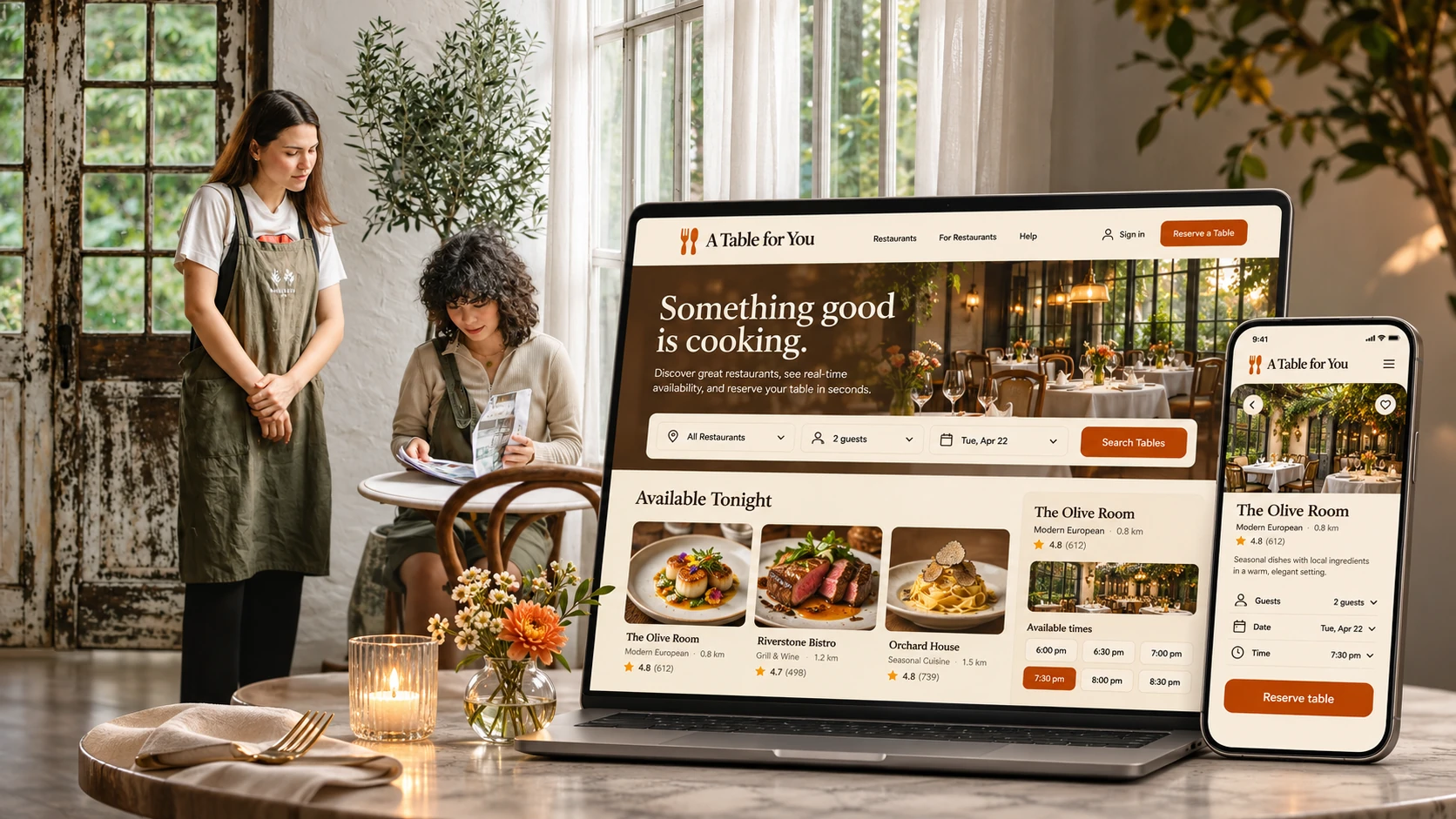
A group chooses a restaurant for a celebration but does not know whether the table is confirmed or a special request was received. Your reservation network could connect the guest's expectations to the venue's actual capacity, giving both sides a clear record before the evening begins.
A business you can
picture.
Create a reservation network for a defined restaurant market. Show practical venue information and available times, then keep confirmations and changes connected to the restaurant team.
Who would be glad
you built it?
Diners arranging a meal
Find suitable times and booking conditions.
Group organisers
Communicate party size and relevant requests.
Restaurant teams
Manage accepted reservations and changes.
Where the money
could come from.
Restaurants could pay a recurring reservation-tools subscription, with the scope and any usage charges clear. The fee buys organisation and booking support, not ownership of the restaurant's dining revenue. Onboarding, availability reliability and customer assistance cost time; avoid promising a guaranteed increase in occupied tables.
The part you could
make your own.
Clear expectations for a particular dining occasion could distinguish your network. Group details, accurate availability and understood requests may matter more than a long restaurant list. Test the experience through actual seating, not booking confirmation alone.
An angle to test with the people you want to serve.Start with something
worth using.
Start with a small venue group, available times, party sizes and clear confirmations. Record requests separately from guaranteed arrangements. Let staff block capacity and manage changes before adding loyalty schemes or complex seating optimisation.
- Restaurant profiles and table availability
- Party-size booking and special requests
- Confirmations, reminders and cancellations
Give the promise
something to stand on.
You need restaurant partners who maintain capacity and use the reservation workflow consistently. Table timing, walk-ins, late arrivals and cancellations require practical rules the staff can follow during service.
Capacity, no-shows and late changes require coordination with the venue. Any deposit policy must be visible before booking. A special request remains a request until the restaurant confirms it.
Let a small beginning
teach you something.
Pilot during a manageable service period with willing restaurants. Follow bookings from selection to seating, including a changed party size, and ask staff where the online record differs from what happens on the floor.
Can the venue honour the confirmed reservation while guests understand which requests have actually been accepted?
Look for these signs
- Capacity reflects real table commitments
- Changes reach restaurant staff
- Guests understand confirmation and arrival terms
A little more
clarity.
Is a special request automatically guaranteed?
No. Show whether the venue has acknowledged or confirmed it. A request for a particular table, access arrangement or menu option should not silently become a promise the restaurant has not accepted.
Should every booking require a deposit?
That is a venue decision within a clear arrangement. If deposits apply, show the amount, cancellation conditions and refund process before confirmation, and keep the record connected to the reservation.
OpenTable is a reference for restaurant reservations.
Now picture it
with your name on it.
Your people. Your priorities. The version you keep thinking about. Answer a few questions and leave with a starting plan you can keep.
Free to explore. No account or email needed for your starting plan.