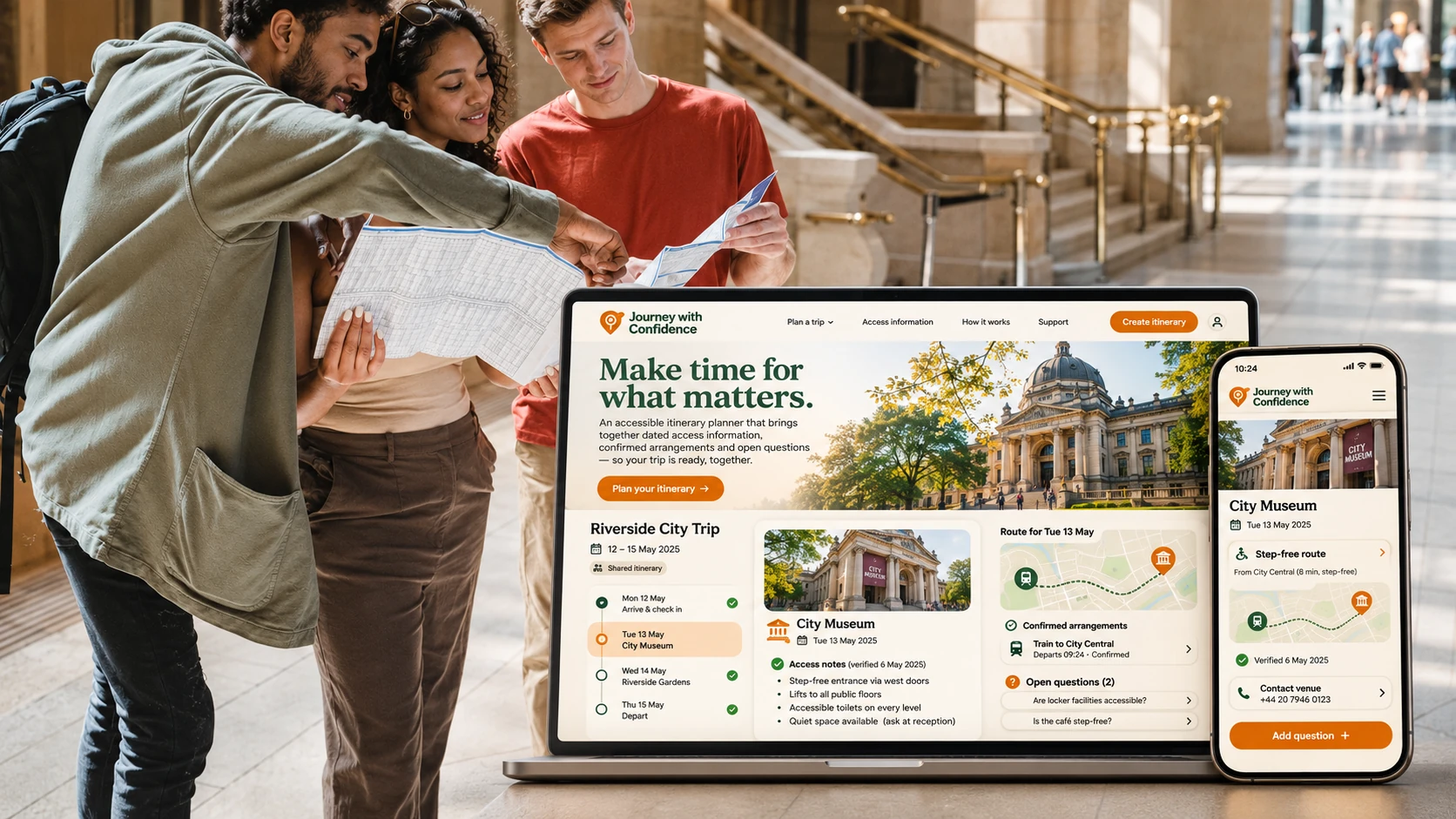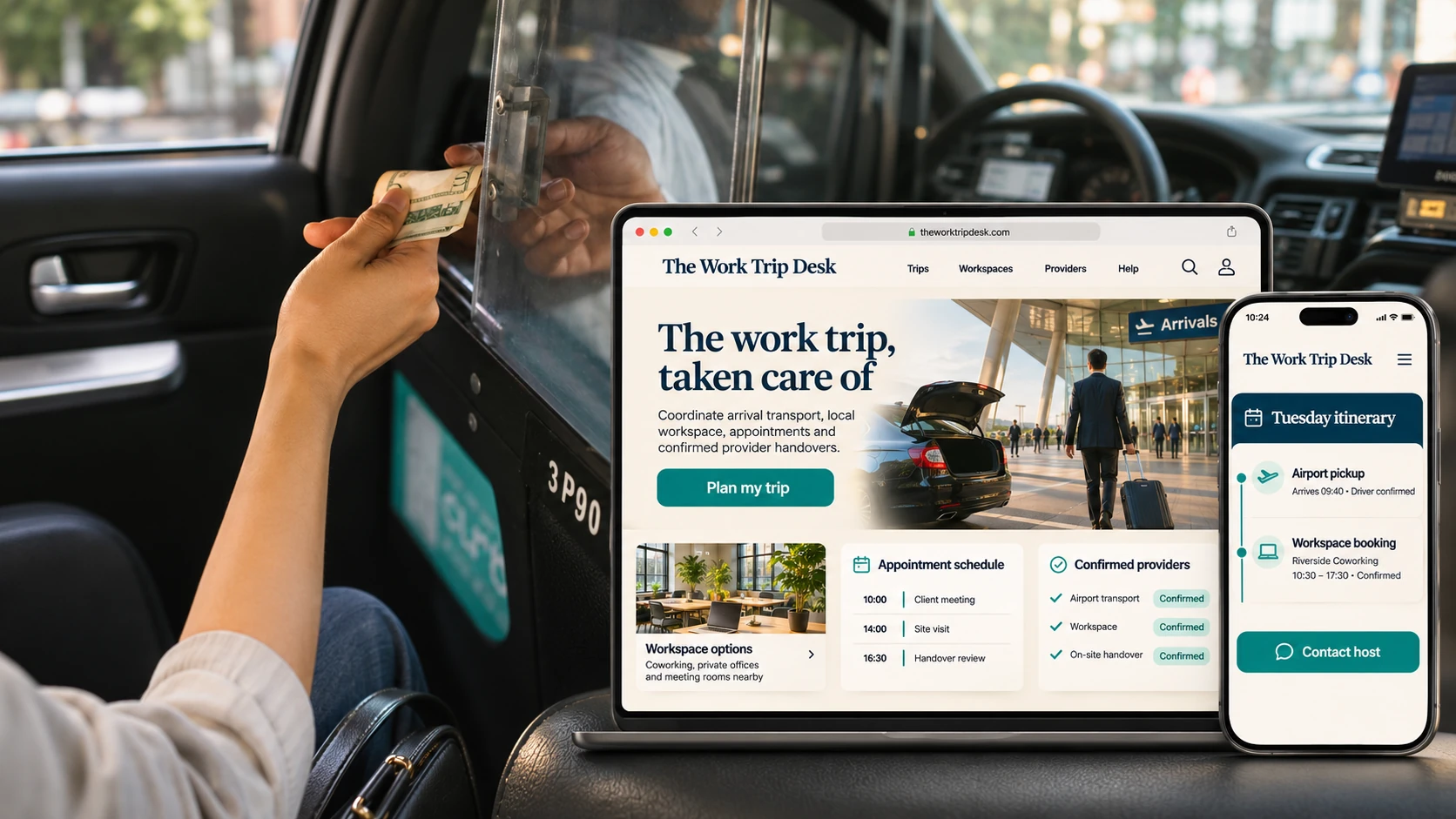
A business traveller has a flight and hotel, but the meeting entrance, quiet workspace and local contact are still uncertain. Those details can shape the whole visit. Your service could help an employer organise the working day around the journey, with each arrangement clearly confirmed before the traveller depends on it.
A business you can
picture.
Focus on one destination or business-travel pattern. The employer provides an approved brief, the coordinator confirms suitable providers and the traveller receives a concise working itinerary.
Who would be glad
you built it?
Employers sending staff on work trips
A practical coordination package beyond transport
Business travellers
Clear information for the working day after arrival
Office and travel coordinators
A shared record of confirmed local arrangements
Where the money
could come from.
An employer could pay a fixed trip-coordination fee for defined preparation and support. The fee covers provider liaison, information checks and the agreed contact window. Service purchases and any commissions should be disclosed separately. Do not offer unlimited around-the-clock help unless the staffing and price support it, or imply that a requested facility is confirmed before the provider agrees.
The part you could
make your own.
Your proposed difference is attention to the work after arrival. A properly confirmed quiet room or usable meeting access instruction could matter more to the traveller than another list of destination attractions.
An angle to test with the people you want to serve.Start with something
worth using.
Choose one destination or trip pattern. Gather the traveller’s practical requirements, confirm meeting access and any workspace or transfer arrangements, then produce a concise itinerary that distinguishes suggestions from bookings.
- Collect the practical requirements of the work visit.
- Confirm workspace, appointments and local transfers.
- Keep responsible contacts and changes together.
Give the promise
something to stand on.
You need dependable local providers and an understanding of business-travel needs. Protect employer and traveller information, confirm what providers have agreed and state support hours and escalation routes realistically.
Protect travel and employer information, confirm each provider's commitment and set support hours clearly. Any specialist travel arrangements need appropriate providers and agreed terms.
Let a small beginning
teach you something.
Trial the desk with an employer that sends staff on a repeated route. Follow a few consenting travellers’ practical needs, then review which arrangements helped the working day and which information remained uncertain.
Can the traveller begin the planned working day using confirmed arrangements and a clear contact for practical changes?
Look for these signs
- Provider commitments are confirmed and recorded
- Travellers can distinguish bookings from suggestions
- Support availability is understood before travel
A little more
clarity.
Does the desk replace the employer’s travel provider?
It can complement existing bookings by coordinating practical details. State exactly which arrangements your service handles and which remain with the employer or another provider.
Can we promise a particular internet connection will suit every task?
Confirm the actual facility and requirements with the provider. Avoid turning a general Wi-Fi description into a guarantee for specialised work without suitable evidence and agreement.
What should my first version focus on?
Start with the first test described here, then build around the part people actually use and would pay to keep.
Now picture it
with your name on it.
Your people. Your priorities. The version you keep thinking about. Answer a few questions and leave with a starting plan you can keep.
Free to explore. No account or email needed for your starting plan.