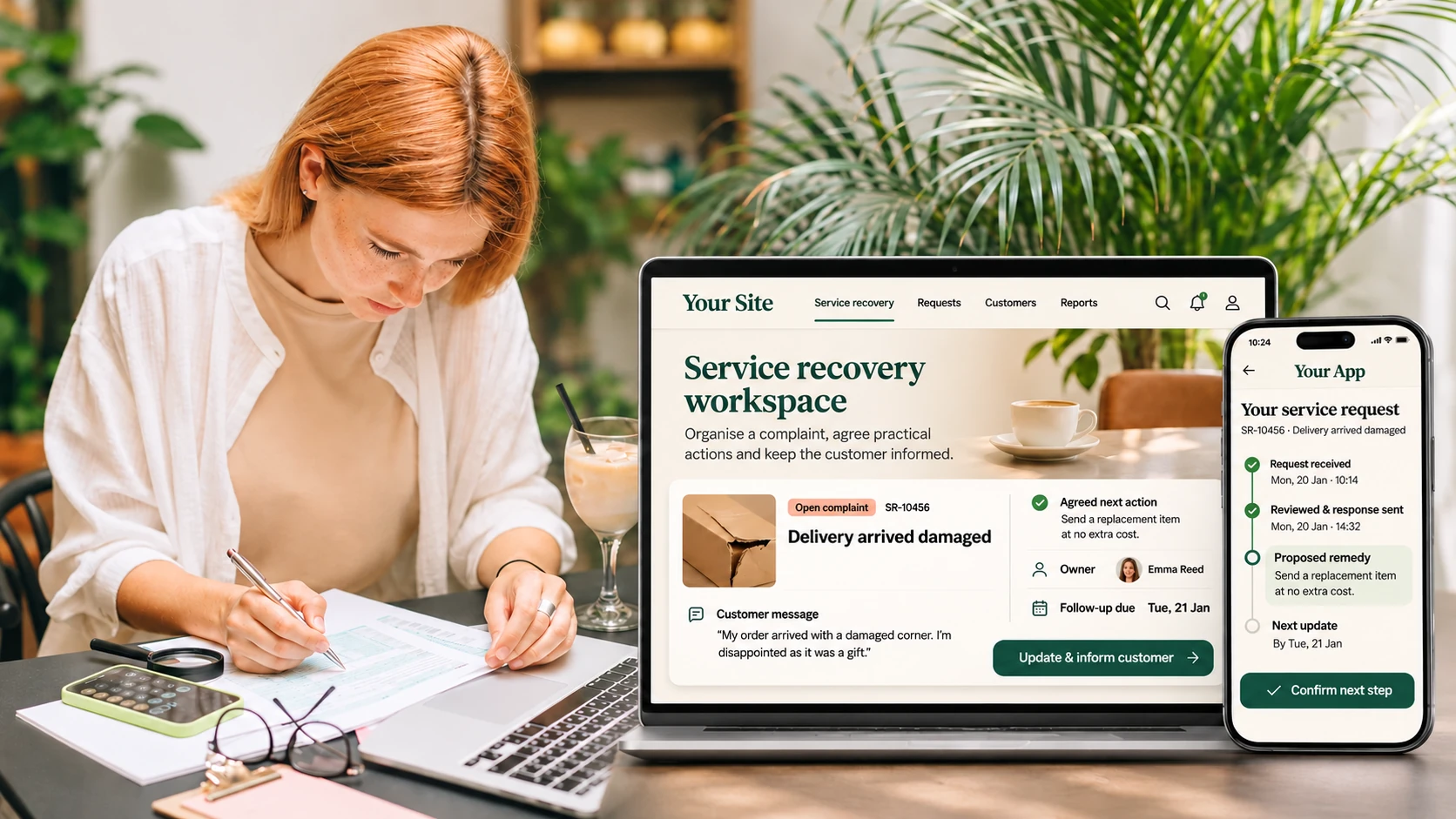
A customer receives a polite apology, then spends the next week asking whether the promised fix is happening. The business has not forgotten on purpose; the action moved between people. Your service could keep the account, agreed response and next update together, helping a team follow through after the first reply.
A business you can
picture.
Start with one service industry. The workspace collects the customer's account, relevant records and the business response, then tracks the actions both sides have acknowledged.
Who would be glad
you built it?
Service businesses handling complaints
A clear owner and action record for each case
Customers awaiting a response
Understandable next steps and updates
Team supervisors
Visibility of unresolved promises and escalation needs
Where the money
could come from.
A business could pay a team subscription for active case coordination, with setup or staff training separately priced. The fee supports records, reminders and support. The value to test is reliable follow-through, not a guarantee that every customer will be satisfied or that a case record resolves legal liability.
The part you could
make your own.
Your possible edge is making the promised action more visible than the first apology. A customer-facing progress note, approved by the case owner, could help people understand what is happening without exposing internal personal details.
An angle to test with the people you want to serve.Start with something
worth using.
Begin with one service team. Record the customer’s account, assign an owner and agree a next action and update time. Track promises and escalation without automatically deciding fault or compensation.
- Give each case a responsible contact.
- Record agreed actions and review dates.
- Keep the customer informed of meaningful changes.
Give the promise
something to stand on.
You need a practical service-recovery process and careful treatment of personal records. Preserve differing accounts, define who can authorise remedies and keep independent dispute routes distinct from your internal coordination.
Protect personal records, preserve differing accounts and make escalation routes clear. The platform coordinates a response and does not decide legal liability or replace independent dispute processes.
Let a small beginning
teach you something.
Trial the workspace with a willing service team on a limited set of ordinary cases. Review whether each promise has an owner and whether customers receive updates that match actual progress rather than automatic reassurance.
Does the customer receive the agreed action or an honest explanation of the next step without repeatedly chasing the team?
Look for these signs
- Cases have an accountable owner
- Updates match actual action status
- Unresolved concerns reach the agreed escalation route
A little more
clarity.
Can the system decide who is at fault?
No. It can preserve accounts and evidence for authorised review. Responsibility, compensation and legal questions need the appropriate decision process rather than an automatic case label.
Should every complaint be visible to the customer?
Share useful approved status information, not all internal records. Protect personal details and distinguish the customer’s account, the business’s response and any findings clearly.
What should my first version focus on?
Start with the first test described here, then build around the part people actually use and would pay to keep.
Now picture it
with your name on it.
Your people. Your priorities. The version you keep thinking about. Answer a few questions and leave with a starting plan you can keep.
Free to explore. No account or email needed for your starting plan.