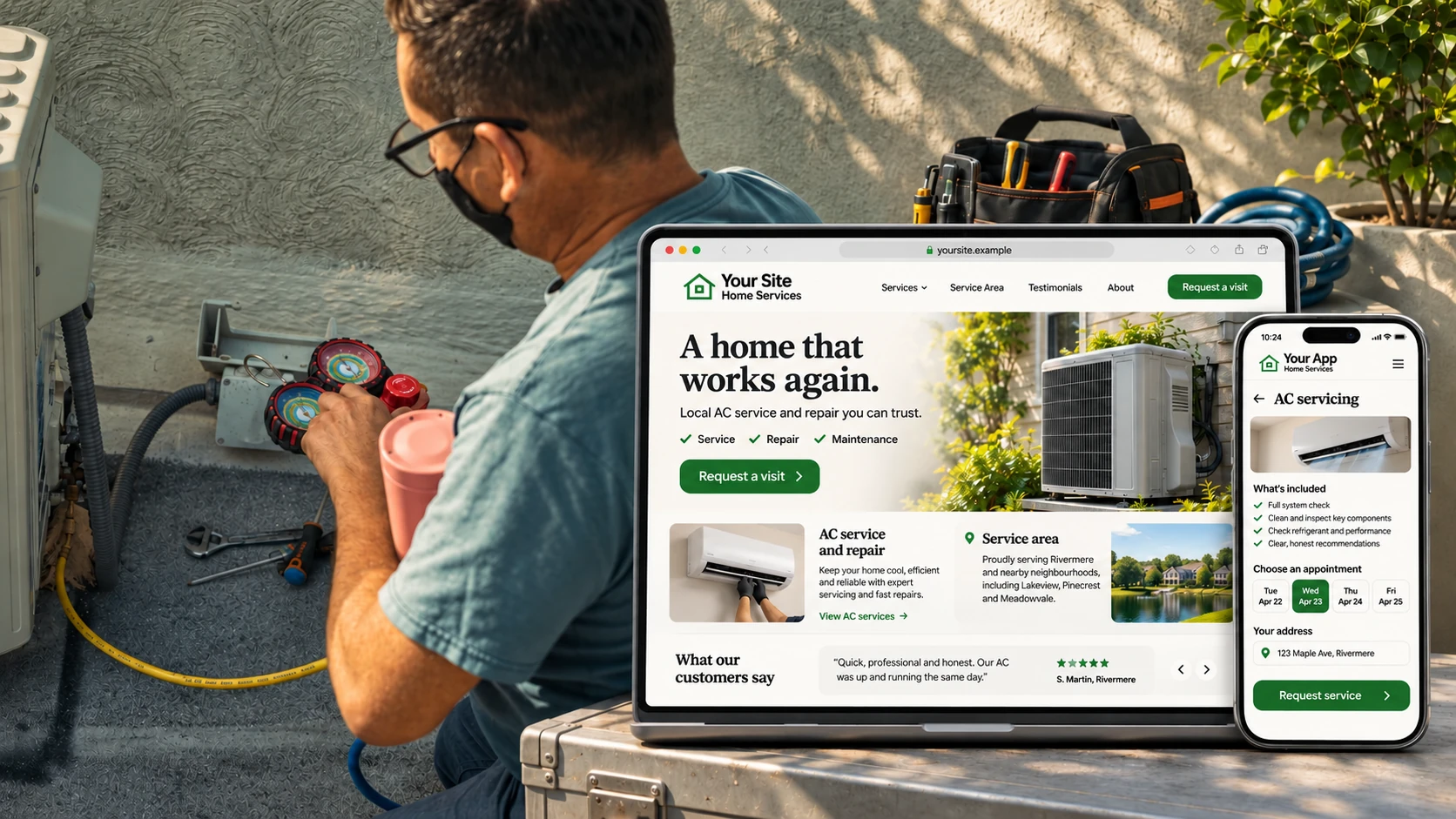
A homeowner hears your business name from a neighbour and searches for you before making contact. They want to see the service, the area you cover and examples of real work. Your website could carry that first conversation clearly, so a useful referral does not end with uncertainty about how to reach you.
A business you can
picture.
Build a service business around a website that explains the offer, shows genuine work and guides a visitor toward a useful enquiry. Start with the services you can reliably deliver.
Who would be glad
you built it?
Local customers needing a service
Check the offer and service area.
People following a recommendation
Recognise the business and see genuine work.
Customers comparing providers
Understand fit before requesting a conversation.
Where the money
could come from.
Your income comes from the professional or trade service customers hire you to deliver. The website supports discovery and suitable enquiries rather than creating a separate payment stream by itself. Include job costs, administration and promotion when assessing value, and track real qualified enquiries before deciding which online additions to fund next.
The part you could
make your own.
Specificity could make your business easier to choose: clear service boundaries, genuine examples and a helpful explanation of what happens after contact. Test whether customers recognise their situation quickly instead of adding broad claims about doing everything.
An angle to test with the people you want to serve.Start with something
worth using.
Start with your main services, service area, genuine work examples, practical contact details and a focused enquiry form. Make the next step clear on a phone before adding online payment or complex customer accounts.
- Clear services and areas served
- Real work examples and customer feedback
- Structured enquiries and contact choices
Give the promise
something to stand on.
You bring the service, credible examples and a response process you can maintain. A good website helps people understand that work, but enquiries still need timely attention and the actual job must meet the agreed expectations.
Keep availability, contact details and work examples current. Use client material with permission. Assign someone to respond to enquiries so a good first impression leads to an actual conversation.
Let a small beginning
teach you something.
Ask recent customers what they wanted to know before hiring you. Use those questions in the first pages, then invite referral contacts to review the site and track whether enquiries contain the information needed to respond usefully.
Can a new visitor recognise that you serve their need and contact you with a clear understanding of the next step?
Look for these signs
- Enquiries fit the stated service area
- Visitors understand the core offer
- Contact requests receive a useful response
A little more
clarity.
Do I need an app as well as a website?
Only if customers have a recurring task that benefits from one. A clear, mobile-friendly website may be enough for discovery and enquiries; establish that journey before adding a separate app to maintain.
Will a website guarantee that I appear first in search?
No. The site can make your business easier to understand and provide a useful destination for referrals and search visitors. Visibility needs ongoing work, and rankings or enquiry volume should not be promised as automatic outcomes.
Squarespace is a related reference for business website publishing.
Now picture it
with your name on it.
Your people. Your priorities. The version you keep thinking about. Answer a few questions and leave with a starting plan you can keep.
Free to explore. No account or email needed for your starting plan.