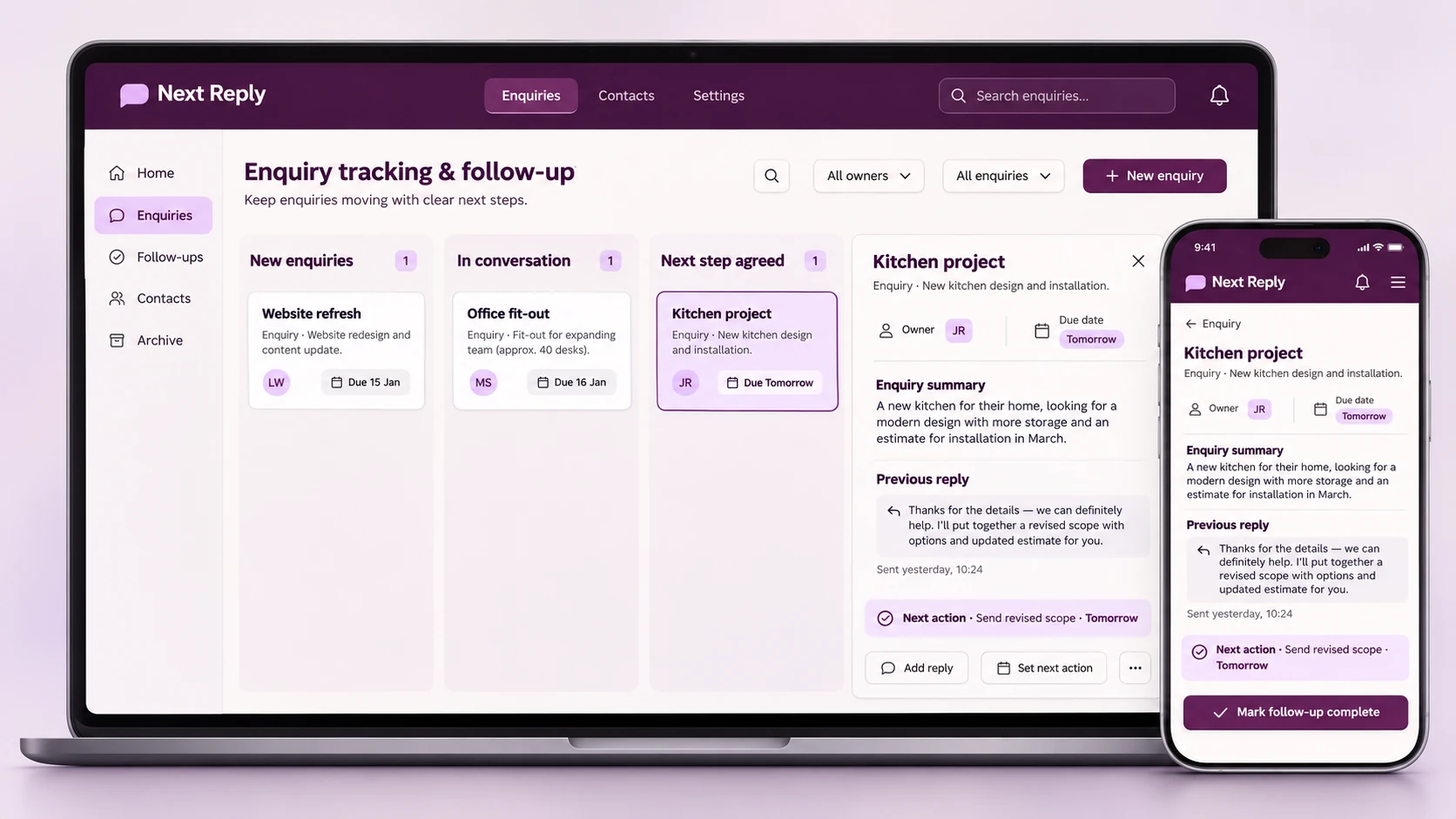
A potential client sends a thoughtful request while the usual responder is away. Someone replies, but nobody records the promised follow-up. Enquiry tracking could give the conversation an owner and a next action, so interest does not disappear simply because the team cannot see what another person agreed.
Requests and promises sit in individual inboxes, leaving colleagues unsure who is responding or what the prospective customer is waiting for.
A shared record names the owner, preserves the latest context and shows the next agreed action with its due date.
Where it could
make a difference.
Service teams
Keep prospective projects moving between staff.
Suppliers
Follow up quotations with useful context.
Small sales teams
See which conversations need attention.
Useful on: Business website, Sales portal, Service website.
What this could mean
for your business.
Tracking can support sales by helping the team respond consistently and remember commitments. It does not make every enquiry suitable or ready to buy. Review completed next actions, response quality and reasons conversations close, while including the effort needed to keep records current.
Start with something
worth using.
Begin with a shared record, assigned owner, status and due date. Keep the latest promise visible. Add automated follow-up only after the team is maintaining accurate records and reviewing exceptions.
- A shared enquiry record
- An assigned owner
- A next action and due date
Give the promise
something to stand on.
You need an agreed sales process and people who own the records. Decide what counts as a useful next action and respect the contact preferences the person has actually given.
Agree who owns an enquiry and what each stage means. Keep access appropriate and avoid sending automatic follow-ups after someone has asked you to stop.
- An agreed sales process
- Responsible team members
- Current contact and preference records
How it fits what you already have
Check forms, inboxes and existing customer records. Define duplicate handling, access and contact preferences, and decide which system owns the enquiry so staff do not maintain conflicting versions of the same conversation.
Let a small beginning
teach you something.
Choose a small set of current enquiries with your team. Review whether each has an owner and meaningful next step, then observe what happens when responsibility changes or someone is absent.
Can another authorised colleague understand what was promised and take the next appropriate action without restarting the conversation?
Look for these signs
- Enquiries have an accountable owner.
- Promised follow-ups remain visible.
- Closed or declined enquiries stop unnecessary chasing.
A little more
clarity.
Should every enquiry receive the same sequence?
No. Different conversations need different responses. Start with reminders for your team and add customer messages only where the timing and content fit the person's request.
Does a status label mean the sale is likely?
A status records your process, not a prediction. Use clear meanings such as awaiting information or quote sent, and keep assumptions about future revenue separate.
Could this work with my existing website?
We would check how your current website is built, what it already does and which services need to connect. That helps us choose a suitable addition and avoid paying twice for something you already have.
What would this change
in your business?
Your customers. Your working day. The part you would love to make easier. Answer a few questions and leave with a starting plan you can keep.
Free to explore. No account or email needed for your starting plan.