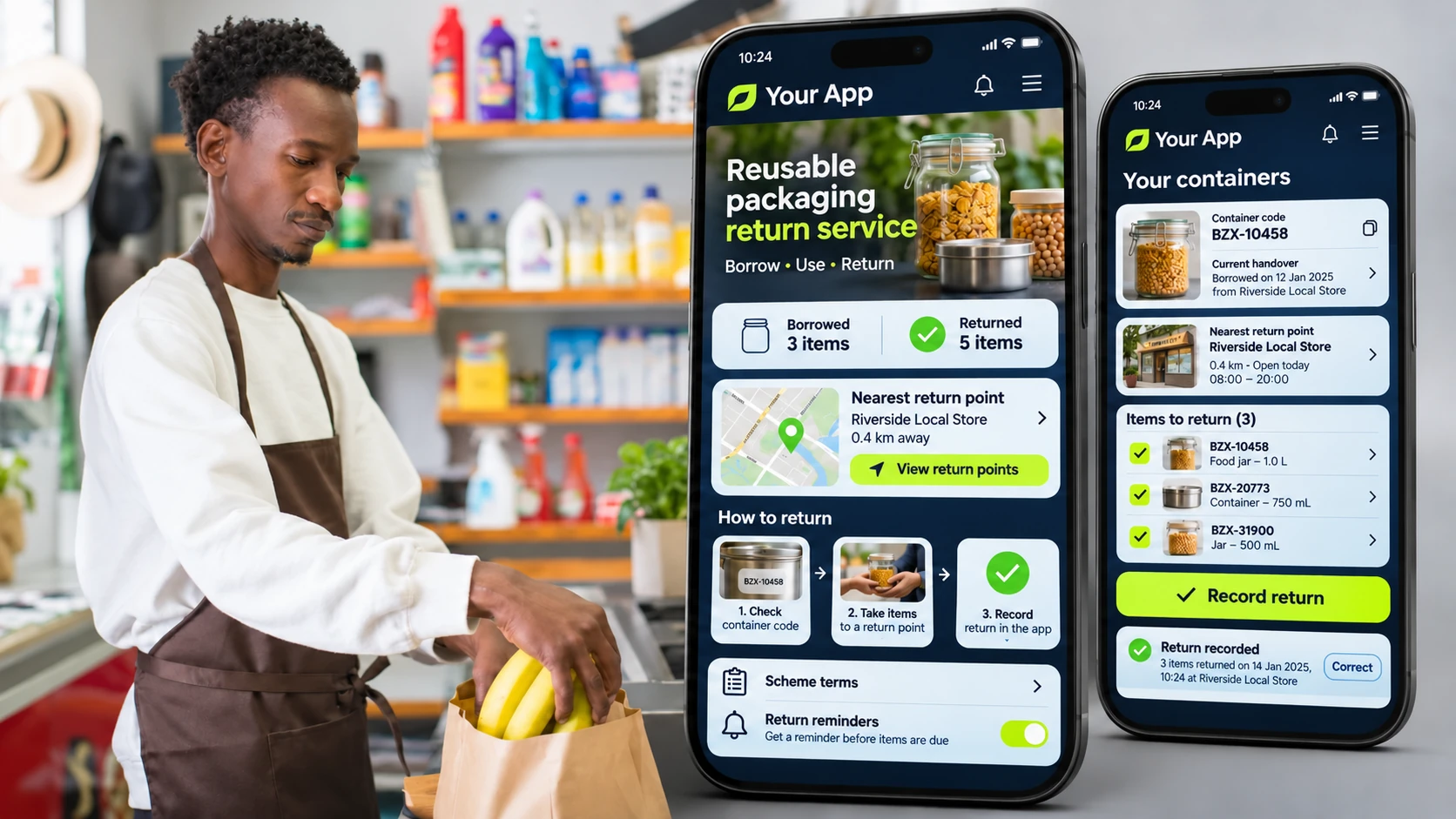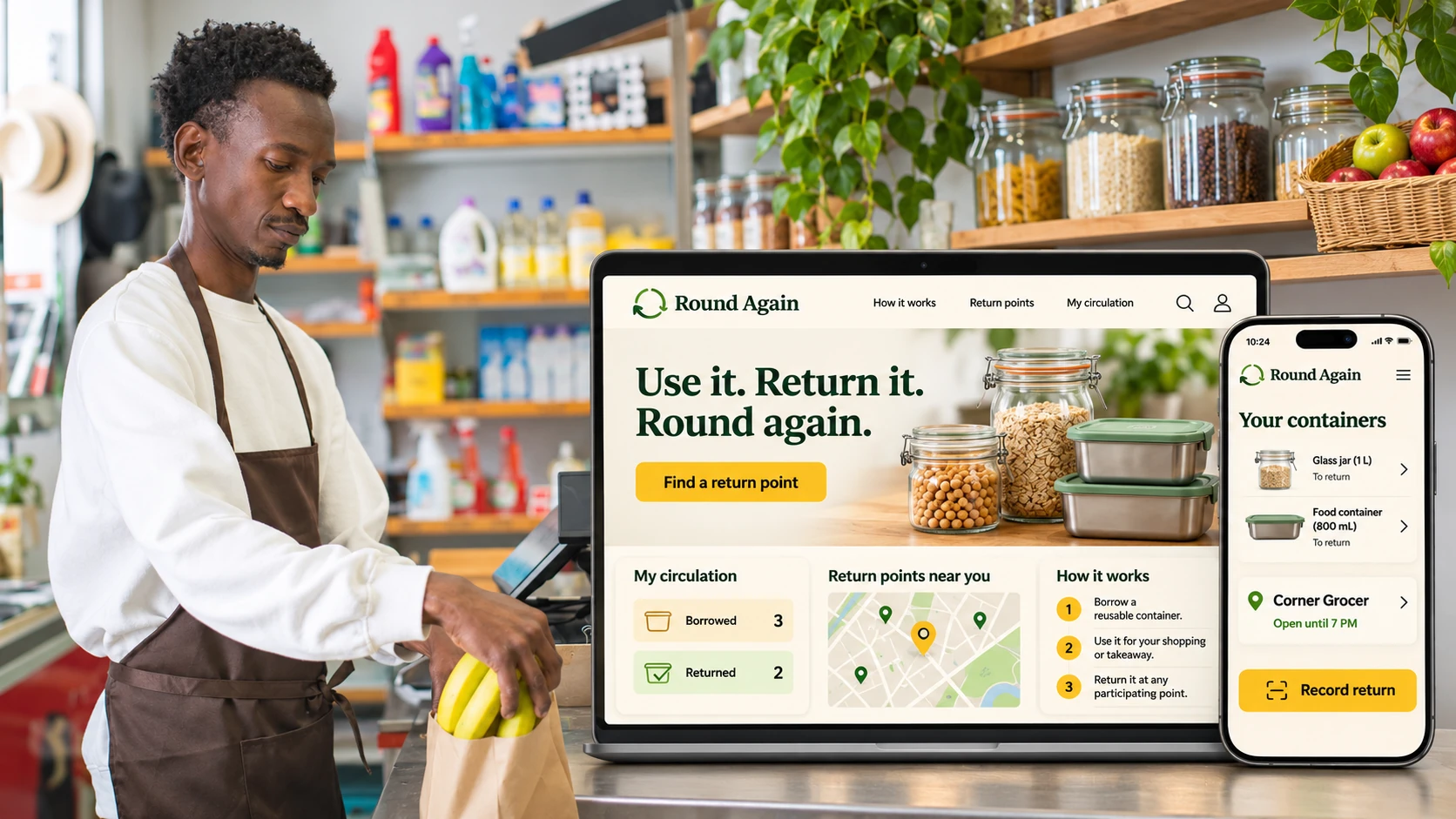
A customer wants to return a container but cannot remember which shop accepts it or whether the lid matters. A seller has a pile waiting for collection. Your service could build the routine between those moments, making returns understandable for customers and the next preparation step manageable for participating businesses.
A business you can
picture.
Start with one packaging type and a small group of businesses. The platform records issue and return, explains any deposit arrangement and coordinates collection from agreed return points.
Who would be glad
you built it?
Food or retail businesses using reusable packaging
A coordinated return and preparation process
Customers holding empty containers
Clear return locations and conditions
Collection and washing partners
Traceable quantities and scheduled handovers
Where the money
could come from.
Participating businesses could pay a circulation service fee per agreed period or volume handled. The fee must cover the coordination actually supplied, with washing, transport and container supply priced explicitly if included. Deposits should be tracked separately and reconciled to real transactions; their temporary collection is not a substitute for a viable service margin.
The part you could
make your own.
Your proposed difference is a common return routine across a small seller group. Customers would learn one process while businesses share a visible record, a practical hypothesis to test before claiming environmental benefits.
An angle to test with the people you want to serve.Start with something
worth using.
Choose one container type and a small group of nearby sellers. Publish return points, record handovers and reconcile counts. Establish appropriate cleaning and inspection arrangements before widening the network.
- Show nearby participating return points.
- Record container issue, return and condition.
- Keep cleaning and replacement responsibilities visible.
Give the promise
something to stand on.
You need a workable physical operation, not only a tracking screen. Container compatibility, collection, cleaning, inspection and deposit records must match the processes your partners can actually maintain.
The physical operation matters as much as the software. Establish suitable cleaning, inspection and handling processes, and keep any deposit balance understandable and reconciled with actual transactions.
Let a small beginning
teach you something.
Partner with a few nearby sellers already willing to manage suitable containers. Follow one complete circulation cycle and record returned quantities, preparation work and the questions customers ask at each handover.
Can containers move from customer return to prepared reuse through a process every participating partner understands and can maintain?
Look for these signs
- Return points follow the published process
- Counts reconcile across handovers
- Preparation responsibilities are completed and recorded
A little more
clarity.
Can the website prove the system is greener?
Not by itself. Any environmental claim needs appropriate evidence about the actual operation. Begin by measuring the circulation process and its costs without turning intention into a quantified benefit.
What happens when a container is damaged?
Agree inspection and retirement rules before circulation begins. Customers and partners should understand deposit consequences and how unsuitable containers leave the active inventory.
What should my first version focus on?
Start with the first test described here, then build around the part people actually use and would pay to keep.
Now picture it
with your name on it.
Your people. Your priorities. The version you keep thinking about. Answer a few questions and leave with a starting plan you can keep.
Free to explore. No account or email needed for your starting plan.