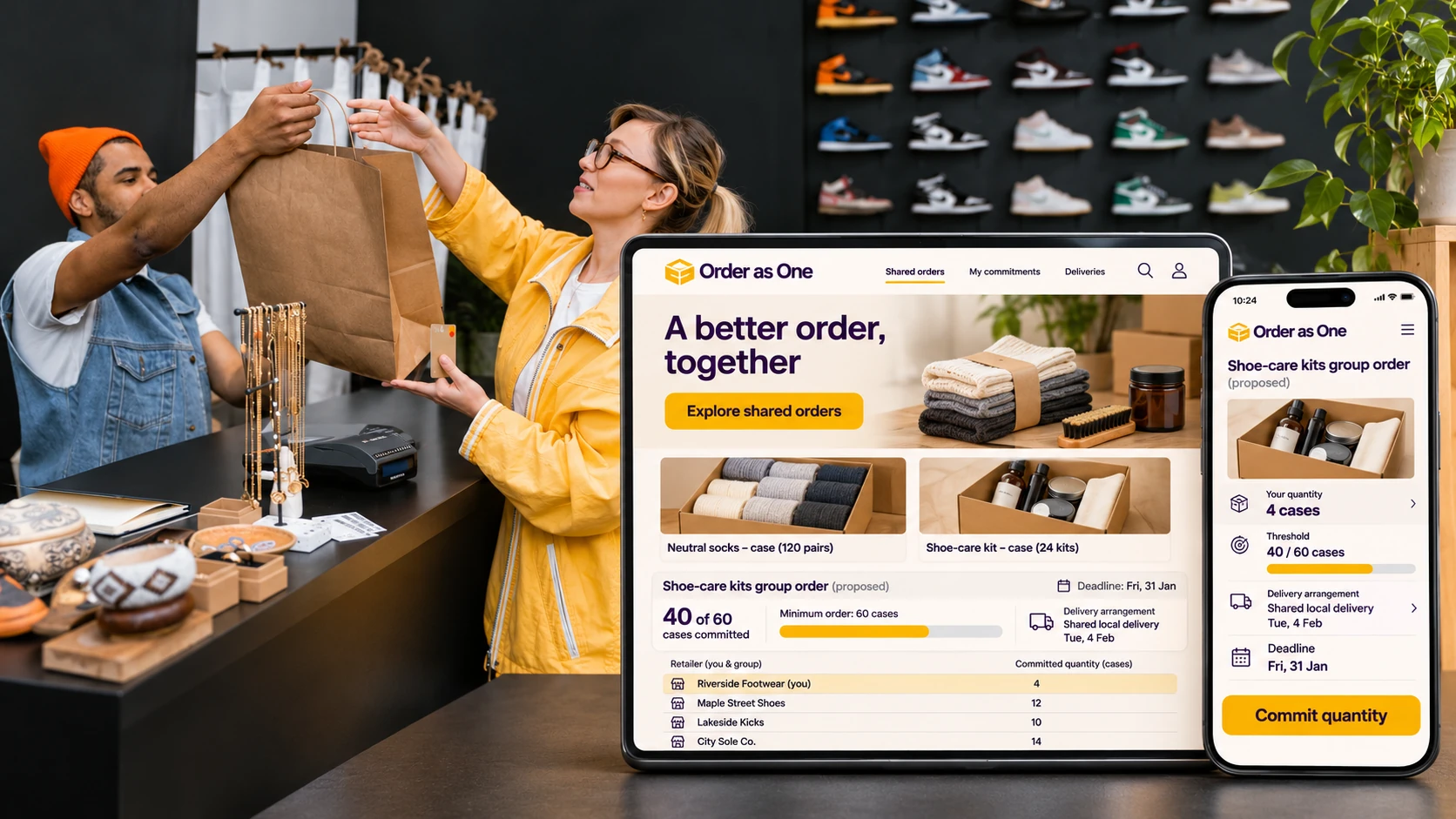
Three shop owners need the same cartons, but each is chasing the supplier separately. One can buy now, another next week, and nobody knows who will collect. Your club could organise the whole commitment: product, quantity, deadline and handover, so a shared order feels manageable rather than messy.
A business you can
picture.
Begin with one supplier, a small retailer group and a few products they buy repeatedly. Make one complete order cycle easy to follow.
Who would be glad
you built it?
Independent retailers
Coordinate repeat stock purchases.
Local wholesalers
Understand confirmed group requirements.
Trade associations
Organise purchasing for participating members.
Where the money
could come from.
Participating retailers could pay a transparent coordination fee on a completed shared order. That fee buys organising, confirmations and handover support. Include payment handling, transport administration, damaged goods and withdrawn commitments in your operating model before assuming the difference between supplier and retailer prices is available profit.
The part you could
make your own.
A dependable rhythm within one trade could distinguish the service. Familiar pack sizes, honest cutoffs and well-run collections may matter as much as a headline unit price. Test which part makes retailers choose the next order.
An angle to test with the people you want to serve.Start with something
worth using.
Start with one supplier, a few repeat products and a fixed order window. Show each retailer their commitment, full payable amount and collection plan. Manually supervise the first complete order before expanding the group.
- Publish supplier-approved products, prices and terms.
- Collect requested quantities before a clear deadline.
- Confirm each retailer’s share before payment.
- Share order progress, collection details and shortage updates.
Give the promise
something to stand on.
Supplier relationships and practical knowledge of a trade matter here. You need to understand order changes, collection arrangements and what happens when a participant withdraws after others have committed.
Someone must handle changed stock, late commitments and orders that miss their minimum quantity. Explain cancellation and refund rules in advance. Use an appropriate payment provider and keep every purchase commitment explicit.
Let a small beginning
teach you something.
Find retailers who already buy the same products and ask to review one actual purchasing cycle. Compare the full shared-order experience with their existing method, including travel, waiting, handling and late changes.
Does the shared order improve the complete buying experience after coordination and transport costs are included?
Look for these signs
- Commitments arrive before the cutoff
- Retailers understand their full costs
- Orders reach the agreed recipients
A little more
clarity.
Does combining orders guarantee a lower price?
No. Supplier terms, transport, handling and coordination can change the result. Show the complete cost for the proposed order and let retailers compare it with their usual purchasing arrangement.
What if the group misses the supplier's minimum?
Explain that possibility before collecting commitments. Offer a clear choice such as cancelling, extending the window or accepting a revised price only with participants' agreement; avoid silently changing what people agreed to buy.
Could this begin inside my wholesale business?
Yes. Your existing customers and suppliers can provide a focused starting group.
Does everybody have to buy the same quantity?
No. Each retailer’s share can differ, provided the supplier’s order terms and everyone’s commitments are clear.
Faire connects retailers and brands through wholesale ordering. It is an adjacent reference. This concept explores shared local order cycles with its own supplier relationships and responsibilities.
Now picture it
with your name on it.
Your people. Your priorities. The version you keep thinking about. Answer a few questions and leave with a starting plan you can keep.
Free to explore. No account or email needed for your starting plan.