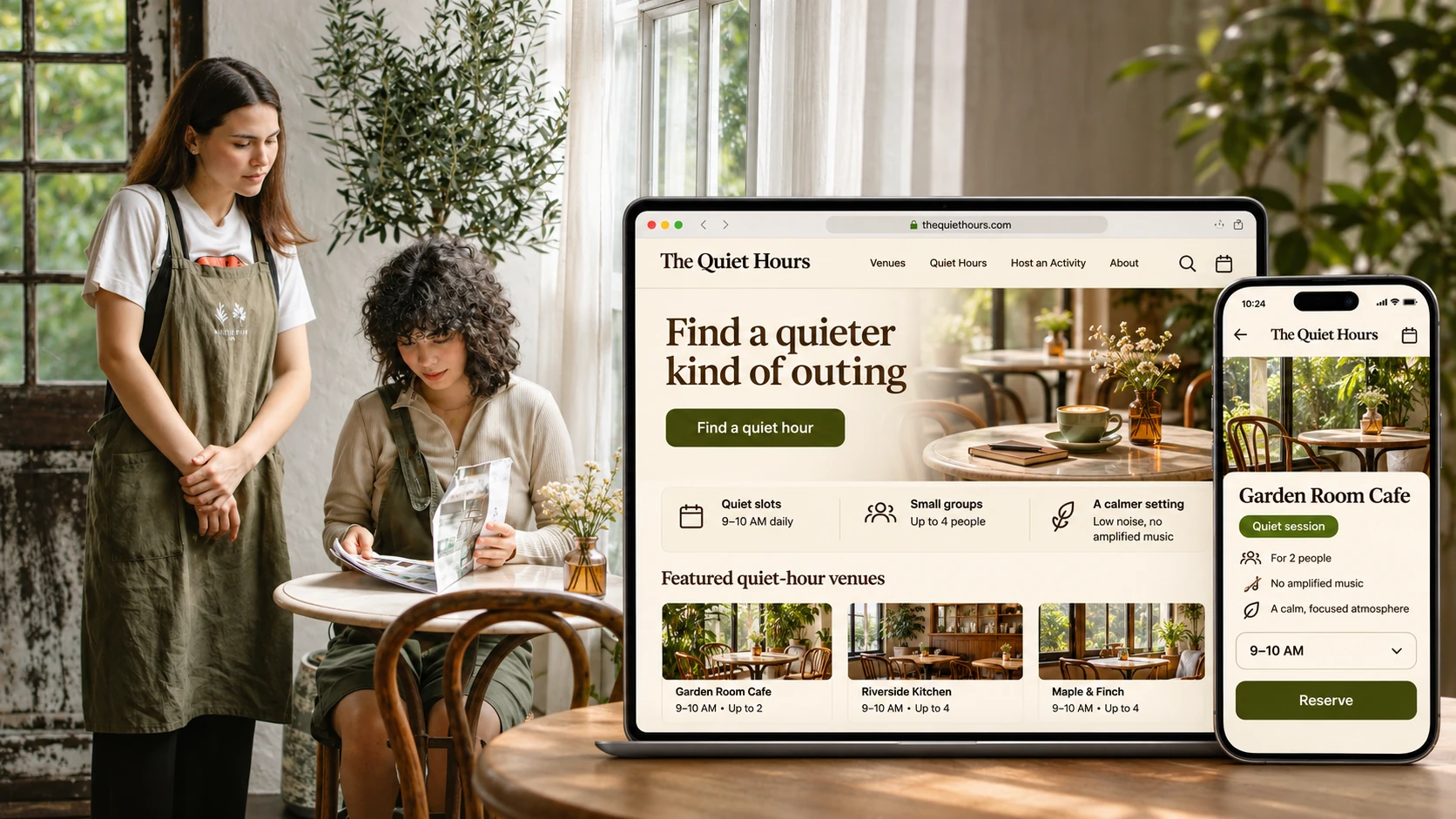
A café has an unused corner on a weekday afternoon while a nearby group needs somewhere for a small workshop. The space seems obvious until questions about noise, tables and ordinary customers appear. Your service could help both sides agree a use that fits that quieter part of the day.
A business you can
picture.
Start with a few venues and a limited set of activities. Each listing describes the actual space, permitted use, available time and what the host will provide.
Who would be glad
you built it?
Small groups planning an activity
A suitable space with clear practical conditions
Venues with quieter periods
A manageable additional booking arrangement
Independent workshop hosts
Comparable information about layout, timing and included facilities
Where the money
could come from.
A disclosed fee on confirmed space bookings could fund the club. The fee covers listing maintenance, coordination and booking support, while the venue’s charge and any required food purchase remain clear. Test the full operating cost of a booking; an apparently unused room can still require staff time, cleaning or changes to normal service.
The part you could
make your own.
Your proposed difference is matching the activity to the venue’s rhythm. A quiet work session and a noisy demonstration have different needs, so thoughtful fit could be more valuable than simply exposing empty hours.
An angle to test with the people you want to serve.Start with something
worth using.
Focus on one activity type and a small venue group. Describe the actual space and permitted use, show confirmed time windows and record setup, cleanup and cancellation terms. Keep enquiries distinct from reservations.
- Show suitable time windows and group limits.
- Explain food, seating and equipment arrangements.
- Confirm the activity before accepting the booking.
Give the promise
something to stand on.
You need venue relationships and practical event coordination. A quiet period is not permission for any activity; confirm capacity, supervision, access, noise limits and what ordinary venue operations continue around the booking.
Confirm permissions, supervision and cancellation arrangements. Keep availability current, and avoid treating a quiet period as permission for any activity or level of noise.
Let a small beginning
teach you something.
Invite a few venues and activity hosts to trial appropriately small bookings. Observe setup, the session and cleanup, then ask whether the arrangement worked for both the group and the venue’s ordinary customers.
Does the booked activity fit the venue’s actual operating conditions without surprising either the host or the group?
Look for these signs
- Activity expectations match venue permissions
- Setup and cleanup responsibilities are clear
- The booking coexists with normal operations
A little more
clarity.
Does a quiet hour mean exclusive use?
Only if the venue explicitly agrees. State whether other customers or staff will use the space and what that means for noise, privacy and movement during the booking.
Can any workshop be hosted in a listed space?
No. Match the actual activity with the venue’s permissions and facilities. Equipment, supervision and specialist requirements may make a seemingly suitable room inappropriate for a particular session.
What should my first version focus on?
Start with the first test described here, then build around the part people actually use and would pay to keep.
Now picture it
with your name on it.
Your people. Your priorities. The version you keep thinking about. Answer a few questions and leave with a starting plan you can keep.
Free to explore. No account or email needed for your starting plan.