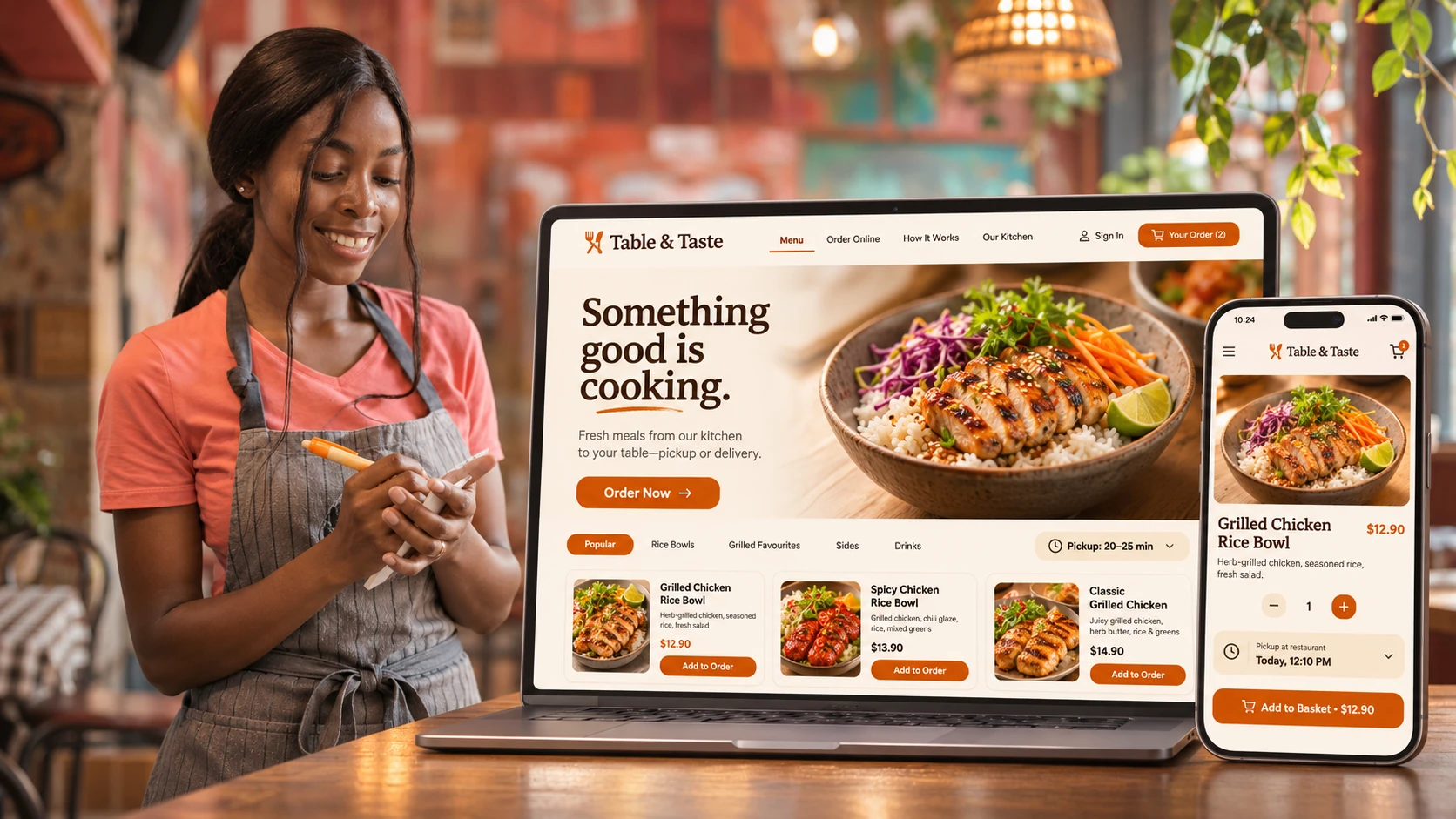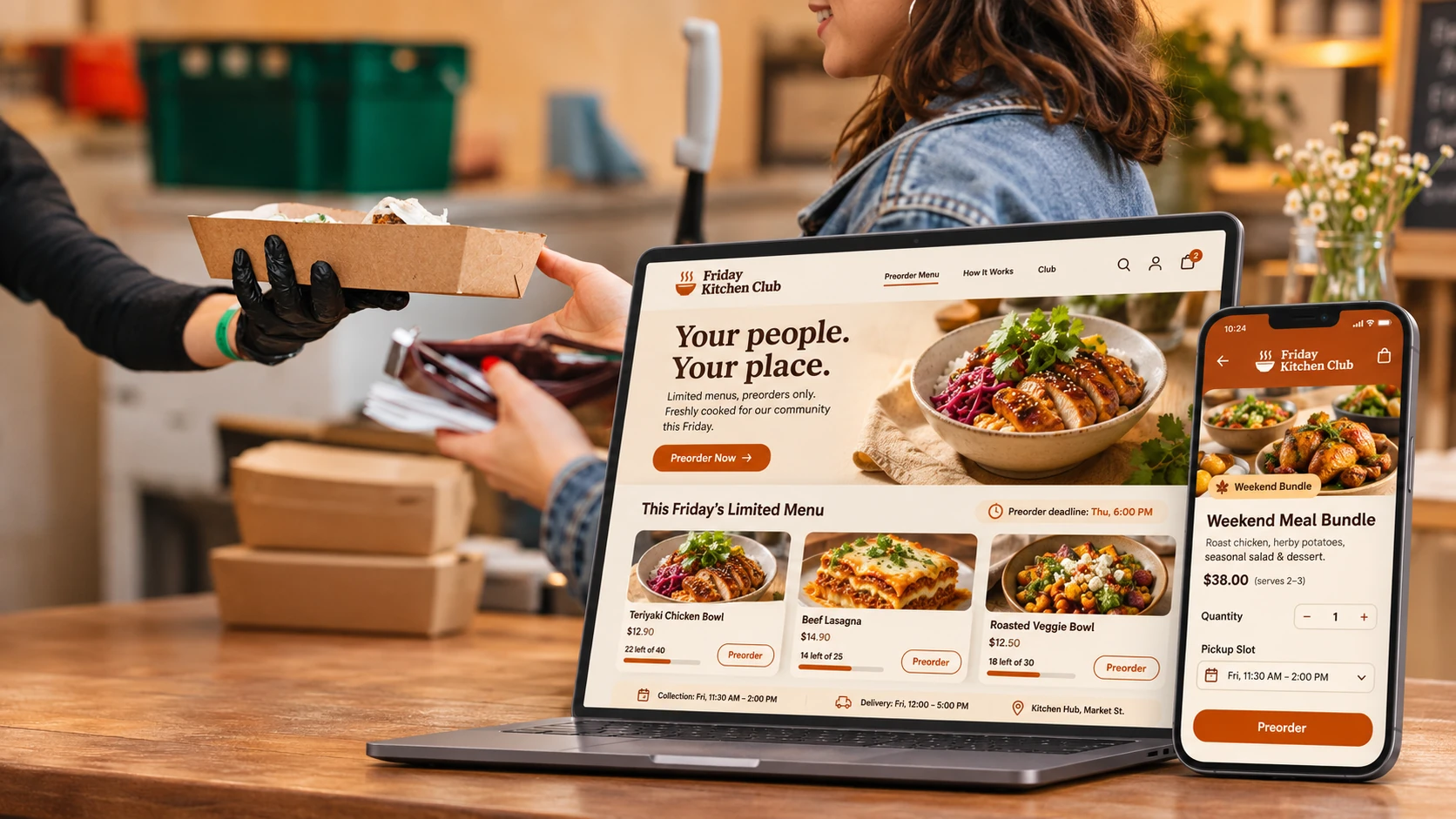
A customer remembers your bread after the last batch has sold, while you are deciding how much to bake next week. Your preorder club could bring those two moments together. Customers choose before a clear cutoff, and the kitchen prepares around commitments it can see and manage.
A business you can
picture.
Start with one food business, a small menu and a service area the team can handle well.
Who would be glad
you built it?
Neighbourhood regulars
Reserve a favourite item before the batch sells out.
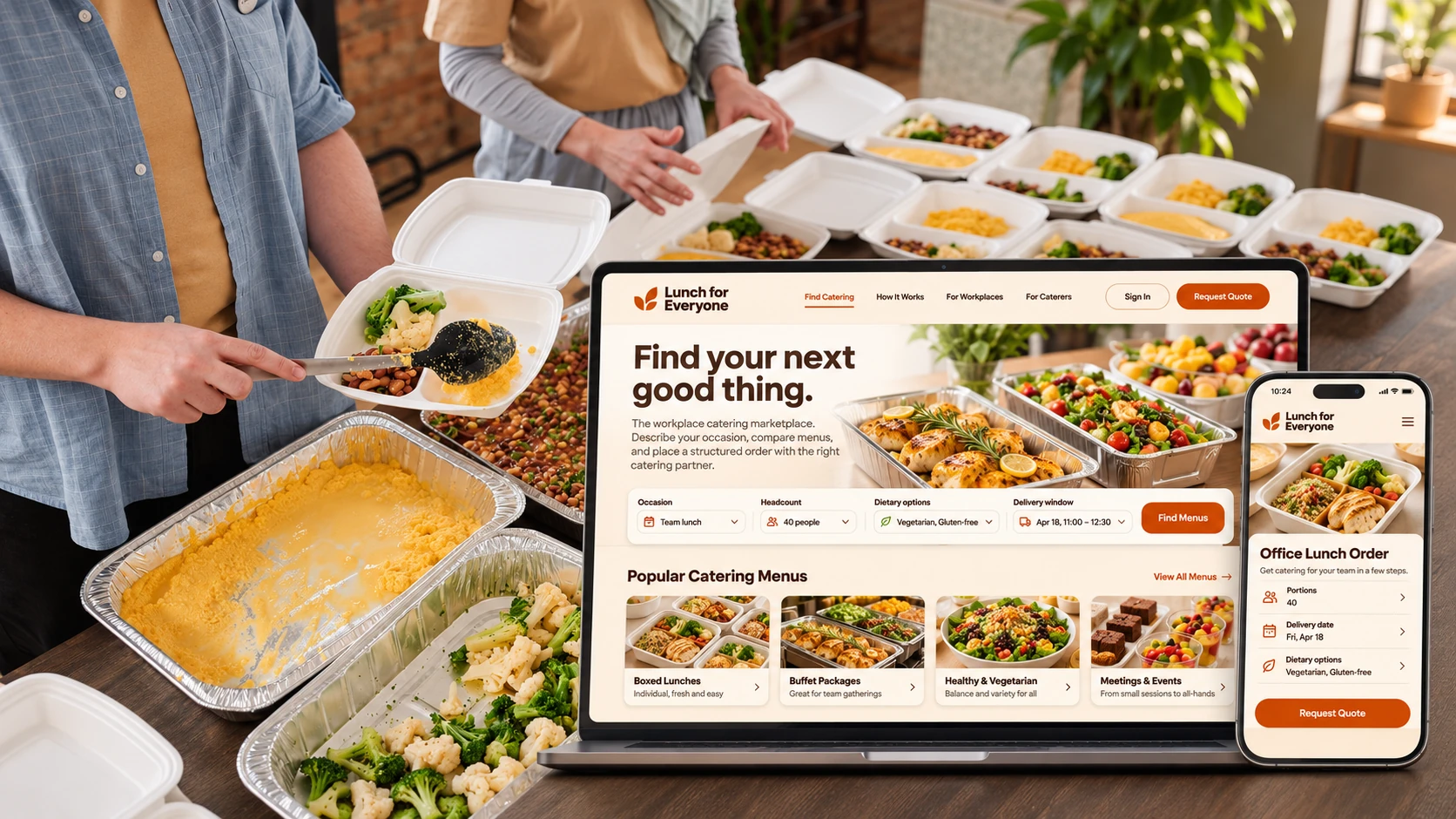
Office food organisers
Arrange a shared meal with clear quantities and timing.
Households planning ahead
Choose a prepared meal and a dependable collection window.
Where the money
could come from.
The kitchen earns from fulfilled food orders paid under clearly stated terms. Start with that direct sales model. Ingredients, packaging, labour, payment charges and delivery all come out of the sale; the ordering website helps organise the business but does not remove the work or cost of preparing food well.
The part you could
make your own.
A recognisable weekly occasion could set the offer apart: a bakery collection or a planned office lunch. Test whether a reliable routine and honest availability matter more to customers than offering a very large menu.
An angle to test with the people you want to serve.Start with something
worth using.
Offer a small menu, one order deadline and a manageable collection or delivery window. Confirm quantities and customer choices, then give the kitchen a preparation list that matches accepted orders.
- Publish the menu, ingredients and order deadline.
- Set quantity limits and useful collection or delivery windows.
- Take orders through an appropriate payment provider.
- Give staff clear preparation and collection lists.
Give the promise
something to stand on.
You need a food operation that can deliver a consistent, clearly described menu. Realistic capacity, collection arrangements and handling of changes matter as much as attractive photographs or easy ordering.
Menu changes, customer questions and cancellations need a process. Keep ingredient and allergen information current, with a way to ask questions. Explain delays, quantity limits and delivery responsibilities before someone pays.
Let a small beginning
teach you something.
Invite existing customers to try one planned order cycle. Follow the experience from choosing a meal through collection, and ask what made the deadline, quantity or handover easy or difficult.
Will customers order ahead often enough to make preparation more predictable without creating unmanageable changes?
Look for these signs
- Orders arrive before preparation begins
- Collections match agreed arrangements
- Customers choose another order cycle
A little more
clarity.
Must customers subscribe?
A one-off preorder is enough to test the routine. Introduce recurring orders only when customers want them, with clear choices for skipping, changing and ending the arrangement before the next preparation cutoff.
What if an ingredient becomes unavailable?
Give customers a clear substitution, refund or cancellation choice before preparation where possible. Keep product information accurate and avoid replacing ingredients silently, especially when the change affects dietary needs.
Could this sit inside my restaurant website?
Yes. A preorder section can work alongside your ordinary menus, location information and enquiries.
Do customers have to subscribe?
No. Start with individual preorders and introduce a membership only if customers want that routine.
Hotplate provides storefronts and preorder tools for food businesses. It is a reference for planned food drops. Your food, reliability and relationship with customers would make the offer worth returning to.
Now picture it
with your name on it.
Your people. Your priorities. The version you keep thinking about. Answer a few questions and leave with a starting plan you can keep.
Free to explore. No account or email needed for your starting plan.