A household wants to cook something different but does not want another evening of planning and shopping. Your meal kit could make the preparation more approachable, provided the ingredients, portions and instructions fit their kitchen and the delivery arrives under suitable conditions.
A business you can
picture.
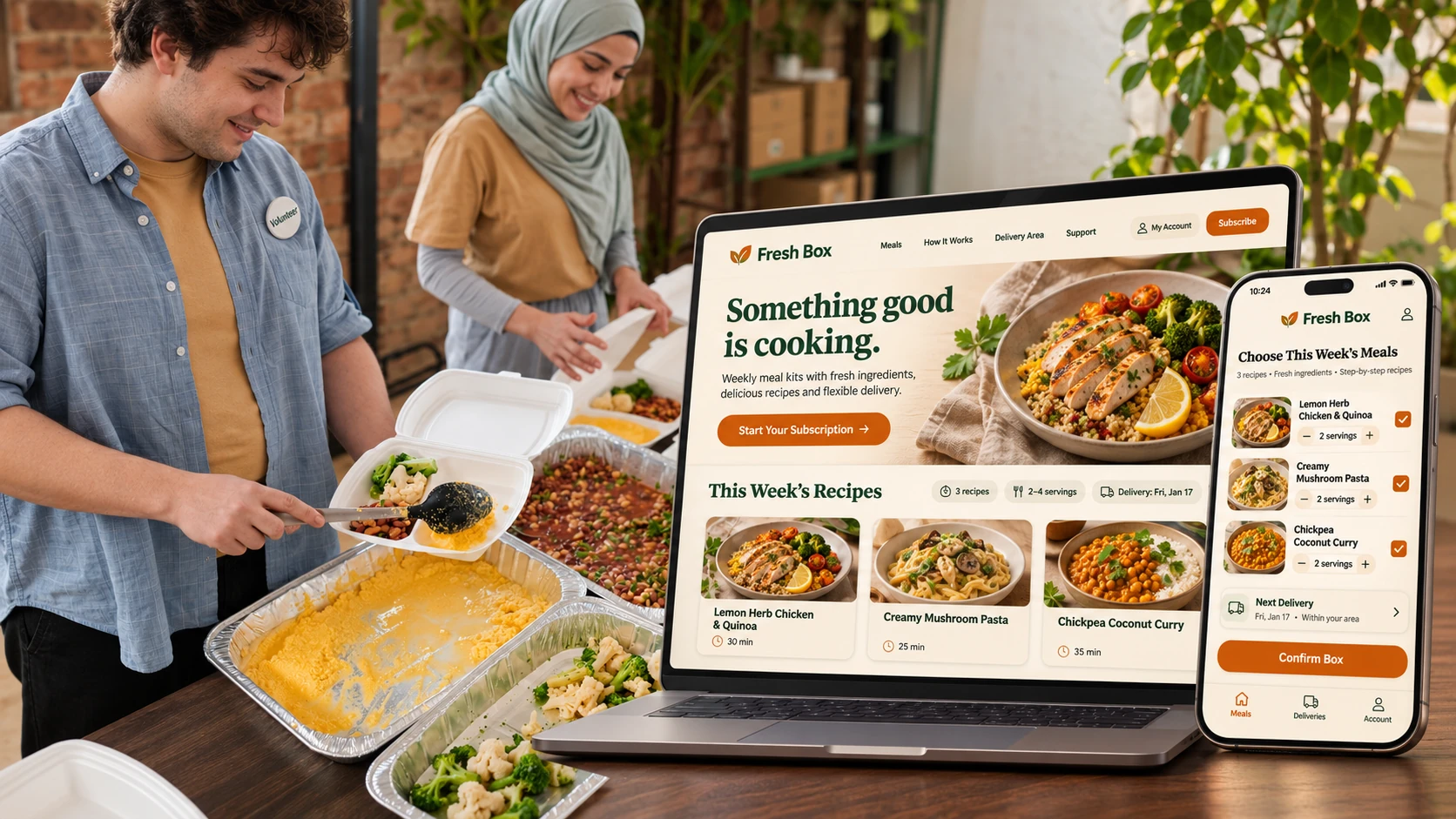
Create a subscription food business around a focused menu and delivery area. Let customers choose suitable meals, see what is included and manage upcoming deliveries.
Who would be glad
you built it?
Households seeking cooking convenience
Receive a practical meal plan and ingredients.
People learning new dishes
Follow clear recipes with suitable portions.
Gift buyers
Send a defined cooking experience.
Where the money
could come from.
Customers pay for each meal-kit delivery under an explicit order or renewal arrangement. Ingredients, packing labour, storage, transport, payments and support all come from that revenue. Begin with actual fulfilment costs for a small area; recurring orders do not automatically create a margin or eliminate food waste.
The part you could
make your own.
Practical reliability could distinguish your kit. Realistic preparation, clear portions and ingredients that fit the chosen household may matter more than a vast rotating menu. Test whether customers cook the meals and voluntarily order again.
An angle to test with the people you want to serve.Start with something
worth using.
Start with a small menu, one box size and a limited delivery area. Show included ingredients, required household staples, preparation assumptions and renewal choices. Test the full packing and cooking experience before widening preferences or coverage.
- Dated menus and portion choices
- Subscription changes and delivery windows
- Recipe instructions and ingredient information
Give the promise
something to stand on.
You need food sourcing, packing and fulfilment capability as well as useful recipes. Storage, delivery conditions, substitutions and customer support determine whether the appealing concept works as an everyday food business.
Food handling, cold-chain requirements where relevant and allergy information need careful operations. Keep menu changes visible and explain substitutions before the customer receives the box.
Let a small beginning
teach you something.
Invite willing households to cook a trial kit using its instructions alone. Review ingredient condition, portions and actual preparation experience, then pilot a few delivery cycles to assess whether the complete operation is sustainable.
Can the household prepare the described meal from the delivered kit and feel the next box is worth choosing?
Look for these signs
- Ingredients arrive in suitable condition
- Instructions match ordinary kitchen needs
- Customers can manage upcoming deliveries easily
A little more
clarity.
Does the box include absolutely everything?
State what is supplied and what the household needs, such as basic equipment or pantry items. Missing practical assumptions can turn an appealing recipe into a frustrating evening.
Can subscribers skip a busy week?
Offer clear pause and cancellation cutoffs that fit your sourcing schedule. Customers should understand when a box becomes committed and how to change future deliveries without hidden steps or unexpected charges.
HelloFresh is a reference for meal-kit subscriptions.
Now picture it
with your name on it.
Your people. Your priorities. The version you keep thinking about. Answer a few questions and leave with a starting plan you can keep.
Free to explore. No account or email needed for your starting plan.