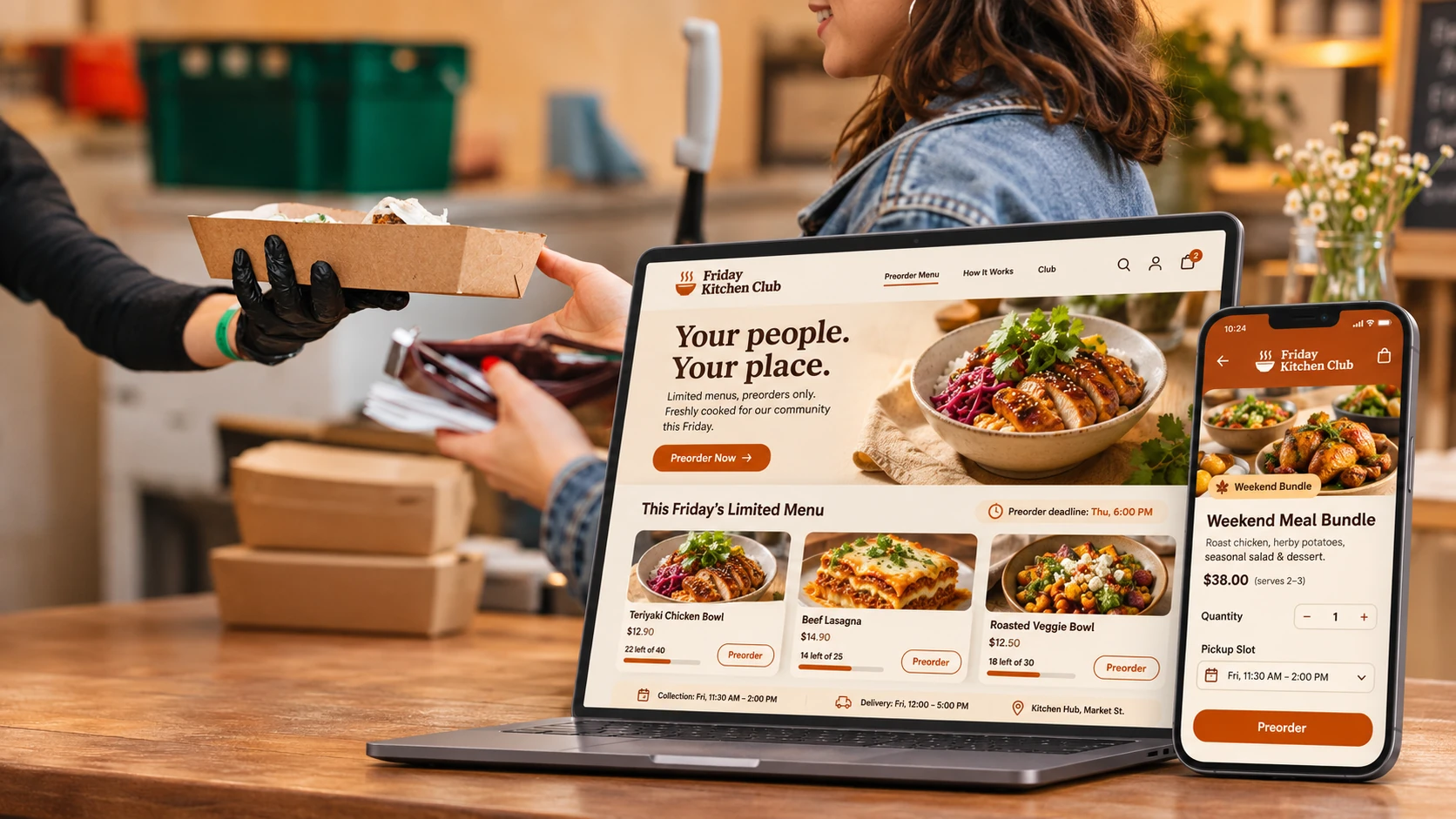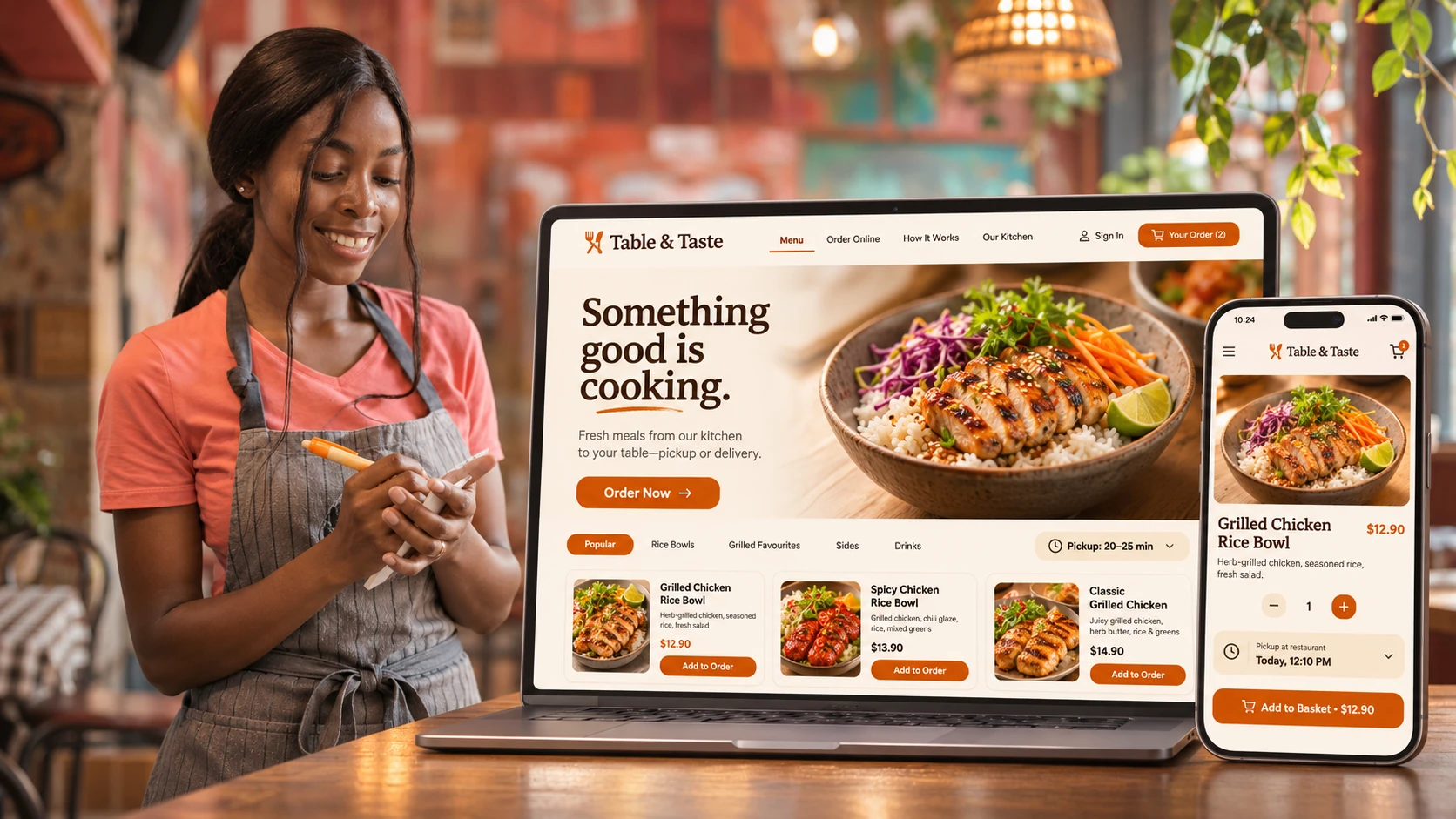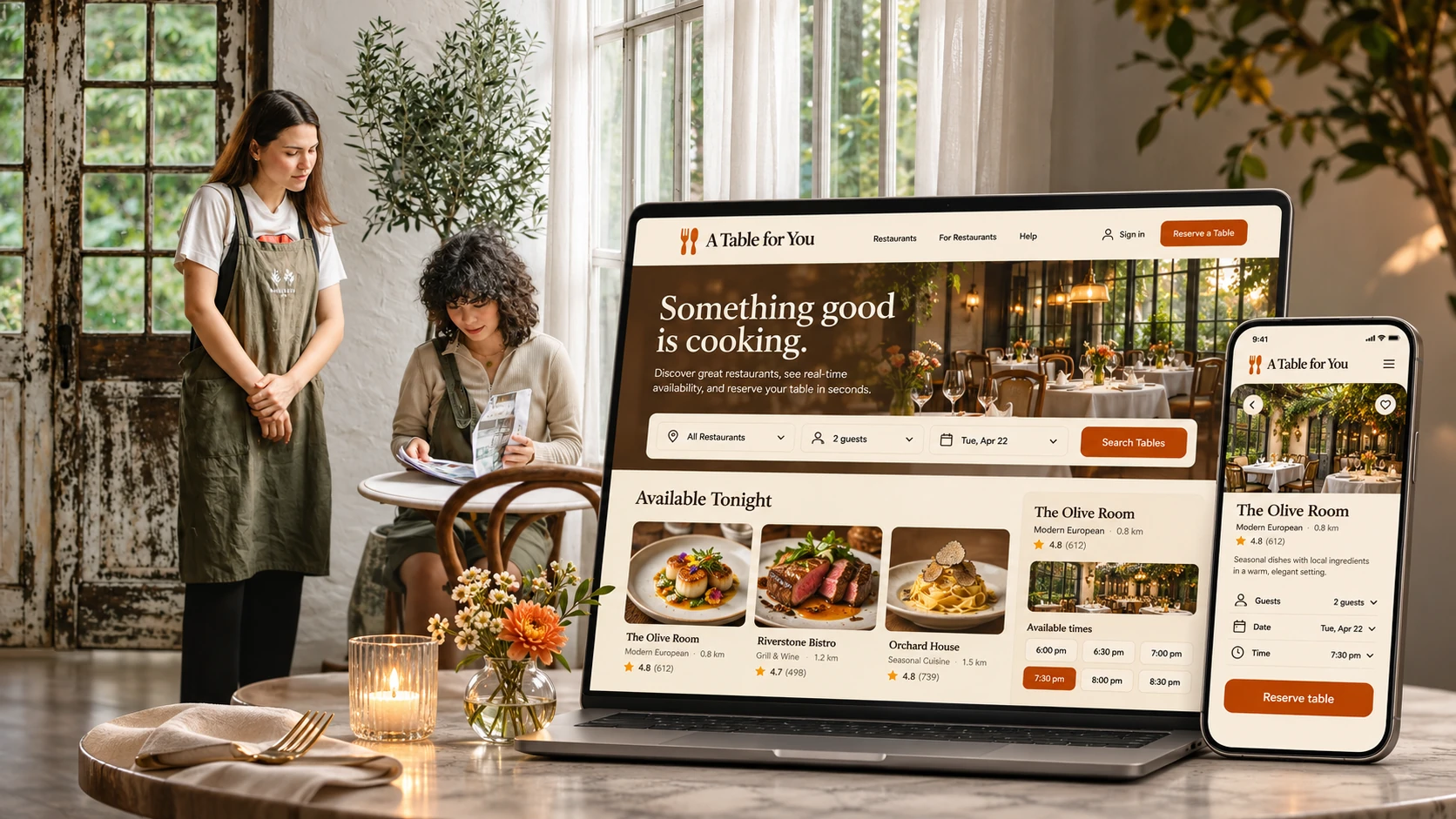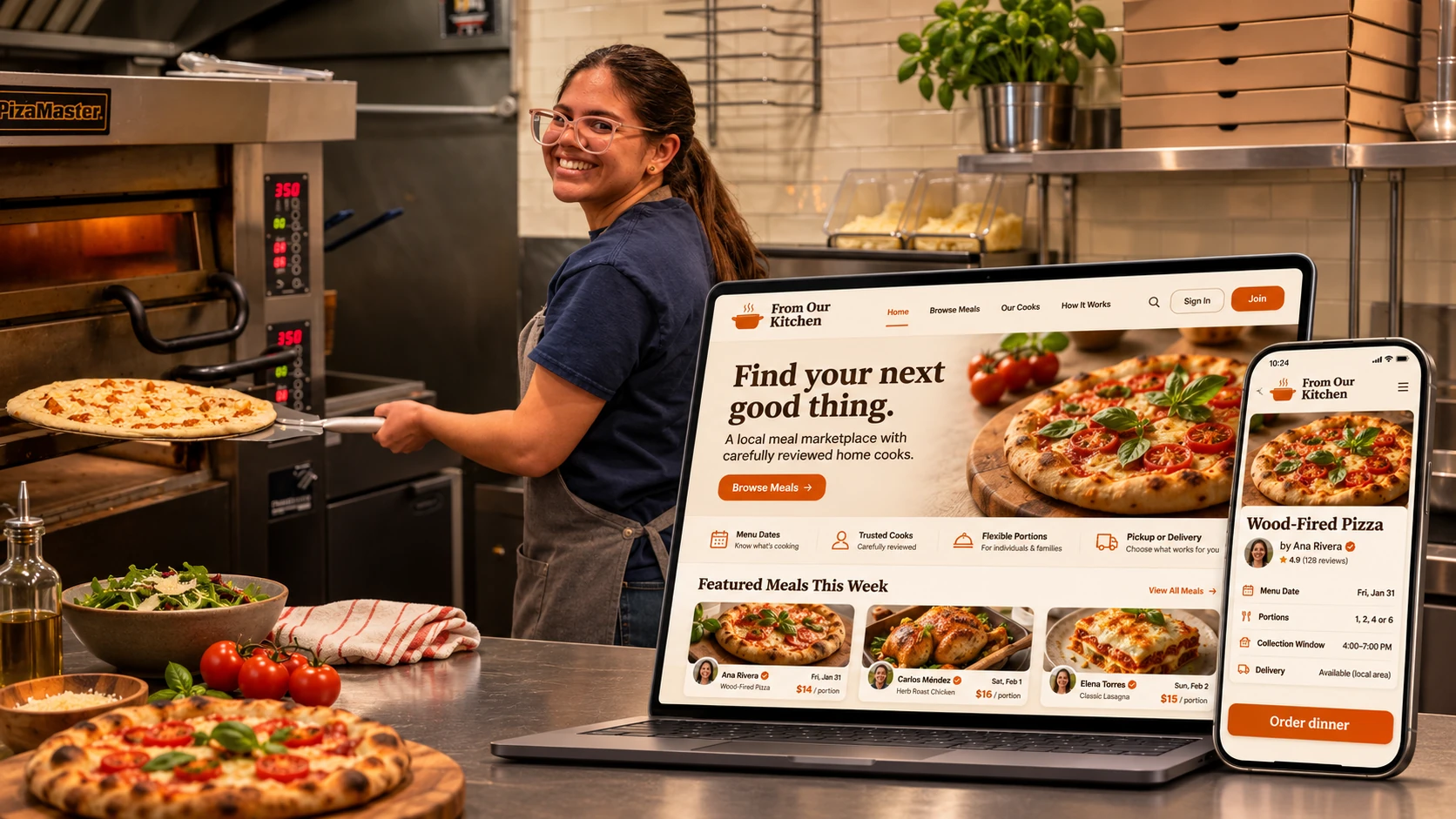
A cook's regular customers keep asking when the next batch will be ready, while new customers need more detail before trying it. Your marketplace could make the menu, portion size and fulfilment plan visible, connecting people to participating food businesses under clear and appropriately reviewed arrangements.
A business you can
picture.
Create a local meal marketplace with a carefully reviewed cook network. Show menu dates, portions, preparation arrangements and collection or delivery options for each participating business.
Who would be glad
you built it?
Households buying prepared meals
Choose suitable portions and collection options.
Independent food businesses
Present a dated menu and available capacity.
Customers exploring local cooking
Understand the offer before a first order.
Where the money
could come from.
The platform could retain a disclosed share of fulfilled orders, with the cook receiving the agreed balance. Provider onboarding, payment handling and customer support create costs. Ingredients, packaging, labour and delivery remain part of each food business's economics; the platform should help clarify those responsibilities rather than promise effortless extra income.
The part you could
make your own.
A well-presented planned menu could distinguish the service. Clear portions, honest capacity and a familiar collection rhythm may help customers choose a cook confidently. Test repeat use after the first meal, not interest in photographs alone.
An angle to test with the people you want to serve.Start with something
worth using.
Start with a small approved cook group and a limited service area. Publish dated menus, portions, availability and order cutoffs. Confirm required provider information and collection or delivery arrangements before taking live orders.
- Cook profiles and dated menus
- Meal orders and dietary information
- Collection, delivery and customer support
Give the promise
something to stand on.
You need a carefully reviewed food-provider network and appropriate local operating arrangements. Menu accuracy, preparation conditions, ingredient information and fulfilment responsibilities must be established before opening broad self-service seller registration.
Food-business requirements, kitchen suitability and allergy information must be reviewed for the chosen market. Participation should depend on the real operating standards you can check and maintain.
Let a small beginning
teach you something.
Work with known food businesses and willing customers through a few planned menu cycles. Compare the listing with the actual meal and handover, and learn which questions first-time customers need answered before ordering.
Can a customer understand the meal and receive it under the preparation and fulfilment arrangements the provider has confirmed?
Look for these signs
- Menus reflect actual planned capacity
- Portions and ingredient information are clear
- Handover follows the agreed arrangement
A little more
clarity.
Can anyone list meals from any kitchen?
Provider participation needs requirements appropriate to the food service and operating market. Establish a reviewed onboarding process and explain what is checked rather than treating a profile and photograph as sufficient assurance.
Should customers be able to order at any time?
Only when the cook can support that model. Planned batches and clear cutoffs may be a better beginning, allowing the provider to prepare accepted quantities and communicate when the next menu becomes available.
Shef is a reference for a local-cook meal marketplace.
Now picture it
with your name on it.
Your people. Your priorities. The version you keep thinking about. Answer a few questions and leave with a starting plan you can keep.
Free to explore. No account or email needed for your starting plan.