Your association knows several makers whose products belong together, but buyers must visit separate pages and repeat the same questions. Multi-vendor selling could create a shared place to discover them. Behind the attractive collection, each order still needs a seller, a payment arrangement and a clear support promise.
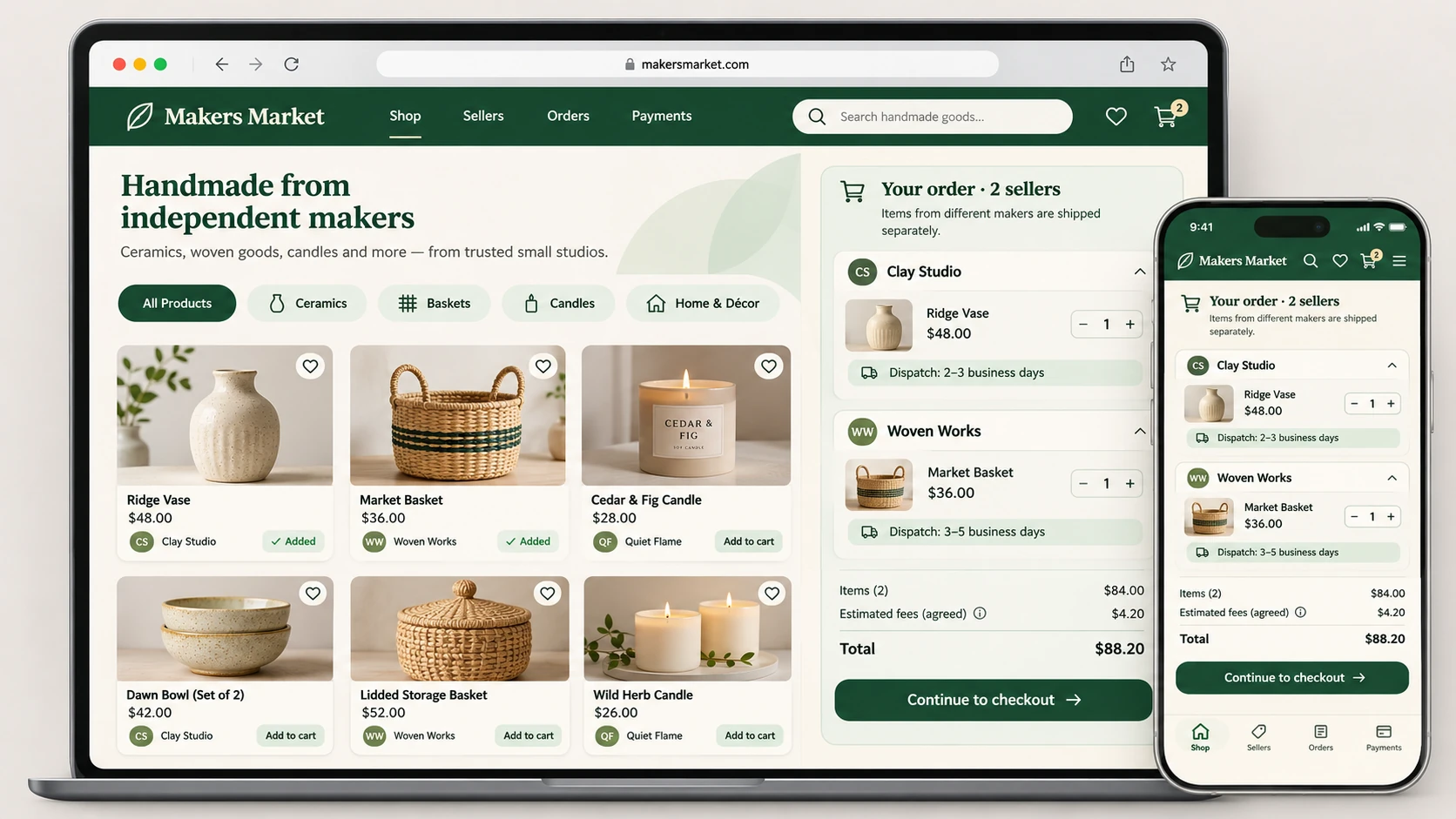
Buyers move between sellers, while your team informally helps with product questions without a shared record of who owns the order.
A consistent collection shows the seller, terms and supported next step, with responsibility carried into the order and help process.
Where it could
make a difference.
Trade associations
Present member businesses in a shared marketplace.
Established communities
Offer a curated collection from participating sellers.
Marketplace operators
Coordinate listings and supported orders.
Useful on: Marketplace, Trade association website, Community.
What this could mean
for your business.
A shared marketplace can support a disclosed transaction fee or paid seller service. The income must cover onboarding, listing review, payment costs and buyer support. Evaluate completed, well-supported orders rather than seller count alone; a large catalogue does not resolve the work behind a purchase.
Start with something
worth using.
Begin with a small approved seller group, consistent listings and clear order ownership. Use payment arrangements suited to the model. Add self-service onboarding only after the first sellers' workflow is dependable.
- Seller profiles and listings
- Order ownership and status
- Agreed fee and payment records
Give the promise
something to stand on.
You need willing sellers, clear participation standards and a named buyer-support owner. Decide who sells each item, who receives payment and who handles returns before inviting vendors to publish freely.
Clarify who takes payment, supplies the order, handles returns and responds when something goes wrong. Confirm payment arrangements with the chosen provider before promising split payouts.
- Seller onboarding and standards
- Defined buyer support
- Suitable payment arrangements
How it fits what you already have
Check the website's account model, order records and payment arrangements. Define seller access, fee calculation, refunds and split fulfilment before connecting vendor dashboards or automating payouts.
Let a small beginning
teach you something.
Ask participating sellers to list a manageable set of products, then follow suitable test purchases through fulfilment. Check whether buyers can identify the responsible seller and obtain help without being passed around.
Can a buyer understand who fulfils each item and where to get help when an order includes more than one seller?
Look for these signs
- Listings meet agreed seller standards.
- Orders identify their responsible seller.
- Support questions reach an accountable person.
A little more
clarity.
Can every seller use the same checkout?
Potentially, but split orders, payments, delivery and returns need deliberate handling. A first version may use a simpler arrangement that your team and payment provider can support clearly.
Is this just a directory with a buy button?
Selling adds order and support responsibilities beyond discovery. Choose whether the feature only introduces buyers or supports the transaction, and make that boundary clear throughout the experience.
Could this work with my existing website?
We would check how your current website is built, what it already does and which services need to connect. That helps us choose a suitable addition and avoid paying twice for something you already have.
What would this change
in your business?
Your customers. Your working day. The part you would love to make easier. Answer a few questions and leave with a starting plan you can keep.
Free to explore. No account or email needed for your starting plan.