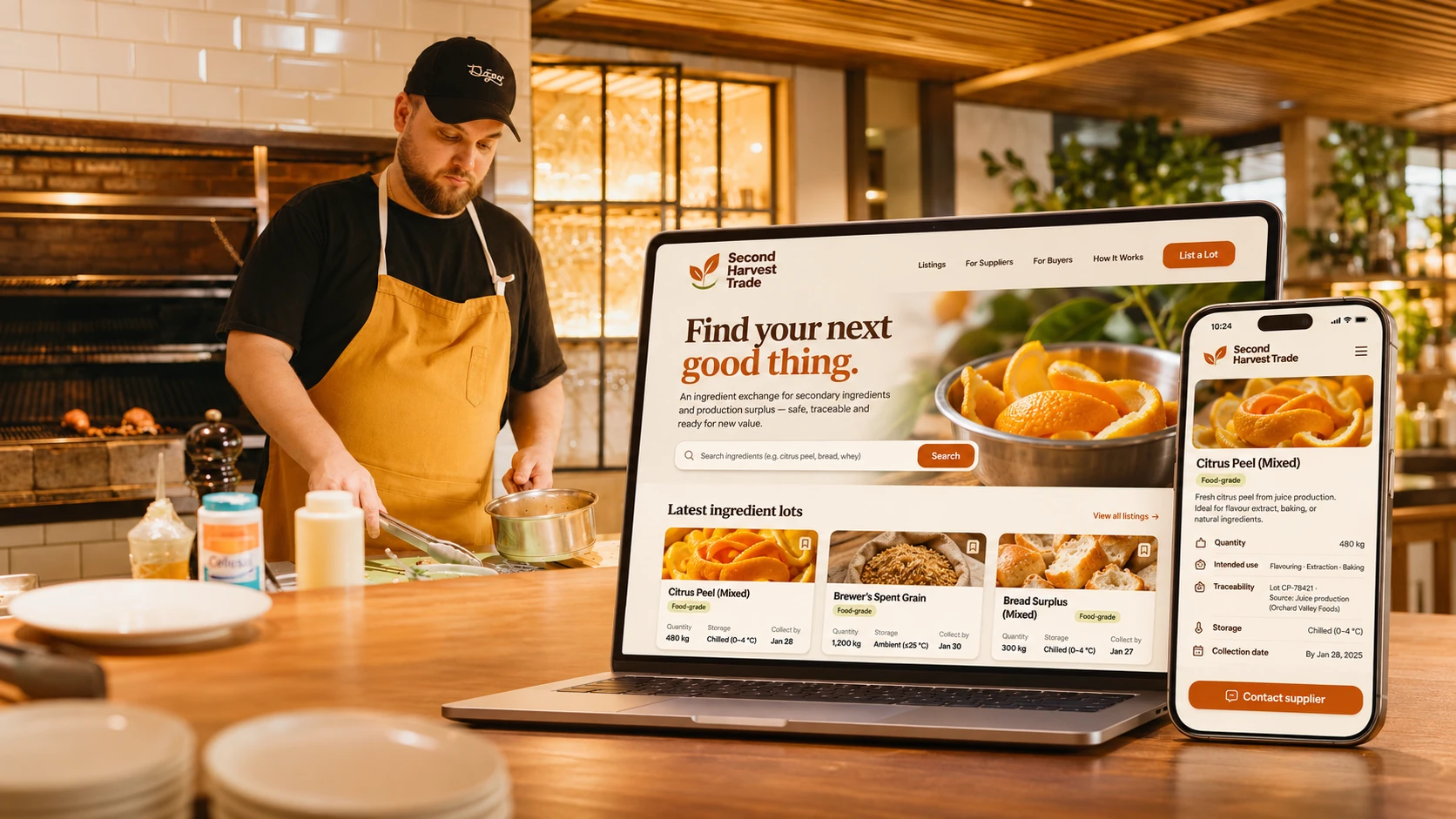
A production run leaves a usable material that does not fit the producer’s next batch. Another operator might have a suitable use, but needs to understand its condition, history and collection needs. Your service could organise that conversation around one material, with competent review and a realistic handover process.
A business you can
picture.
Choose one documented ingredient stream and a small set of qualified buyers. Listings carry the relevant specifications, handling history, available quantity and collection window for buyer review.
Who would be glad
you built it?
Food producers with suitable surplus
A structured route to a possible business buyer
Processors seeking a defined ingredient
Relevant specifications and handling information
Qualified supply partners
Traceable records for assessing a proposed second use
Where the money
could come from.
A disclosed coordination fee on a completed transaction could support the exchange. The fee covers documentation, matching and handover coordination, with inspection, storage or collection separately priced where provided. Include the actual cost of failed or unsuitable matches in the pilot. Do not earn by presenting uncertain material as ready for food production without the required review.
The part you could
make your own.
Your proposed difference is a repeatable relationship for a specific material. A buyer may value consistent descriptions and an agreed collection routine more than a broad catalogue of loosely described surplus.
An angle to test with the people you want to serve.Start with something
worth using.
Choose one material stream and a small producer-buyer group. Define the information required, arrange appropriate suitability review and record collection conditions. Keep unreviewed availability separate from an agreed transaction.
- Describe the ingredient and its source clearly.
- Match requests to actual available batches.
- Record agreed handling and handover details.
Give the promise
something to stand on.
You need expertise in the chosen material and appropriate food-handling partners. Suitability, storage and traceability require competent review; a seller’s willingness to list something does not establish that it is safe for another use.
Food suitability, handling and traceability require competent review and applicable local compliance. The platform should never infer that an ingredient is safe or appropriate merely because a seller offers it.
Let a small beginning
teach you something.
Work with qualified partners and a small pair of compatible operators. Follow one proposed material transfer from description through review to handover, recording which information determined whether it could proceed responsibly.
Can the receiving operator assess the proposed material and complete an appropriate handover using the supplied, reviewed information?
Look for these signs
- Material descriptions include required history
- Suitability decisions have responsible reviewers
- Handover conditions are recorded and followed
A little more
clarity.
Can every surplus ingredient be resold?
No. Suitability depends on the material, condition, handling and intended use, with applicable requirements reviewed by competent people. A listing is not permission to put an ingredient into another food product.
Is the platform responsible for physical collection?
Only if that service is explicitly included and properly arranged. State who handles transport, storage and handover, and keep those responsibilities connected to the transaction record.
What should my first version focus on?
Start with the first test described here, then build around the part people actually use and would pay to keep.
Now picture it
with your name on it.
Your people. Your priorities. The version you keep thinking about. Answer a few questions and leave with a starting plan you can keep.
Free to explore. No account or email needed for your starting plan.