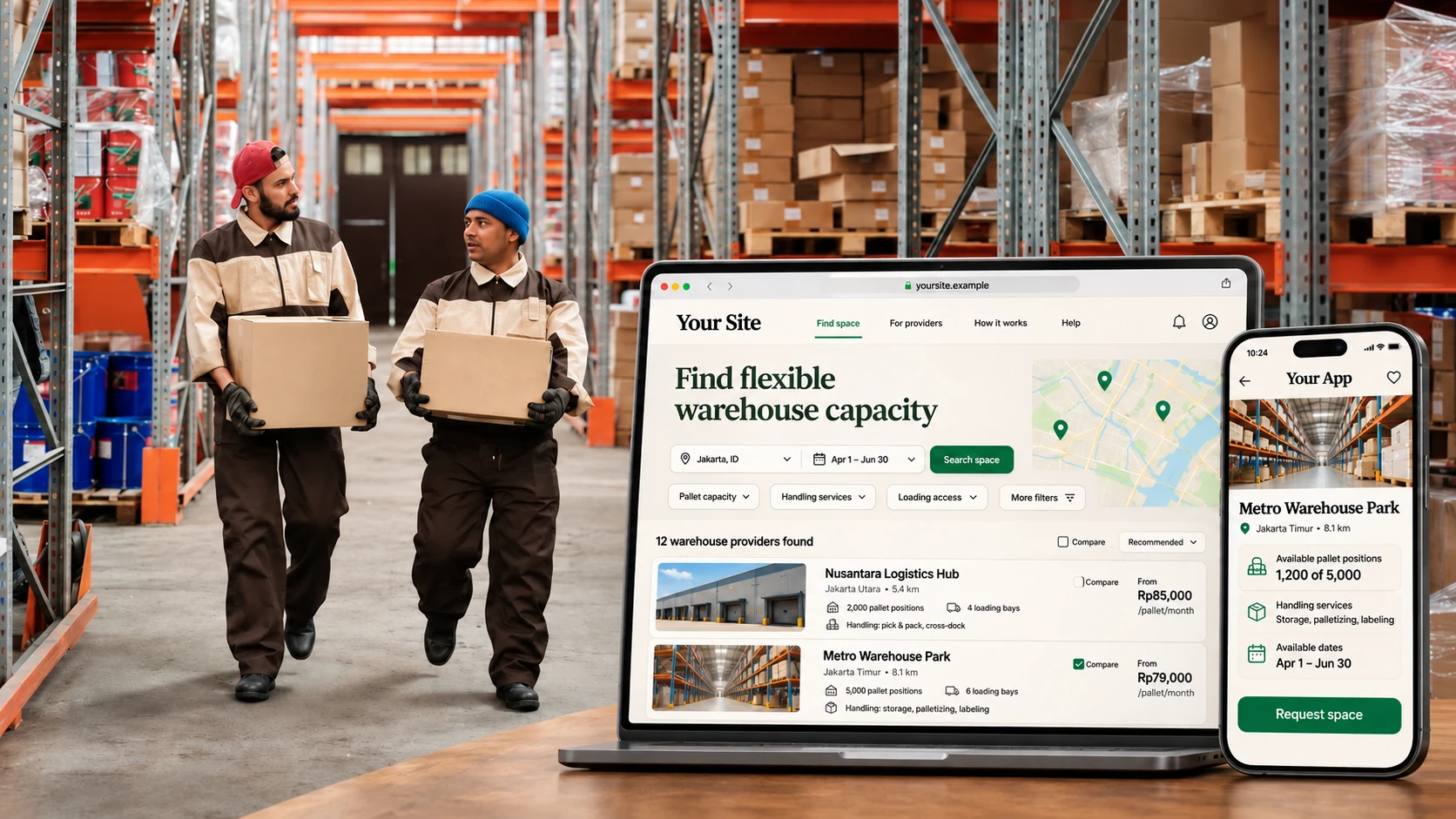
A retailer has a larger shipment coming but is not ready for a long warehouse lease. Available floor space alone does not answer whether the provider can receive, store and dispatch those goods. Your marketplace could organise the requirements and compare the full service, helping both sides assess a workable fit.
A business you can
picture.
Connect businesses with suitable warehouse providers. Gather product, volume and handling requirements, then compare capacity, service scope and commercial terms.
Who would be glad
you built it?
Growing retailers
Find suitable temporary storage or fulfilment.
Seasonal businesses
Arrange capacity for a defined period.
Warehouse providers
Assess goods and service requirements clearly.
Where the money
could come from.
A disclosed provider arrangement or a defined coordination fee could fund the platform. Keep that income separate from storage and handling charges. Suitability review, commercial comparison and support take work; each provider's labour, space and operating costs remain part of the underlying service the customer is buying.
The part you could
make your own.
A clear comparison of operating scope could be your advantage. Matching actual goods and tasks to a provider may help more than advertising empty square metres. Test the complete intake-to-release process before expanding capacity listings.
An angle to test with the people you want to serve.Start with something
worth using.
Choose one goods category and provider network. Capture volumes, handling needs, expected duration and service requirements. Compare capacity, charges and responsibilities, then review suitability before confirming a booking or stock transfer.
- Warehouse profiles and capabilities
- Capacity enquiries and service quotations
- Onboarding documents and operating contacts
Give the promise
something to stand on.
You need logistics knowledge and suitable provider relationships. Product restrictions, handling, access, inventory records and exit arrangements must be explicit; a warehouse listing should not blur space rental with a complete fulfilment operation.
Provider checks, insurance, stock records and service agreements need specialist oversight. Available capacity must be confirmed, and the handover should document what the warehouse has actually received. Agree how stock discrepancies will be recorded and resolved.
Let a small beginning
teach you something.
Map a real business's incoming stock needs with a suitable warehouse provider. Pilot a limited intake and retrieval cycle, checking whether quantities, handling tasks and records match the agreed service rather than just the advertised space.
Can the provider receive, manage and release the goods under the scope and charges both sides agreed before arrival?
Look for these signs
- Goods meet the provider's stated conditions
- Service charges have clear definitions
- Inventory handovers are documented and reconcilable
A little more
clarity.
Does warehouse space automatically include order fulfilment?
No. Receiving, picking, packing, dispatch and returns can be separate services. Show each included task and charge so the business can compare the complete operating arrangement.
What happens when the temporary arrangement ends?
Agree notice, retrieval, outstanding fees and inventory reconciliation before intake. A flexible booking should still have a clear exit process, especially when the provider holds stock the business needs for its customers.
Flexe is a reference for flexible warehousing services.
Now picture it
with your name on it.
Your people. Your priorities. The version you keep thinking about. Answer a few questions and leave with a starting plan you can keep.
Free to explore. No account or email needed for your starting plan.