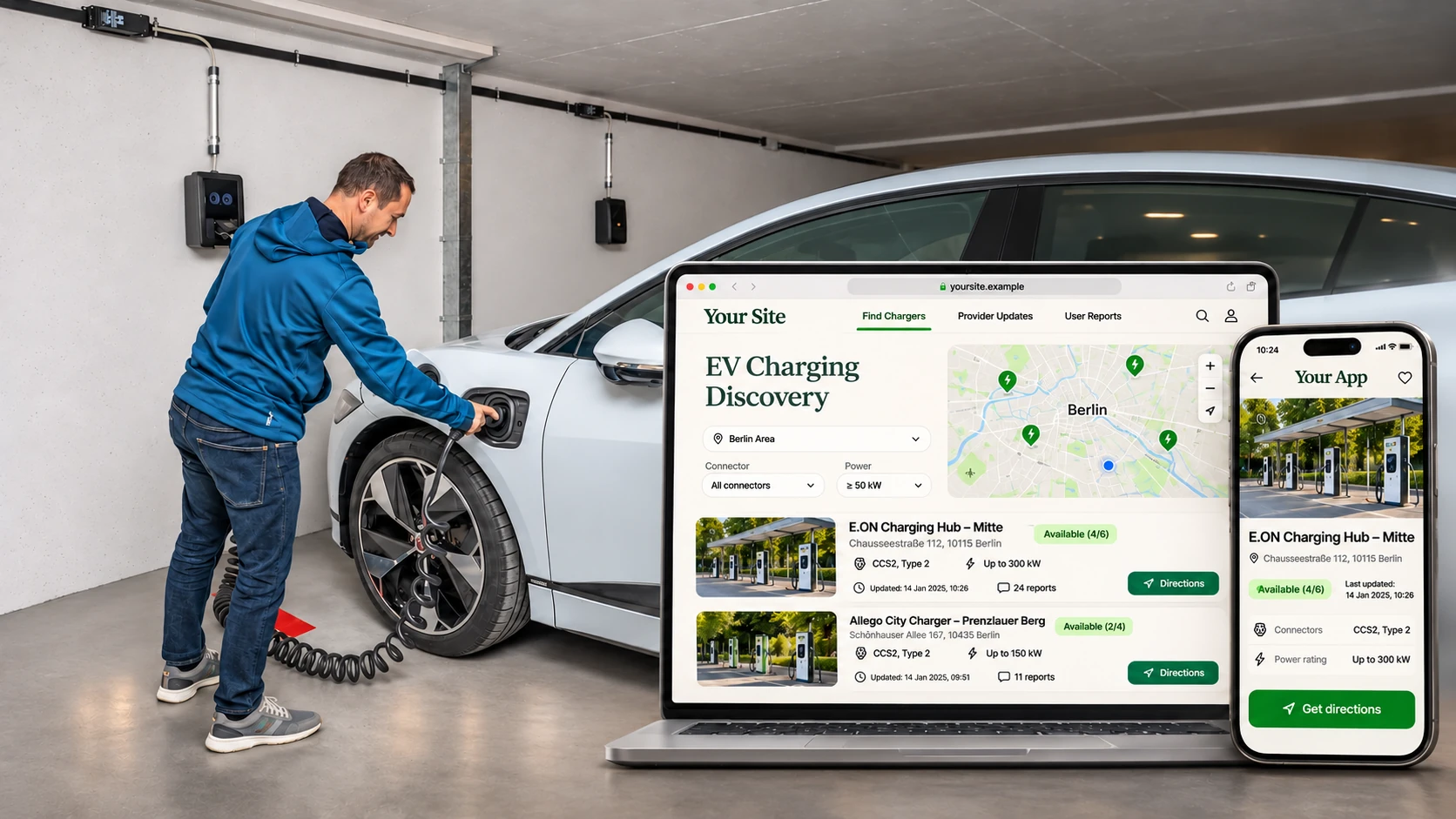
Imagine a driver reaching a charging location only to discover a closed gate or a connector their car cannot use. The place was on the map, but the journey was not understood. Your guide could focus on that gap, helping someone prepare for the stop before relying on it.
A business you can
picture.
Create a charging information service for a defined region or driver group. Combine reliable station details with dated provider updates and carefully moderated user reports.
Who would be glad
you built it?
Drivers planning unfamiliar journeys
Compatibility and access details before choosing a stop
Small electric fleets
A reviewed set of charging locations along working routes
Destination businesses
A clear description of the charging facilities they actually offer
Where the money
could come from.
One route to test is a paid planning workspace for small fleet teams that need a maintained set of suitable stops. They pay for organised, sourced information and update work. Account for research, mapping and support costs; access to charger payments or reservations requires separate operator arrangements.
The part you could
make your own.
Your version could serve drivers arriving outside normal business hours. A carefully checked description of gates, parking access and after-hours contacts gives this audience something more specific to assess than map coverage alone.
An angle to test with the people you want to serve.Start with something
worth using.
Cover a compact region or one travel corridor. Record connector types, access hours, parking instructions, information sources and last checks. Let users report an issue without presenting their report as confirmed live status.
- Charging locations and connector filters
- Access conditions and provider links
- Dated observations and trip shortlists
Give the promise
something to stand on.
You would need a method for checking location information and relationships with people who operate chargers. Your editorial discipline matters: dated observations must stay distinct from live operator information.
Data freshness and location accuracy are central. A user report is not the same as live operator status. Do not present a charger as working or reservable without a supporting source.
Let a small beginning
teach you something.
Invite a small fleet manager and drivers on one corridor to review a sample guide. Ask which details change a charging decision, then verify the locations they would actually depend on.
Which checked arrival details make a driver choose or reject a charging stop before setting off?
Look for these signs
- Drivers identify unsuitable stops before travel
- Reported changes receive a dated review
- Fleet teams reuse the maintained guide
A little more
clarity.
Can the guide show a charger as available now?
Only when a dependable current source supports that statement. Otherwise show the source and check time clearly, and encourage confirmation with the operator before a journey depends on that stop.
Does this need a charging network of my own?
A discovery guide can start without owning chargers. The business still depends on information quality; reserving, activating or taking payment for charging needs permission and a supported connection to the operator.
PlugShare is a reference for charging location discovery.
Now picture it
with your name on it.
Your people. Your priorities. The version you keep thinking about. Answer a few questions and leave with a starting plan you can keep.
Free to explore. No account or email needed for your starting plan.