A freelancer has completed good work for an overseas client, yet the invoice keeps coming back with another requested detail. The achievement begins to feel like paperwork. Your service could help gather the client’s stated requirements and supporting records into a calm, reviewable package before the next submission.
A business you can
picture.
Focus on a small set of client workflows. Customers choose their client's requirements, assemble the requested information and review the pack before sending it through their normal channels.
Who would be glad
you built it?
Freelancers serving overseas clients
A clear checklist for a particular client’s invoice request
Small export-service businesses
Repeatable preparation across recurring assignments
Business support organisations
A practical preparation tool for members
Where the money
could come from.
A business could buy a fixed preparation package for one client relationship, with repeat access offered later. The fee pays for gathering requirements, checking completeness and organising documents. Qualified tax or legal review should be separately scoped where needed. The product should promise a clearer submission, not guaranteed acceptance or a guaranteed payment date.
The part you could
make your own.
Your proposed advantage is remembering the client-specific details that caused earlier delays. A dated checklist connected to that relationship may be more useful than a supposedly universal international invoice template.
An angle to test with the people you want to serve.Start with something
worth using.
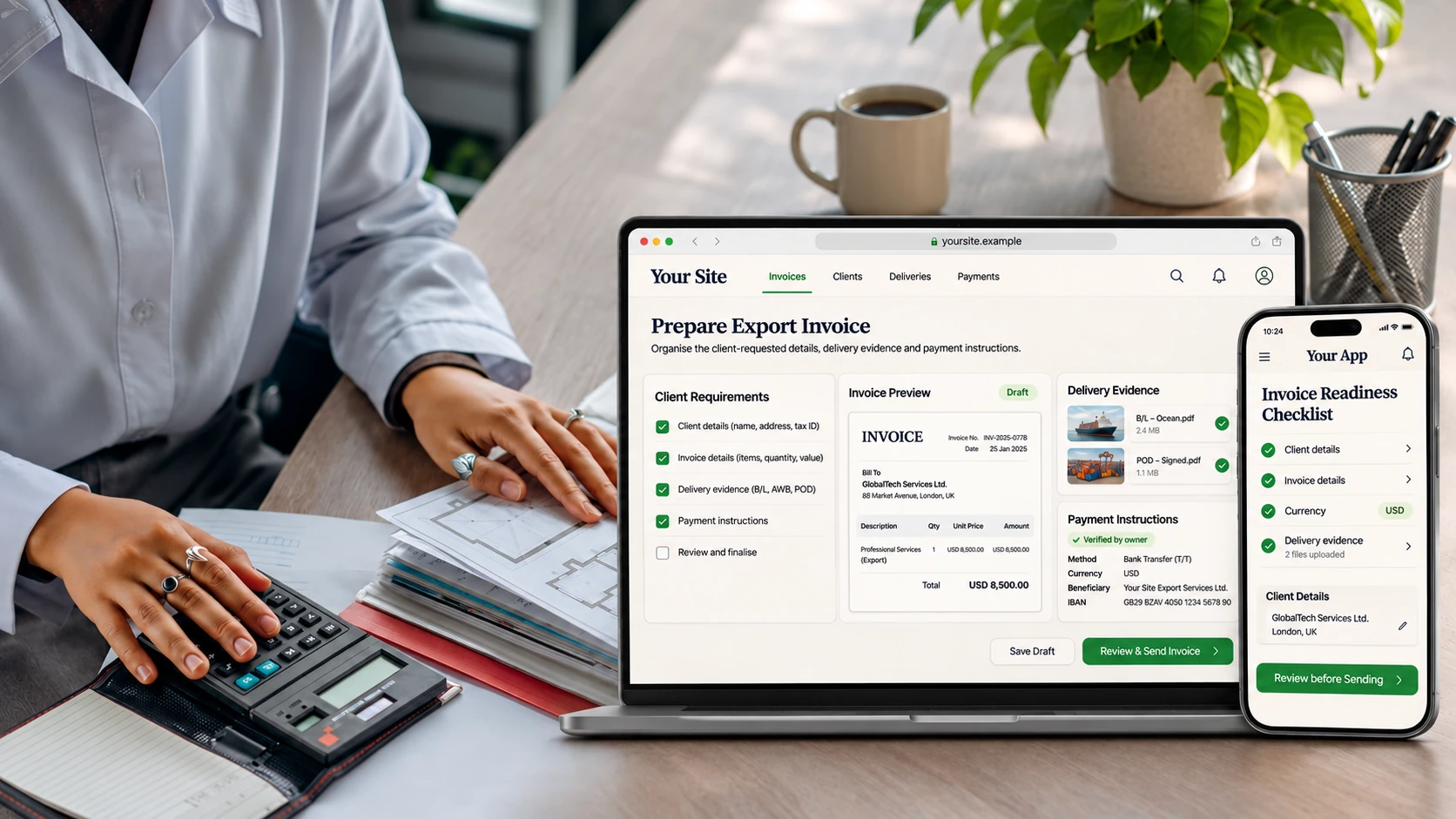
Focus on one type of service relationship. Collect the client’s supplied billing instructions, check for missing administrative fields and prepare a reviewable invoice package. Keep payments and exchange-rate decisions outside the first version.
- Keep client requirements beside invoice details.
- Collect approved payment instructions and references.
- Record submissions, questions and corrected versions.
Give the promise
something to stand on.
You need strong document organisation and access to qualified reviewers when questions exceed administration. Client preferences, dated templates and requirements that differ by country must remain clearly distinguished.
Keep templates dated and distinguish client preferences from requirements needing qualified review. The initial platform does not move money, choose exchange rates or give tax or legal advice.
Let a small beginning
teach you something.
Invite a few service businesses to bring examples with private details removed of returned invoice requests. Build a preparation checklist from the client’s actual instructions, then let the responsible person review its use on the next submission.
Can the business prepare the client’s requested invoice details and clearly identify any questions that need professional advice?
Look for these signs
- Client instructions have a source and date
- Missing administrative details are found before submission
- Specialist questions are separated for review
A little more
clarity.
Will the service tell me what tax to charge?
That requires appropriate advice for the specific transaction. The preparation desk can identify the question and organise information for a qualified reviewer, rather than inventing a universal answer.
Does it collect the overseas payment?
The proposed first version prepares records and submission details. Moving money, choosing currency arrangements or providing payment services would be a separate product with its own requirements.
What should my first version focus on?
Start with the first test described here, then build around the part people actually use and would pay to keep.
Now picture it
with your name on it.
Your people. Your priorities. The version you keep thinking about. Answer a few questions and leave with a starting plan you can keep.
Free to explore. No account or email needed for your starting plan.