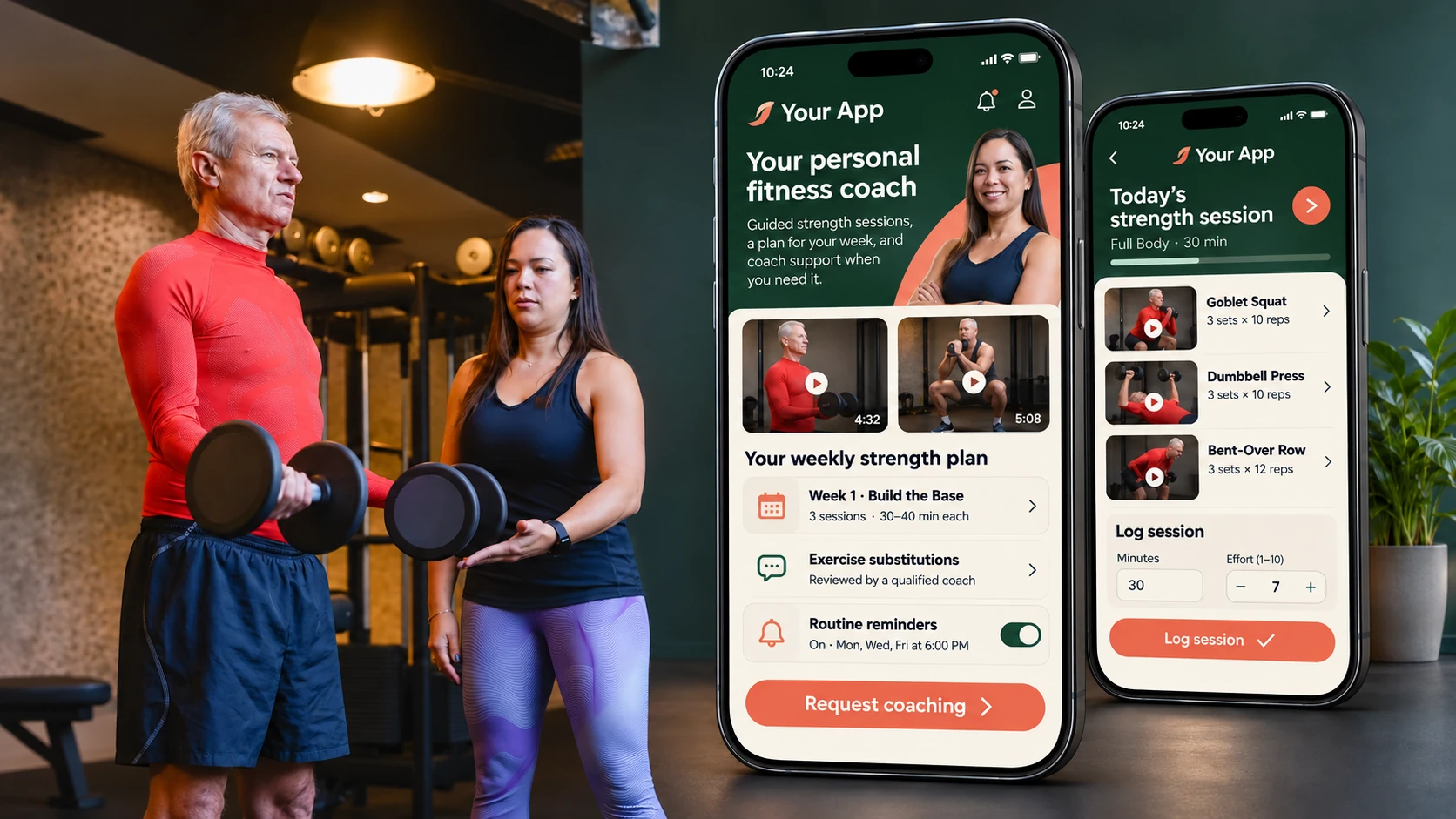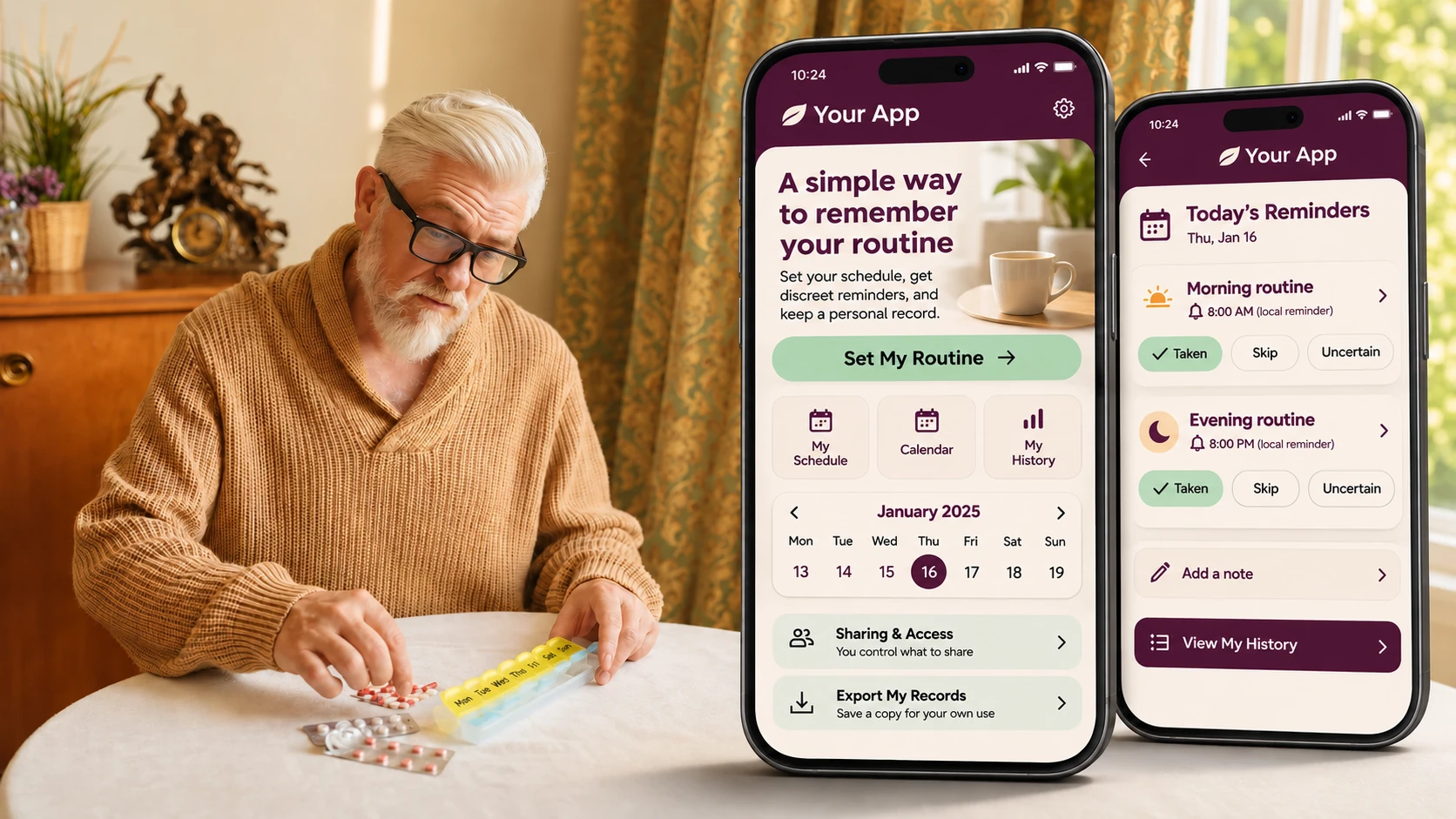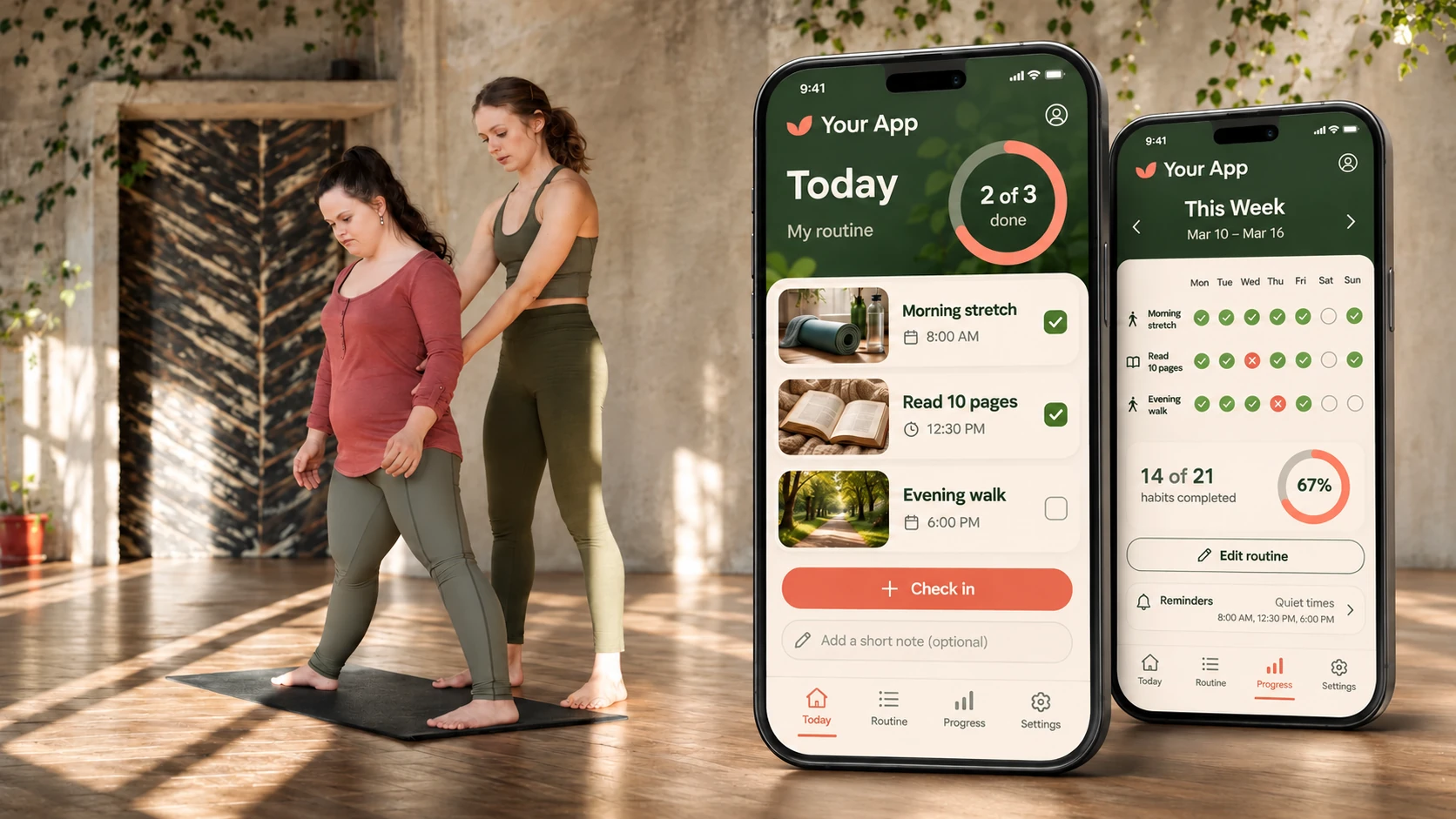
Someone intends to practise a language each evening, then misses a few days and avoids the tracker that now feels accusing. Your app could help them adjust the promise to fit real life, recording what happened without turning a personal routine into a public performance.
One useful moment.
A reason to open it.
A person names one routine, chooses a realistic schedule and sets a quiet reminder. A missed day can be recorded honestly without losing the ability to begin again.
Who would be glad
you built it?
People beginning a small routine
Choose a manageable commitment.
Returning learners
Restart after an interruption.
Coaches offering templates
Share a plan without automatically seeing private records.
A place in their life.
At the right moment.
Why it belongs on a phone
The phone is present when a routine happens. A quick check-in and a chosen reminder make the next small action easy to notice.
A reason to come back
People return for the next small action and the satisfaction of seeing their own pattern. Missed days should lead naturally into a fresh start.
Where the money
could come from.
A paid upgrade could offer additional routines, useful personal history and reviewed planning packs. The price needs a benefit beyond a free reminder. Product maintenance, syncing and support cost money. Coach licences can be explored separately while keeping users' records private by default.
The part you could
make your own.
Make the restart unusually easy: reduce the commitment, choose the next suitable time and continue. Test whether your audience values this approach over a more competitive tracking experience.
An angle to test with the people you want to serve.Start with something
worth using.
Start with a routine, flexible schedule, quiet reminders and a weekly review. Let users pause or revise the plan. Add templates only when they offer a concrete benefit for the intended audience.
- Set a personal routine and schedule
- Choose quiet reminder times
- Check in with an optional short note
- Review a week and adjust the plan
Give the promise
something to stand on.
You need a thoughtful view of behaviour and privacy. Keep claims modest: the app supports planning and reflection, while the user's circumstances determine what they can sustain.
Keep reminders under the user’s control and make history easy to delete. Frame the product as general organisation; avoid promises about treatment or health outcomes.
Let a small beginning
teach you something.
Invite willing people to try one self-chosen routine. Ask about the moments they ignored or welcomed the reminder and whether the weekly review helped them make a more realistic plan.
Does the tracker help the person choose a workable next step after an interruption rather than abandon the routine entirely?
Look for these signs
- Users adjust unrealistic schedules.
- Reminders stay under personal control.
- Reviews produce a clear next intention.
A little more
clarity.
Are streaks necessary?
No. They are one design choice and can be unhelpful for some audiences. Test a calmer view of attempts, pauses and restarts before assuming a broken streak motivates anyone.
Can a coach see a client's activity?
Only through an explicit sharing arrangement. Using a coach's template should not silently grant access to private history or notes.
Does missing a day have to reset everything?
No. You can design for flexible consistency, with planned rest days and a useful next step after an interruption.
Streaks is a habit tracker for Apple devices. Explore how it presents recurring tasks, then test the routines and tone that would fit your chosen audience.
Now picture it
with your name on it.
Your people. Your priorities. The version you keep thinking about. Answer a few questions and leave with a starting plan you can keep.
Free to explore. No account or email needed for your starting plan.