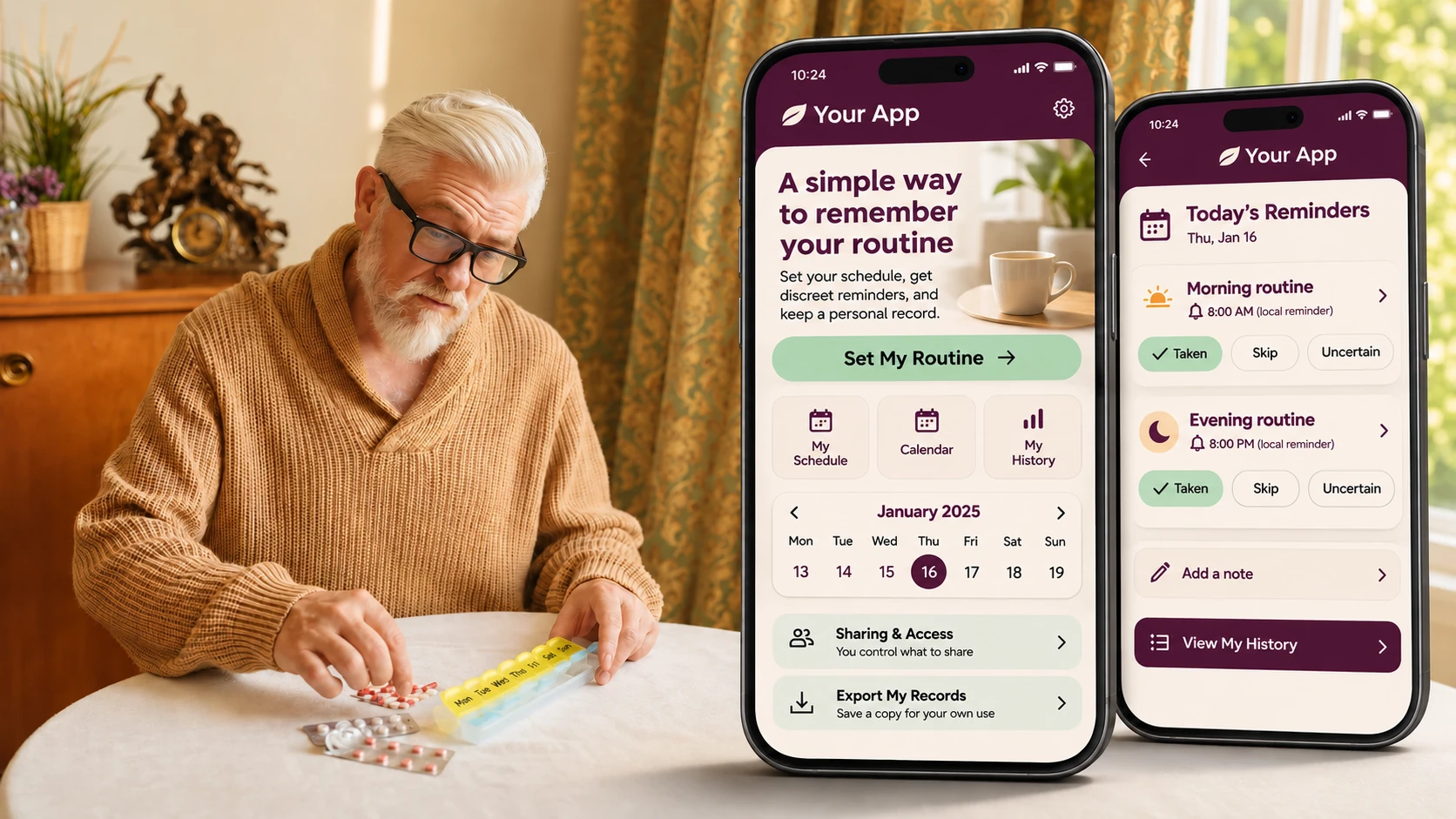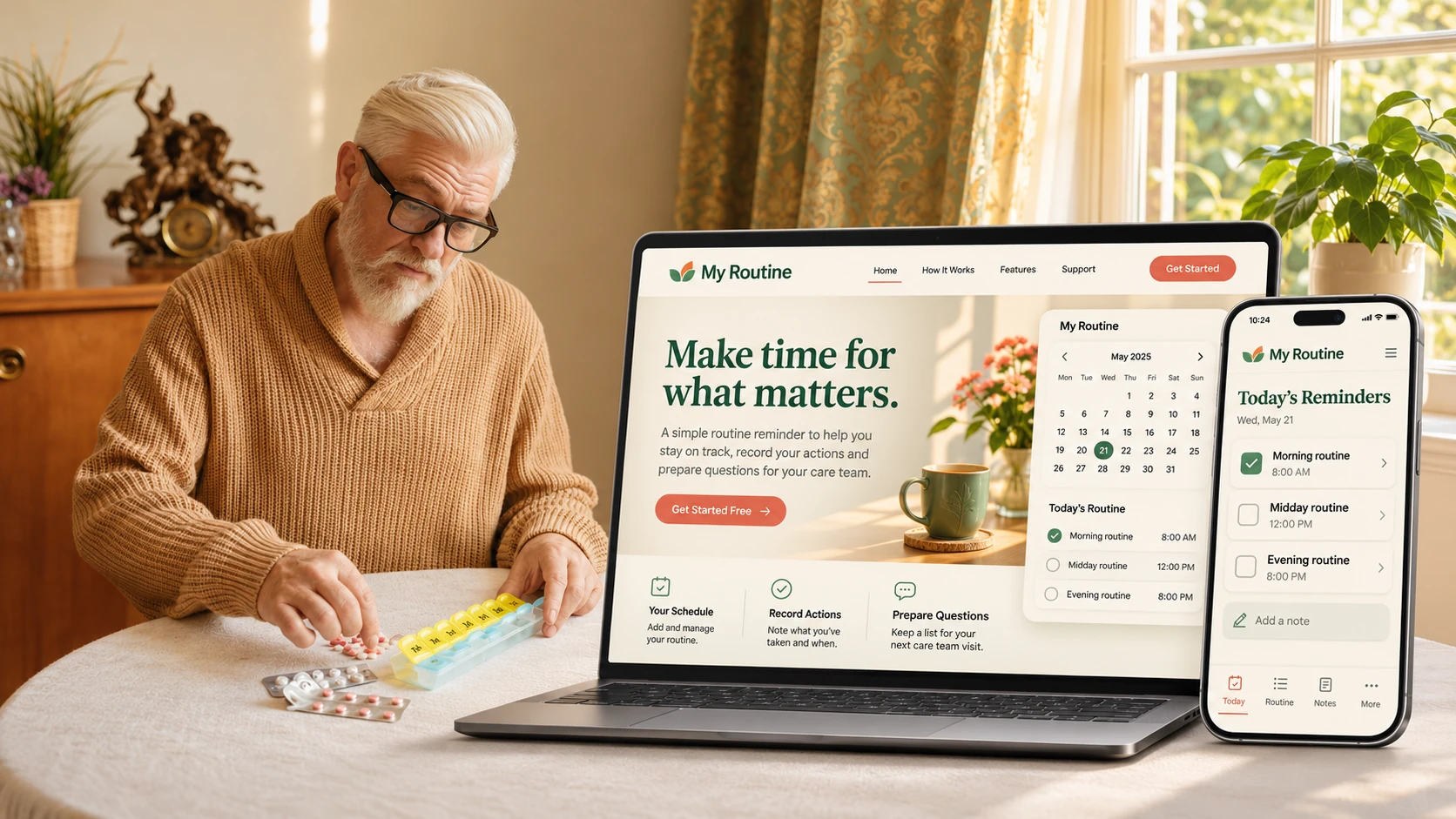
A person following an agreed care plan wonders whether they recorded a routine task earlier in the day. They want a clear personal record, not an app inventing new instructions. Your companion could organise reminders and notes around the plan they already have, while making its limited role easy to understand.
A business you can
picture.
Create a reminder and record-keeping app around user-entered or professionally confirmed schedules. Help people see reminders, record their own actions and prepare questions for their care team.
Who would be glad
you built it?
People managing an established routine
Keep reminders and personal records together.
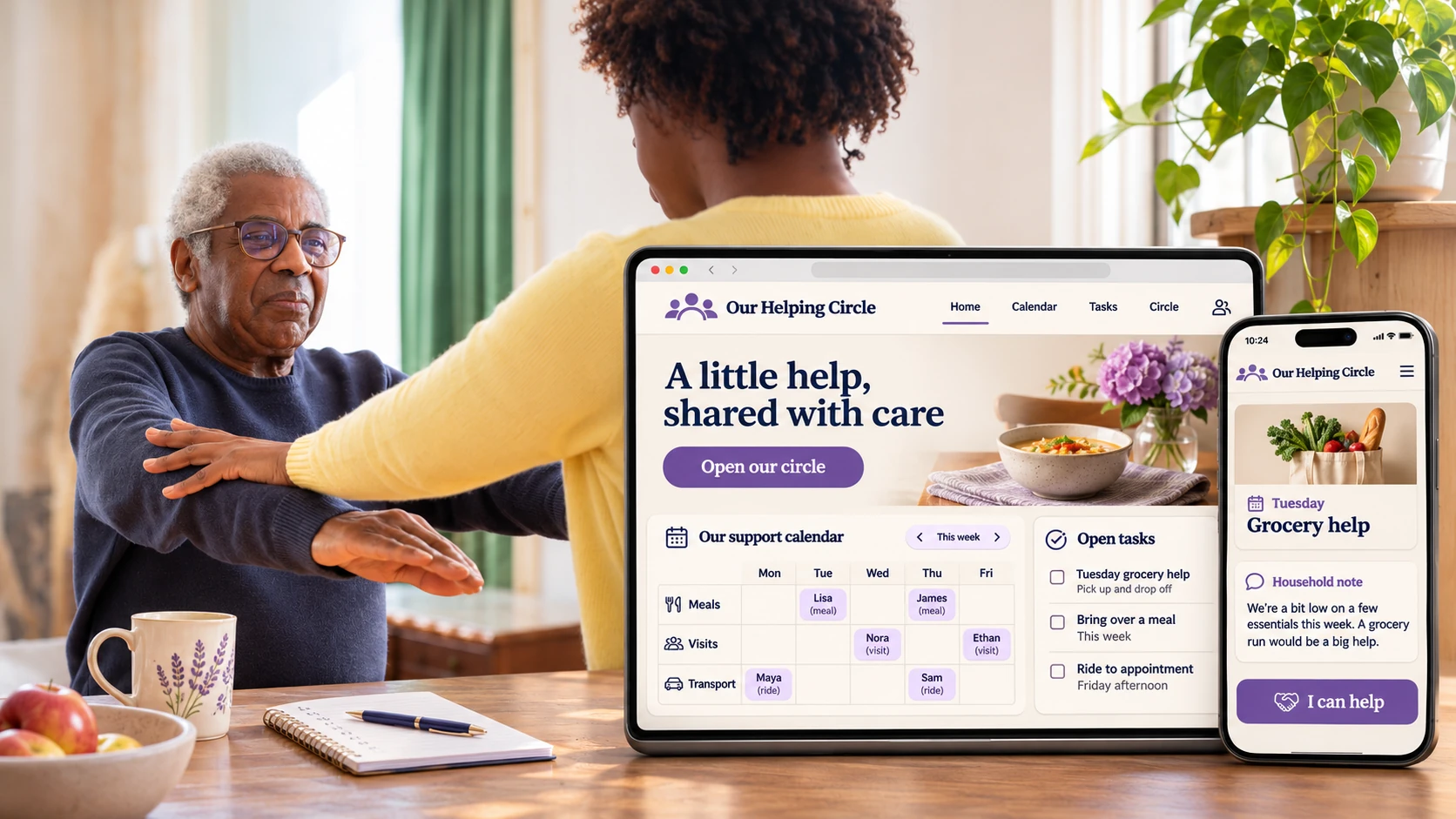
Authorised family supporters
Help with agreed organisation tasks.
Care teams receiving user-shared notes
Review questions raised between appointments.
Where the money
could come from.
Users could pay for additional organisation tools under a clear subscription, or a properly governed partner could fund access. The fee supports secure records, maintenance and reliable reminders. Keep commercial interests separate from medicine choices, and establish the intended service role before presenting the product as part of clinical care.
The part you could
make your own.
A calm, understandable routine could be the distinction. Clear schedule ownership, simple corrections and useful questions for the care team may help more than complicated dashboards. Test comprehension and usability without promising a health outcome.
An angle to test with the people you want to serve.Start with something
worth using.
Start with user-entered or professionally confirmed schedules, reminders, personal records and questions to discuss. Show who entered each schedule and how it is changed. Avoid automated dose recommendations or claims that a reminder proves medicine was taken.
- User-controlled reminder schedules
- Personal dose and refill records
- Optional trusted-person access
Give the promise
something to stand on.
You need a carefully bounded reminder product designed with appropriate professional input. Privacy, notification reliability and clear responsibility for schedule entry are central; the product should support an existing plan rather than make treatment decisions.
Reminders must be tested for timing, device settings and changes of time zone. The app should not independently change doses or replace a clinician. Health information and shared access need careful protection.
Let a small beginning
teach you something.
Test the interface with sample schedules and willing users, alongside appropriate professional review. Ask people to explain the reminder and record meanings, then check how they respond to a missed alert or an uncertain entry.
Can users understand the reminder and record without mistaking the app for a source of new medication instructions?
Look for these signs
- Schedules have a clear entry source
- Users can correct uncertain records
- Questions can be prepared for professional review
A little more
clarity.
Should the app tell someone what to do after a missed dose?
That can depend on the medicine and care plan. The initial companion should direct the person to their existing professional instructions or appropriate care contact, not generate a universal dosing response.
Does tapping completed prove the medication was taken?
It records the user's action in the app. Make that distinction visible, particularly if information is shared with a supporter or professional, so a self-entered log is not mistaken for independently verified evidence.
Medisafe is a reference for medication reminder apps.
Now picture it
with your name on it.
Your people. Your priorities. The version you keep thinking about. Answer a few questions and leave with a starting plan you can keep.
Free to explore. No account or email needed for your starting plan.