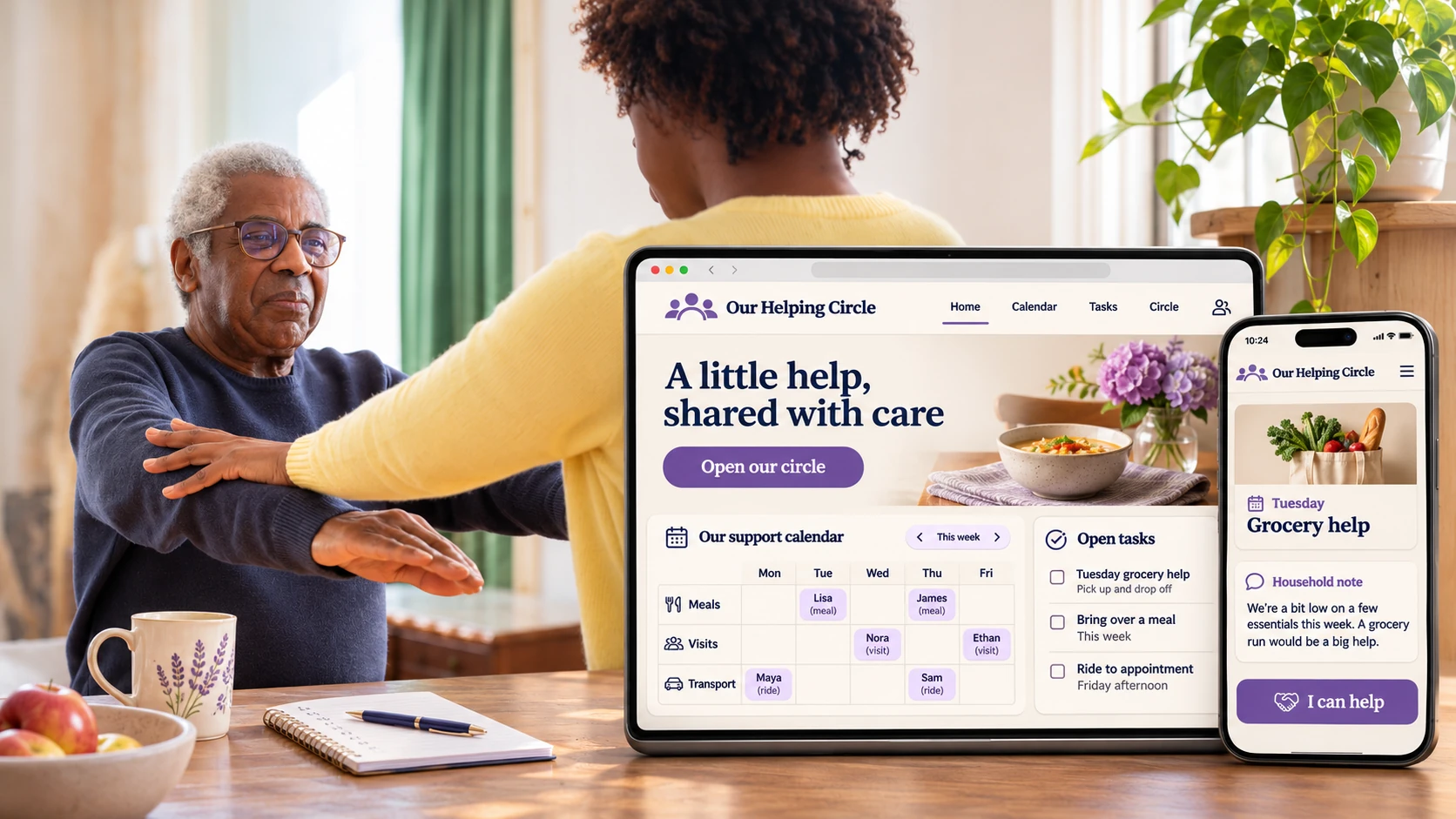
A household has plenty of kind offers but still needs to work out who can collect groceries, bring dinner or cover a school run. Your planner could turn those offers into agreed tasks, while the person receiving help keeps control over what is shared and who is invited.
A business you can
picture.
Start with everyday tasks and a small circle of approved supporters. Let the household decide what to share and who can see it.
Who would be glad
you built it?
Families organising help
Coordinate everyday tasks privately.
Trusted friends
Offer specific support at useful times.
Support organisations
Help members arrange practical assistance.
Where the money
could come from.
A household could pay for a private coordination plan, or an organisation could fund access for members. Choose one clear payer for the first pilot. Storage, invitations and support require funding, but the service should not pressure recipients to expose personal information or buy unnecessary extras during a difficult period.
The part you could
make your own.
A recipient-controlled experience could be the useful difference: simple requests, quiet updates and a coordinator who handles the chasing. Test whether those choices make accepting help feel easier rather than adding another obligation.
An angle to test with the people you want to serve.Start with something
worth using.
Begin with an invitation-only circle, a chosen coordinator, task requests and confirmations. Let the household hide details, decline offers and pause the plan without having to explain itself publicly.
- Invite selected supporters into a private circle.
- Post a task, time window and useful instructions.
- Let someone accept and confirm completion.
- Keep updates visible only to the right people.
Give the promise
something to stand on.
This suits someone who understands sensitive household coordination. You need thoughtful permissions and a service that reduces effort for the recipient instead of requiring them to supervise another busy group.
Accessible design, private information and thoughtful support need attention. Agree backup arrangements for missed tasks. This service would coordinate nonclinical help; it would not manage medication, provide healthcare or replace urgent assistance.
Let a small beginning
teach you something.
Work with a willing household and its trusted coordinator on a short, ordinary support period. Ask the recipient separately whether the arrangement actually lightens their load and respects their preferences.
Does the household spend less effort arranging help while retaining control over what happens around it?
Look for these signs
- Tasks have willing named helpers
- Recipients can change preferences easily
- Repeated explanations become less necessary
A little more
clarity.
Who should control the circle?
The household should choose who can invite people, view details and coordinate tasks. A trusted helper may manage the plan, but that should not remove the recipient's ability to change or pause it.
Can this include professional care?
A practical coordination tool can sit alongside a professional service. Do not blur ordinary help with qualified care, clinical decisions or emergency response; those need their own responsible providers and arrangements.
Would it replace professional care?
No. It helps organise everyday practical support around the household’s choices.
Must the person receiving help do all the administration?
A trusted coordinator could help, with clearly agreed access and the household’s permission.
Lotsa Helping Hands offers a care calendar for practical support. It is an adjacent reference. This concept explores selective sharing and clear handovers within a chosen circle.
Now picture it
with your name on it.
Your people. Your priorities. The version you keep thinking about. Answer a few questions and leave with a starting plan you can keep.
Free to explore. No account or email needed for your starting plan.