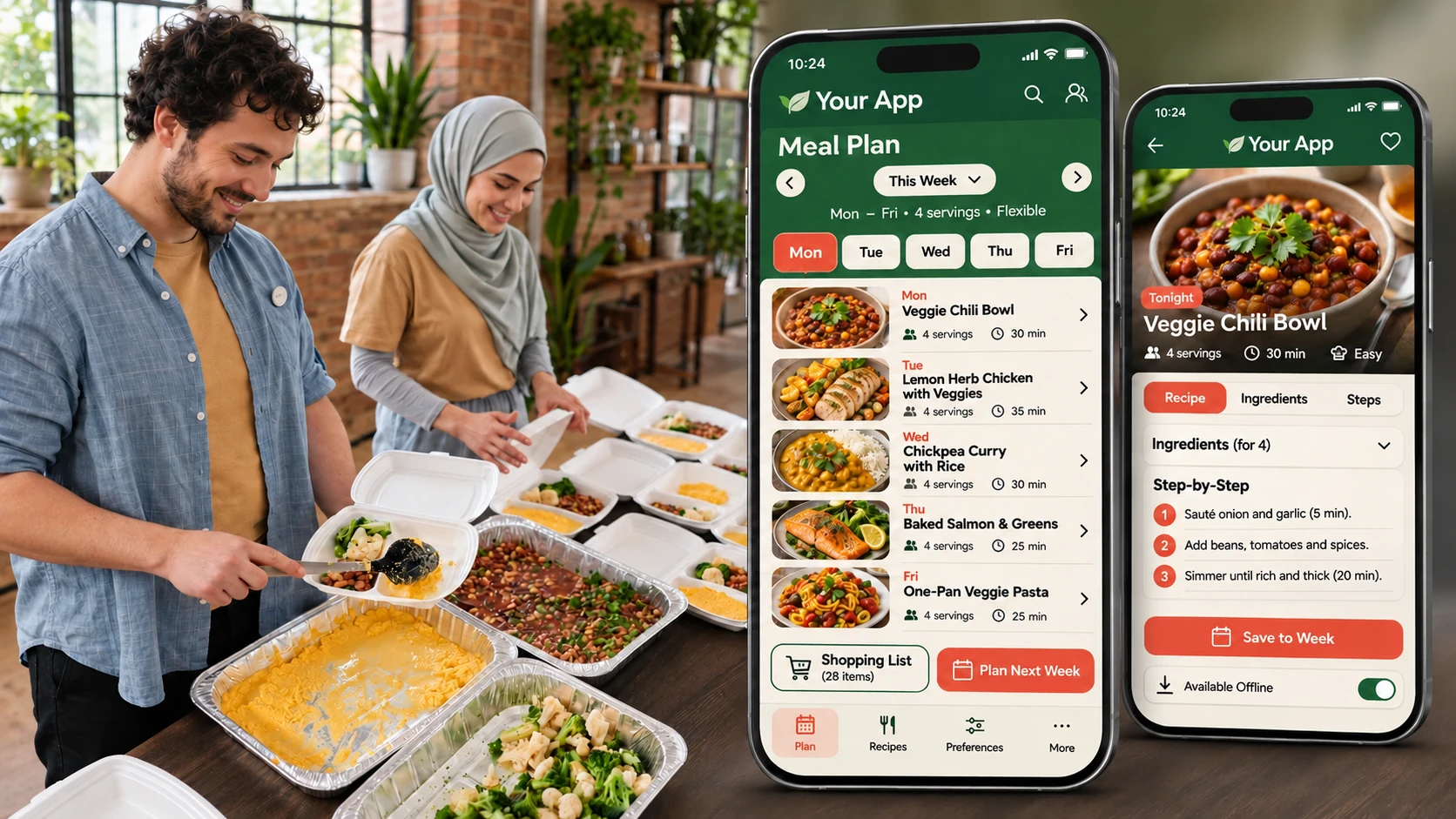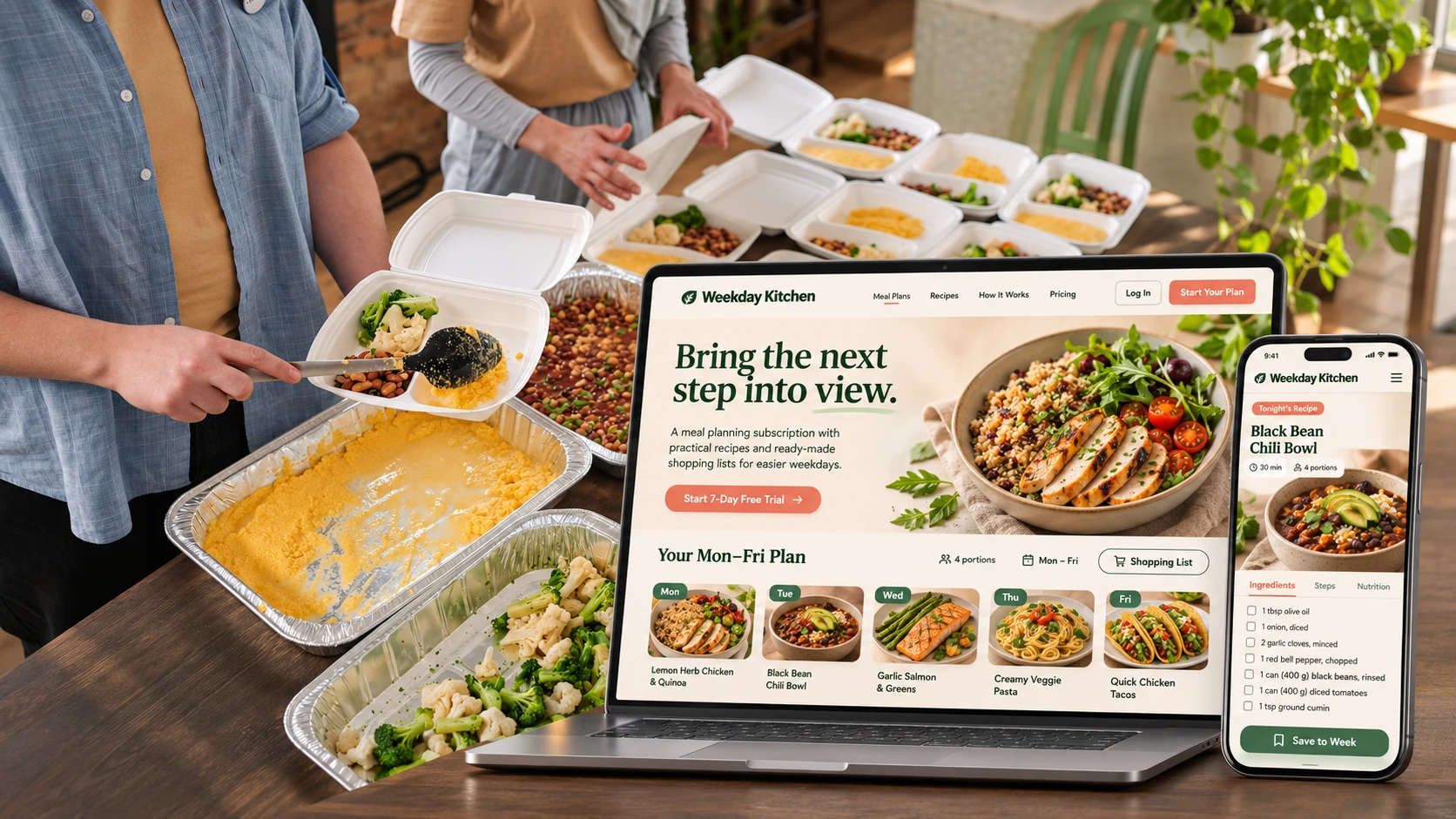
A parent reaches the evening with food in the cupboard but no clear plan for combining it. Your service could help the household choose a few realistic meals and organise the shopping around them, making the next cooking decision feel smaller without promising that every week will run perfectly.
A business you can
picture.
Create a meal planning subscription with practical recipes and shopping lists. Start with a defined household need, such as simple weekday cooking or reducing repeated shopping decisions.
Who would be glad
you built it?
Households planning weekday meals
Choose manageable recipes and shopping.
People cooking for one or two
Use suitable portions and ingredients.
Families coordinating food preferences
Agree a practical shared plan.
Where the money
could come from.
Households could pay for maintained planning tools and a practical recipe collection. Begin with that subscription and a clear cancellation path. Recipe development, testing, updates and support are continuing costs; any paid ingredient referrals should be disclosed and should not make a supposedly flexible plan depend on undisclosed commercial preferences.
The part you could
make your own.
Realistic everyday cooking could distinguish your offer. Short preparation steps, sensible portions and readily obtainable ingredients may matter more than spectacular food photography. Test whether the plan is used when the household is tired and busy.
An angle to test with the people you want to serve.Start with something
worth using.
Choose one household need and a small reliable recipe collection. Offer a weekly plan, editable servings and a shopping list. Let users replace meals and record preferences before adding elaborate automated recommendations.
- Preference-based meal plans
- Editable recipes and shopping lists
- Saved favourites and household portions
Give the promise
something to stand on.
You need tested recipes and a clear understanding of the household you serve. Ingredient availability, preparation time and dietary information need care; general meal planning should not quietly become personalised medical nutrition advice.
Recipe accuracy, food information and allergy communication need qualified review. Keep general meal organisation distinct from clinical nutrition advice. Users should be able to check ingredients and make their own substitutions.
Let a small beginning
teach you something.
Ask willing households to plan and cook from a sample week. Compare stated preparation assumptions with their experience, and learn which ingredients, portions or steps make the plan impractical in an ordinary evening.
Can a household use the plan through a normal week and adapt it when time or preferences change?
Look for these signs
- Recipes match available ingredients
- Shopping lists reflect chosen portions
- Households can adjust the plan easily
A little more
clarity.
Can the service cater for medical dietary needs?
That requires appropriate professional expertise and a clearly defined service. The first product can organise ordinary preferences while avoiding claims that generic recipes treat a condition or replace individual clinical guidance.
Must users follow every planned meal?
A useful planner should allow change. Easy swaps, adjustable portions and a clear shopping list can help the plan fit real life rather than making a missed meal feel like failure.
Eat This Much is a reference for meal planning software.
Now picture it
with your name on it.
Your people. Your priorities. The version you keep thinking about. Answer a few questions and leave with a starting plan you can keep.
Free to explore. No account or email needed for your starting plan.