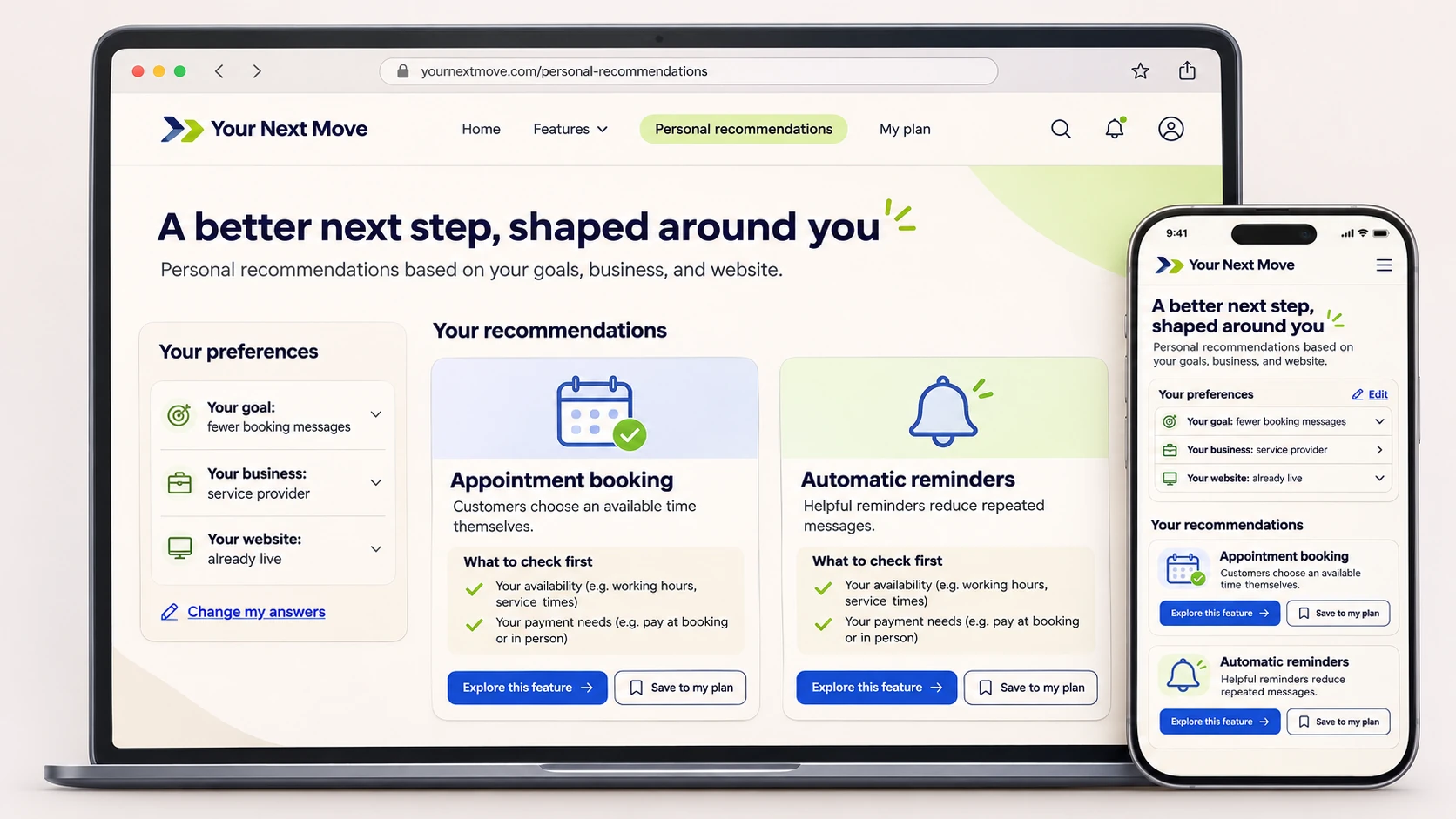
A visitor opens a large collection of courses or business ideas and feels interested in everything but ready to choose nothing. A guided recommendation could ask a few meaningful questions and show a manageable set with reasons. The visitor remains free to change the answers, browse more widely or reject a suggestion that misses their situation.
Visitors face a large collection and must guess where to begin, while generic featured items reveal little about their personal relevance.
A few meaningful preferences produce a manageable shortlist with reasons, editable inputs and links that let the visitor explore or challenge each suggestion.
Where it could
make a difference.
Learning platforms
Suggest material aligned with a stated goal.
Idea libraries
Connect possibilities to a visitor's interests.
Product catalogues
Offer a relevant starting shortlist.
Useful on: Online store, Learning website, Directory, Idea library.
What this could mean
for your business.
Recommendations can help visitors reach relevant offers and make a large catalogue feel more approachable. Their value depends on fit and explanation, not the sophistication of the matching method. Review useful next steps and mismatches alongside completed questionnaires, and keep any paid placement clearly identified.
Start with something
worth using.
Start with a few useful preferences, explained suggestions and editable answers. Link to full details and the wider catalogue. Add more complex matching only after reviewing where the simple rules miss the intended fit.
- A few useful preference questions
- Relevant suggestions with reasons
- A way to change the inputs
Give the promise
something to stand on.
You need structured catalogue information and transparent matching rules. Decide what the questions actually establish and keep commercial priorities separate from claims that an option is personally best for someone.
Use only the information people have agreed to share or that is appropriate to the service. Keep suggested items accurate and avoid invented suitability, profitability or success scores.
- Structured catalogue information
- Transparent matching rules
- Recommendation quality review
How it fits what you already have
Check catalogue tags, matching rules, saved preferences and privacy choices. Define how new or unavailable entries affect suggestions, and preserve a normal browsing route when visitors prefer not to answer questions.
Let a small beginning
teach you something.
Ask intended visitors to answer the questions and explain the resulting suggestions. Review mismatches with a knowledgeable person and check whether users feel able to adjust the inputs rather than accept the first result blindly.
Can the visitor understand why an option was suggested and change the inputs when the shortlist does not fit their situation?
Look for these signs
- Suggestions show understandable reasons.
- Users can revise their answers.
- Mismatches inform catalogue or rule improvements.
A little more
clarity.
Does a recommendation prove an idea will work for me?
No. It offers a starting point based on the information supplied. The detail page and a more personal conversation should help you explore customers, resources and practical requirements before committing.
Must this use AI?
Not necessarily. Clear rules can be a useful first version. If AI is added, it should work from the actual catalogue and explain the basis of suggestions without inventing capabilities or personal certainty.
Could this work with my existing website?
We would check how your current website is built, what it already does and which services need to connect. That helps us choose a suitable addition and avoid paying twice for something you already have.
What would this change
in your business?
Your customers. Your working day. The part you would love to make easier. Answer a few questions and leave with a starting plan you can keep.
Free to explore. No account or email needed for your starting plan.