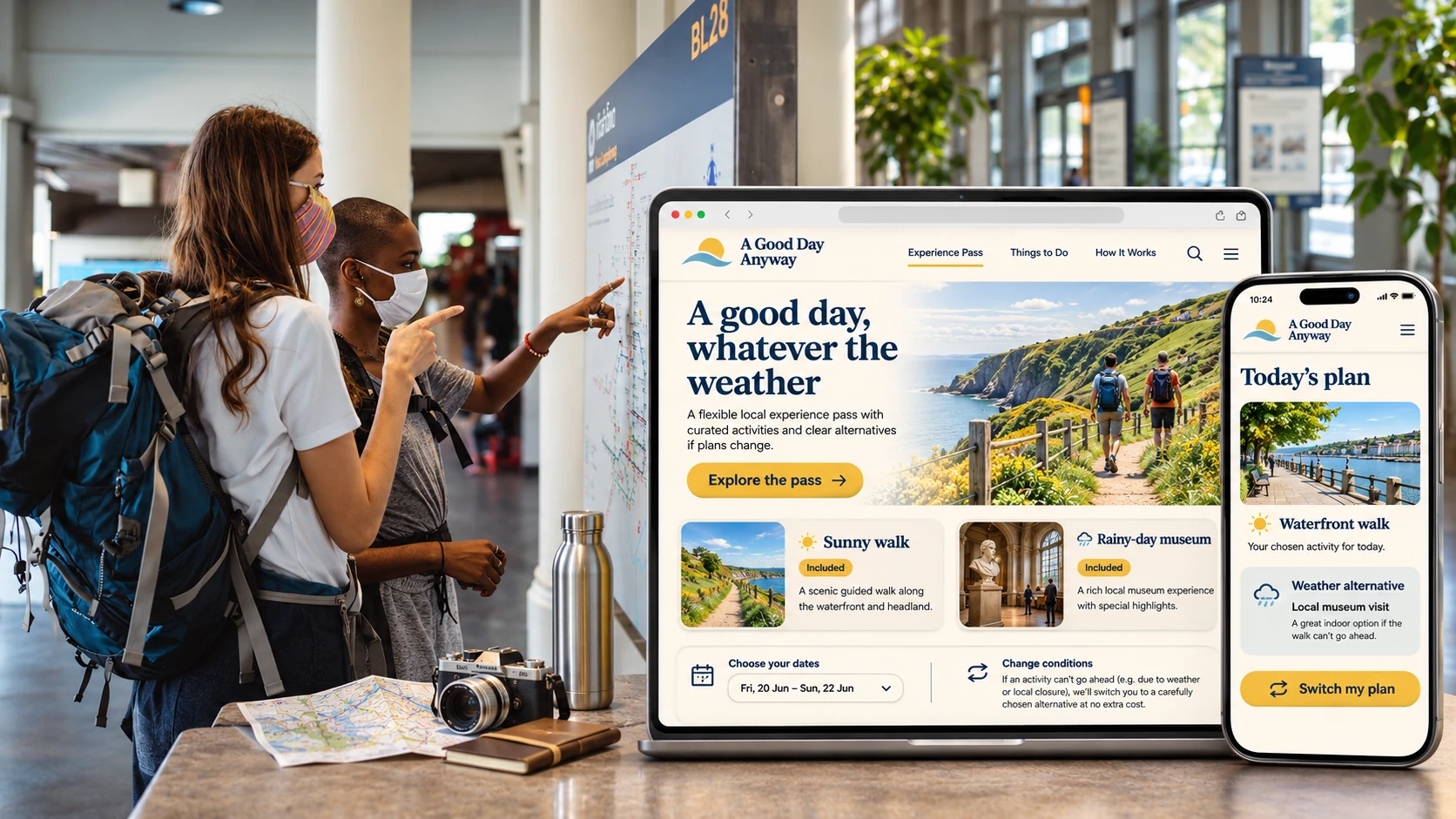
A visitor has set aside a day for an outdoor experience, then the conditions change. The host has ideas for alternatives but nothing is agreed with the other providers. Your service could organise those options in advance, giving guests a clearer choice and hosts a practical confirmation process when the original activity cannot go ahead.
A business you can
picture.
Start with a small group of complementary providers. A pass explains the original activity, the conditions for a change and the alternatives that can be offered subject to confirmed capacity.
Who would be glad
you built it?
Visitors booking a flexible experience day
Understandable alternatives and change terms
Activity providers
A coordinated way to offer suitable replacements
Local experience networks
Shared rules for capacity and handover decisions
Where the money
could come from.
Visitors could buy a clearly defined pass, with an agreed coordination share retained by the platform and provider payments specified. Revenue must cover booking, changes and support. Price the actual flexibility promised; an attractive pass should not imply unlimited replacements or guaranteed capacity when providers have only agreed provisional options.
The part you could
make your own.
Your proposed edge is preparation before disruption. A visitor could understand the decision path at purchase, while hosts know who confirms a replacement and how the guest will be contacted.
An angle to test with the people you want to serve.Start with something
worth using.
Choose a small set of compatible experiences. Agree alternative options, capacity checks and change terms before selling the pass. Explain what is included, what requires confirmation and what happens when no suitable alternative is available.
- Explain change conditions before a pass is purchased.
- Keep alternative availability separate from a guarantee.
- Let visitors accept a confirmed replacement or agreed remedy.
Give the promise
something to stand on.
You need participating provider agreements and clear responsibility for operational decisions. Weather information may support a discussion, but the responsible operator decides whether its activity can proceed safely.
Terms, capacity and safety decisions require clear provider agreements. Weather information can inform a conversation, but the responsible operator decides whether its activity can proceed.
Let a small beginning
teach you something.
Work with a small provider group to rehearse a changed-day scenario before a limited real pilot. Check capacity confirmation and guest communication, then ask whether the pass terms match the choices actually available.
When the original activity changes, can the guest choose from confirmed alternatives under terms they understood before purchase?
Look for these signs
- Alternatives have provider-confirmed capacity
- Change terms are clear before purchase
- Guests receive one understandable next arrangement
A little more
clarity.
Does the pass guarantee an activity in any weather?
No. Only promise the alternatives and conditions the providers can support. Some situations may leave no suitable option, which needs an honest cancellation or other agreed process.
Who decides whether the original activity proceeds?
The responsible activity operator, using appropriate judgement and requirements. The platform coordinates choices and communication; it should not override an operator’s safety decision with an automated weather rule.
What should my first version focus on?
Start with the first test described here, then build around the part people actually use and would pay to keep.
Now picture it
with your name on it.
Your people. Your priorities. The version you keep thinking about. Answer a few questions and leave with a starting plan you can keep.
Free to explore. No account or email needed for your starting plan.