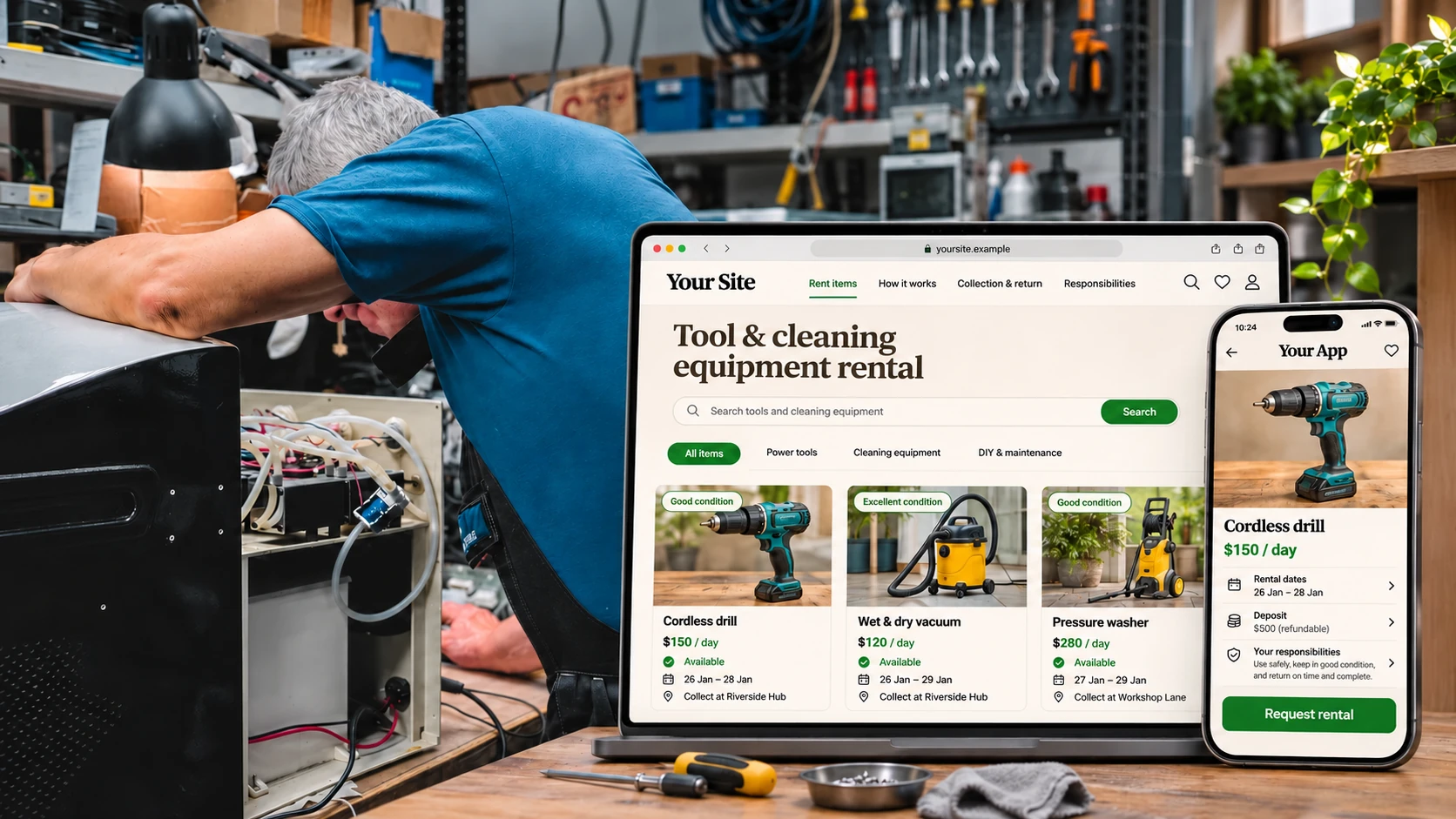
A homeowner needs a specialised tool for a weekend project, while someone nearby owns one that rarely leaves the cupboard. Your marketplace could organise availability, condition and collection, turning that possible match into a rental both people understand before the item changes hands.
A business you can
picture.
Create a rental marketplace for a focused category. Show condition, availability, collection arrangements and the responsibilities attached to using and returning the item.
Who would be glad
you built it?
Occasional users
Access an item for a limited need.
Owners of suitable equipment
Offer well-maintained items for rent.
Small rental operators
Manage availability and handovers.
Where the money
could come from.
The marketplace could retain a disclosed booking fee, while the owner receives rental income under agreed terms. Include payment handling, support and disputes in the platform's costs. Maintenance, downtime and damage remain part of the owner's economics, so an idle item's advertised daily rate is not a reliable profit forecast.
The part you could
make your own.
Category-specific handovers could be your edge. Clear condition notes, practical instructions and predictable collection arrangements may make a renter more comfortable than a general listing. Test the entire return cycle before expanding.
An angle to test with the people you want to serve.Start with something
worth using.
Choose one category and a manageable local area. Support accurate listings, available dates, agreed terms and condition records at handover. Start with owners you can onboard properly and keep unsuitable or difficult-to-assess items out.
- Item listings and availability calendars
- Rental requests and deposits
- Collection, return and condition records
Give the promise
something to stand on.
You need knowledge of the item category and a fair process for condition, deposits and returns. Maintenance, suitability and responsibility for damage matter more than making every possible item immediately bookable.
Identity checks, damage handling, insurance arrangements and late returns need an operating process. Do not imply that every item or activity is covered unless an actual agreement supports that claim.
Let a small beginning
teach you something.
Work with a few owners and people who have a genuine short-term need. Supervise the first rental cycle, noting questions about use, collection, condition and return before adding more categories or locations.
Can both parties agree the item's condition and responsibilities before collection and close the rental clearly on return?
Look for these signs
- Availability reflects real commitments
- Handover records are understandable
- Returns follow the agreed arrangement
A little more
clarity.
Does every item need a deposit?
That depends on the category and agreed arrangement. Explain any deposit, holding period and deduction process before booking, and use a suitable payment approach rather than treating a deposit as ordinary platform income.
Who covers damage or unsafe use?
Define responsibility, suitability requirements and any applicable cover before rental. Avoid suggesting that a checkbox or user profile removes the need for maintenance, instructions and a clear process when something goes wrong.
Hygglo is a reference for peer-to-peer item rental.
Now picture it
with your name on it.
Your people. Your priorities. The version you keep thinking about. Answer a few questions and leave with a starting plan you can keep.
Free to explore. No account or email needed for your starting plan.