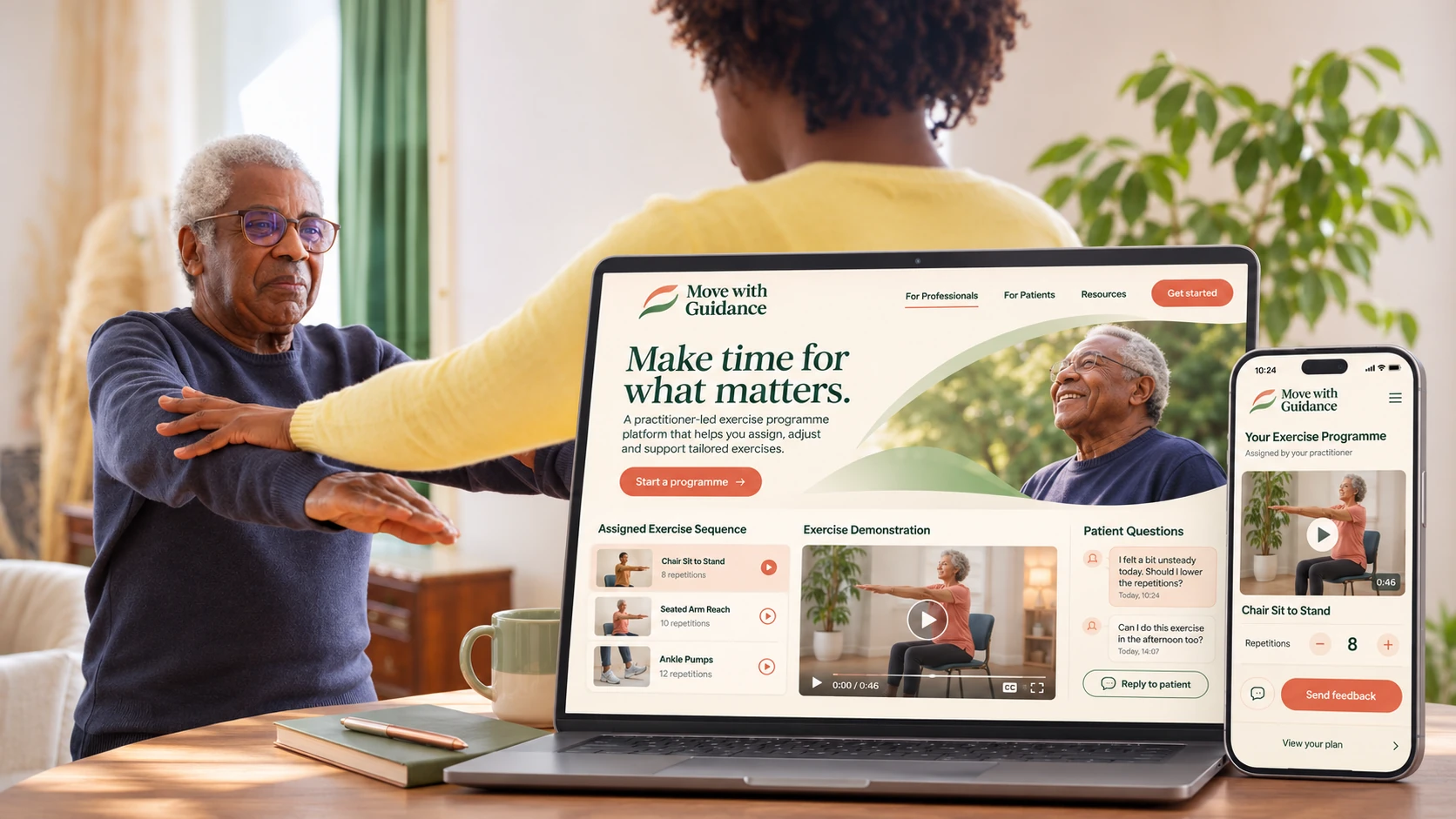
After an appointment, a patient remembers the purpose of an exercise but not every detail of the explanation. Your platform could give them the programme selected by their therapist and a simple way to record questions, while the qualified practitioner remains responsible for reviewing and adjusting the plan.
A business you can
picture.
Offer exercise-programme software to appropriate clinical professionals. Let the practitioner choose and adjust the plan, while the patient can review instructions and report questions or difficulties.
Who would be glad
you built it?
Qualified clinical practitioners
Share and review prescribed programmes.
Patients following an agreed plan
Revisit instructions and report difficulties.
Practice teams
Coordinate authorised programme support.
Where the money
could come from.
Practices could pay a recurring software fee for programme delivery and feedback tools. Keep that charge distinct from professional treatment fees. Approved content, secure records, support and integration work all need funding; the platform should sell a defined workflow rather than imply that its subscription includes unlimited clinical care.
The part you could
make your own.
A clearer continuation of the appointment could be the difference. Accessible instructions, visible professional ownership and useful feedback prompts may help the practice support its own patients. Test comprehension and handover without promising a treatment result.
An angle to test with the people you want to serve.Start with something
worth using.
Start with practitioner-assigned exercises, approved demonstrations and patient feedback. Show the responsible practitioner and agreed contact route. Keep automatic programme changes and unreviewed symptom interpretation outside the first version.
- Practitioner-assigned exercise plans
- Approved demonstrations and instructions
- Patient feedback and review appointments
Give the promise
something to stand on.
You need appropriate clinical input and a clearly defined software role. The professional should control programme selection and changes, with privacy, access and response arrangements designed around the practice's actual service.
Clinical oversight, consent and health-data controls are required. The software should not independently prescribe exercises or reinterpret symptoms. Clearly explain when feedback is reviewed and how to seek appropriate care.
Let a small beginning
teach you something.
Test with qualified practitioners using sample programmes, then a carefully supervised patient group where appropriate. Ask whether instructions remain understandable after the appointment and whether feedback reaches the right person under the stated arrangements.
Can the patient follow the professionally agreed instructions and raise a question without assuming the app independently manages their care?
Look for these signs
- Programmes show professional ownership
- Patients can find relevant instructions
- Feedback follows an agreed review process
A little more
clarity.
Can patients choose any exercise from a large library?
That depends on the professionally designed service. The initial product can keep the assigned plan clear, avoiding a self-selection experience that might conflict with the practitioner's instructions or imply suitability for everyone.
Will feedback be monitored continuously?
Only if the practice explicitly provides that service. Show realistic response arrangements and appropriate urgent-contact guidance so a patient does not rely on an ordinary programme message for immediate help.
Physitrack is a reference for practitioner-led exercise software.
Now picture it
with your name on it.
Your people. Your priorities. The version you keep thinking about. Answer a few questions and leave with a starting plan you can keep.
Free to explore. No account or email needed for your starting plan.