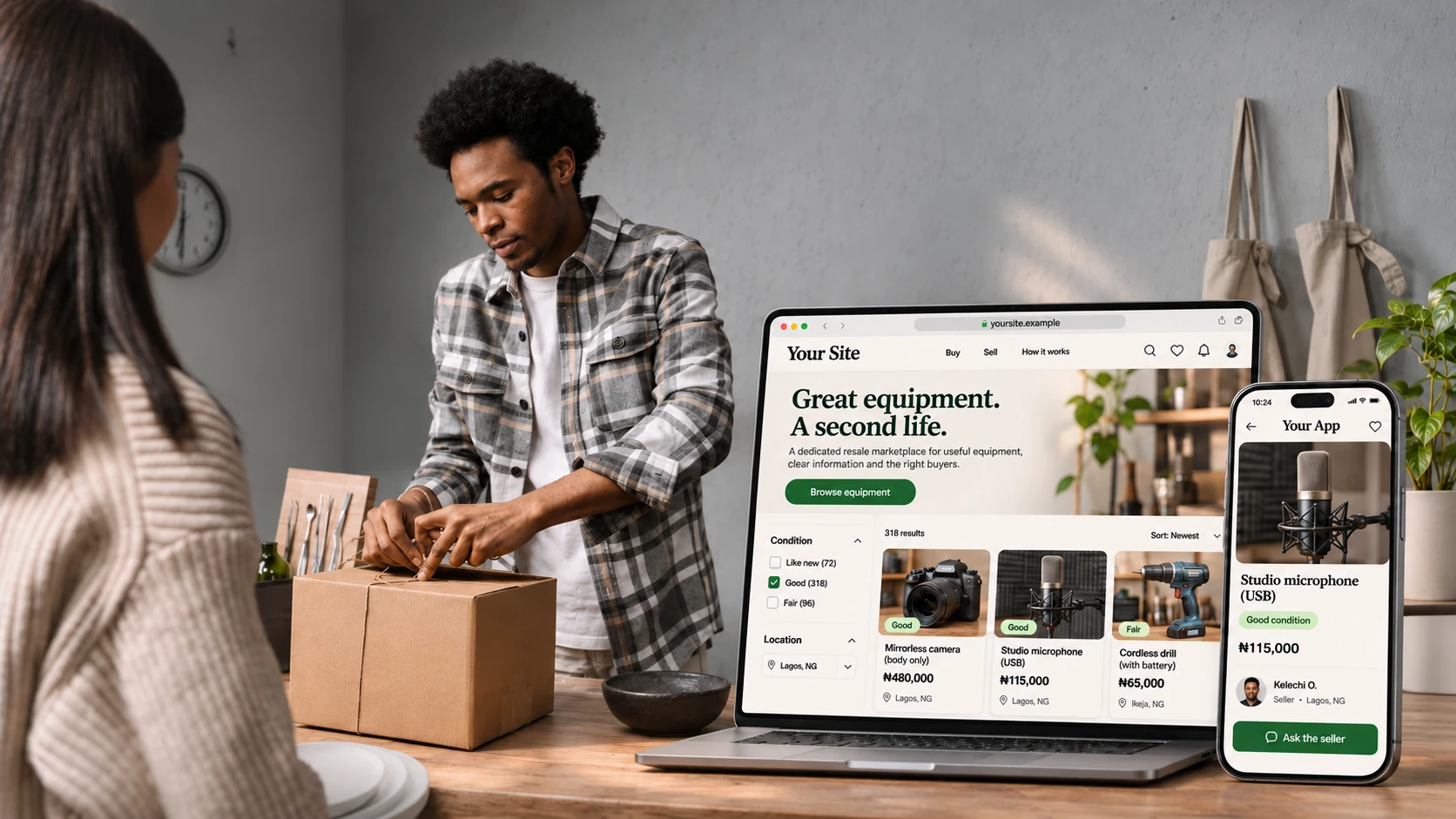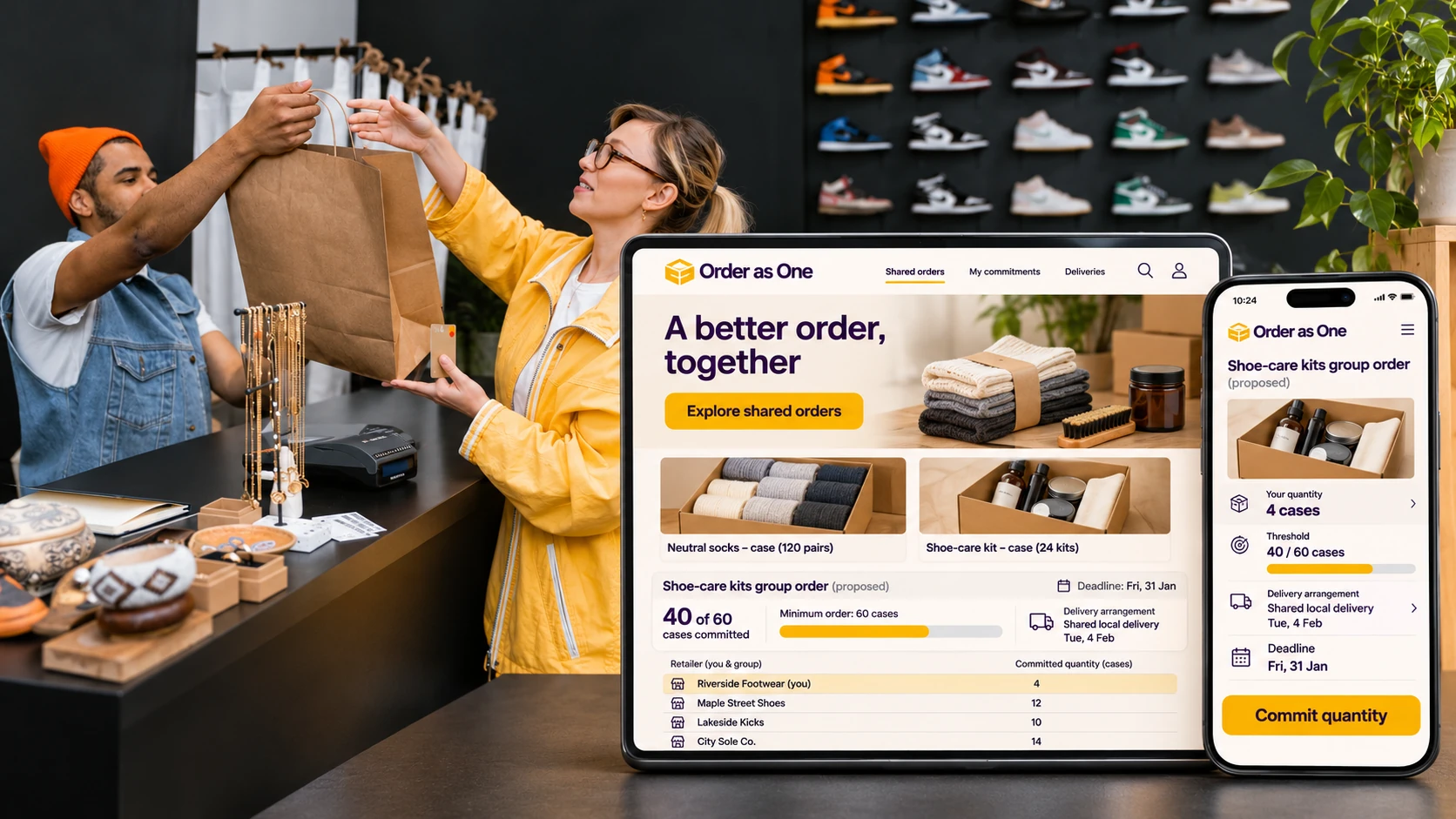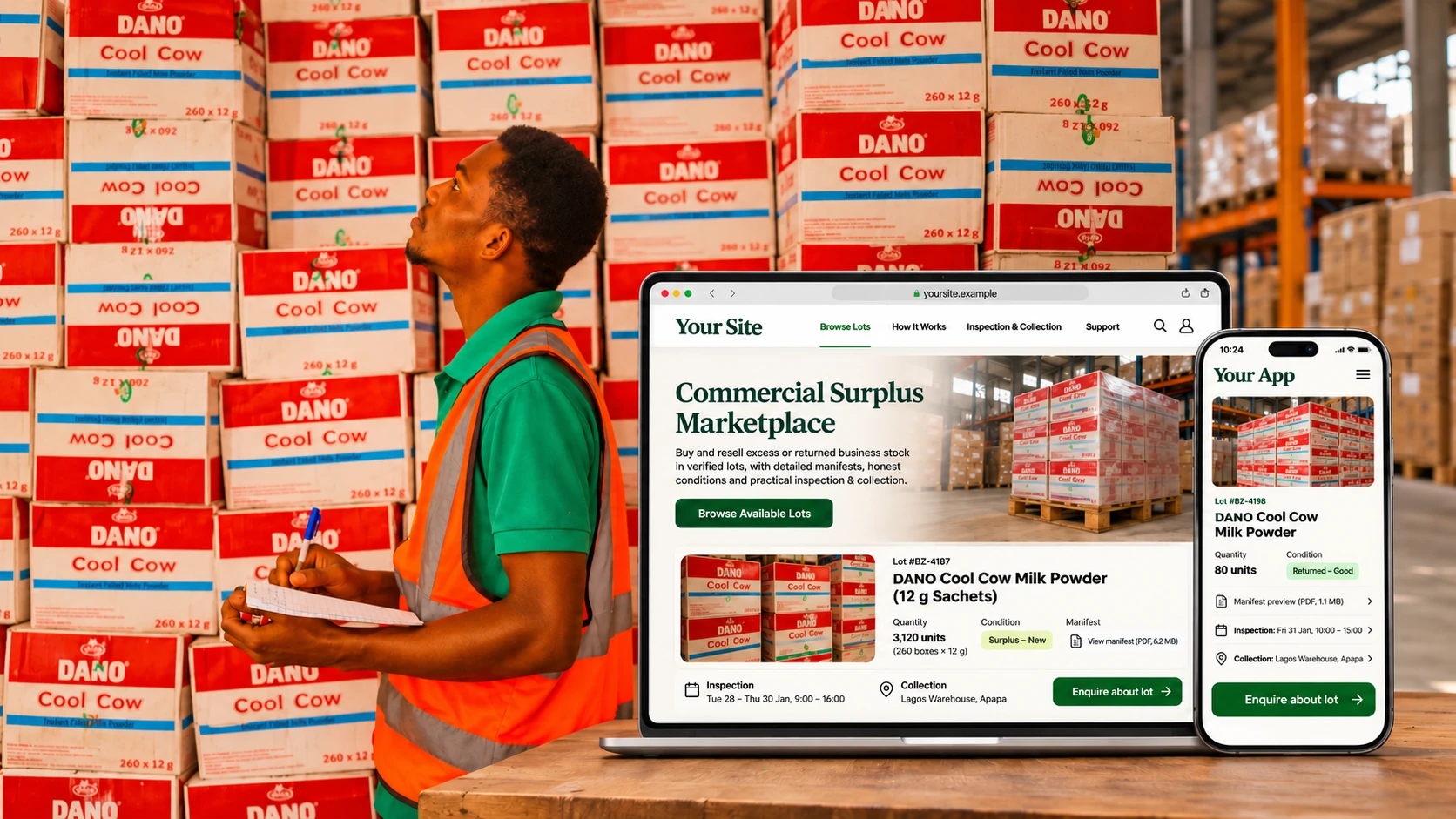
A wholesaler has returned products taking up space while another retailer is searching for suitable discounted inventory. The headline quantity sounds appealing, but the mix and condition matter. Your exchange could make the lot understandable through a detailed manifest, honest evidence and practical inspection or collection arrangements.
A business you can
picture.
Create a resale exchange for excess or returned commercial stock. Organise lots around detailed manifests and honest condition descriptions, with a practical process for inspection and collection.
Who would be glad
you built it?
Retailers buying stock lots
Assess resale suitability and full costs.
Businesses clearing surplus
Present inventory accurately.
Specialist resellers
Compare lots within a familiar category.
Where the money
could come from.
A seller could pay a disclosed fee on a completed lot sale, with optional cataloguing or managed preparation priced separately. The platform must cover verification work, support and transaction handling. Buyers still bear their own transport, sorting and resale costs, which should be visible when the opportunity is presented.
The part you could
make your own.
Trustworthy lot information could distinguish your exchange. A detailed manifest and candid condition evidence may help serious buyers more than dramatic discount claims. Test whether better information supports satisfactory completed collections.
An angle to test with the people you want to serve.Start with something
worth using.
Choose one category and a few sellers. Require a usable lot manifest, condition explanation, photographs and collection terms. Offer inspection arrangements where practical and make uncertainty visible rather than describing every return as sale-ready stock.
- Stock lots and item manifests
- Condition evidence and buyer questions
- Offers, payments and collection arrangements
Give the promise
something to stand on.
You need expertise in the stock category and a reliable approach to manifests and condition. Sorting, inspection, transport and disagreements over mixed lots can be significant work behind what looks like a simple listing.
Ownership, product restrictions, condition disputes and fulfilment require clear procedures. Keep seller claims separate from any checks the platform has actually performed.
Let a small beginning
teach you something.
Ask experienced buyers to review real surplus lots and identify what prevents a decision. Follow a small number through inspection and collection, comparing the delivered lot with the manifest and agreed condition.
Can a buyer assess the lot's likely use and complete collection costs without relying on an optimistic headline description?
Look for these signs
- Manifests match the offered lots
- Condition categories are understood
- Collection follows the agreed arrangement
A little more
clarity.
Can returned goods be sold as new?
Describe condition accurately and follow the applicable selling requirements. A return may be unused, damaged or incomplete; the platform should not collapse those differences into one appealing label.
Does a discount prove a profitable resale opportunity?
No. Sorting, transport, repairs, unsellable items and selling costs affect the result. Give buyers the evidence they need to make their own assessment instead of promising a margin from the stated discount.
B-Stock is a reference for surplus inventory marketplaces.
Now picture it
with your name on it.
Your people. Your priorities. The version you keep thinking about. Answer a few questions and leave with a starting plan you can keep.
Free to explore. No account or email needed for your starting plan.