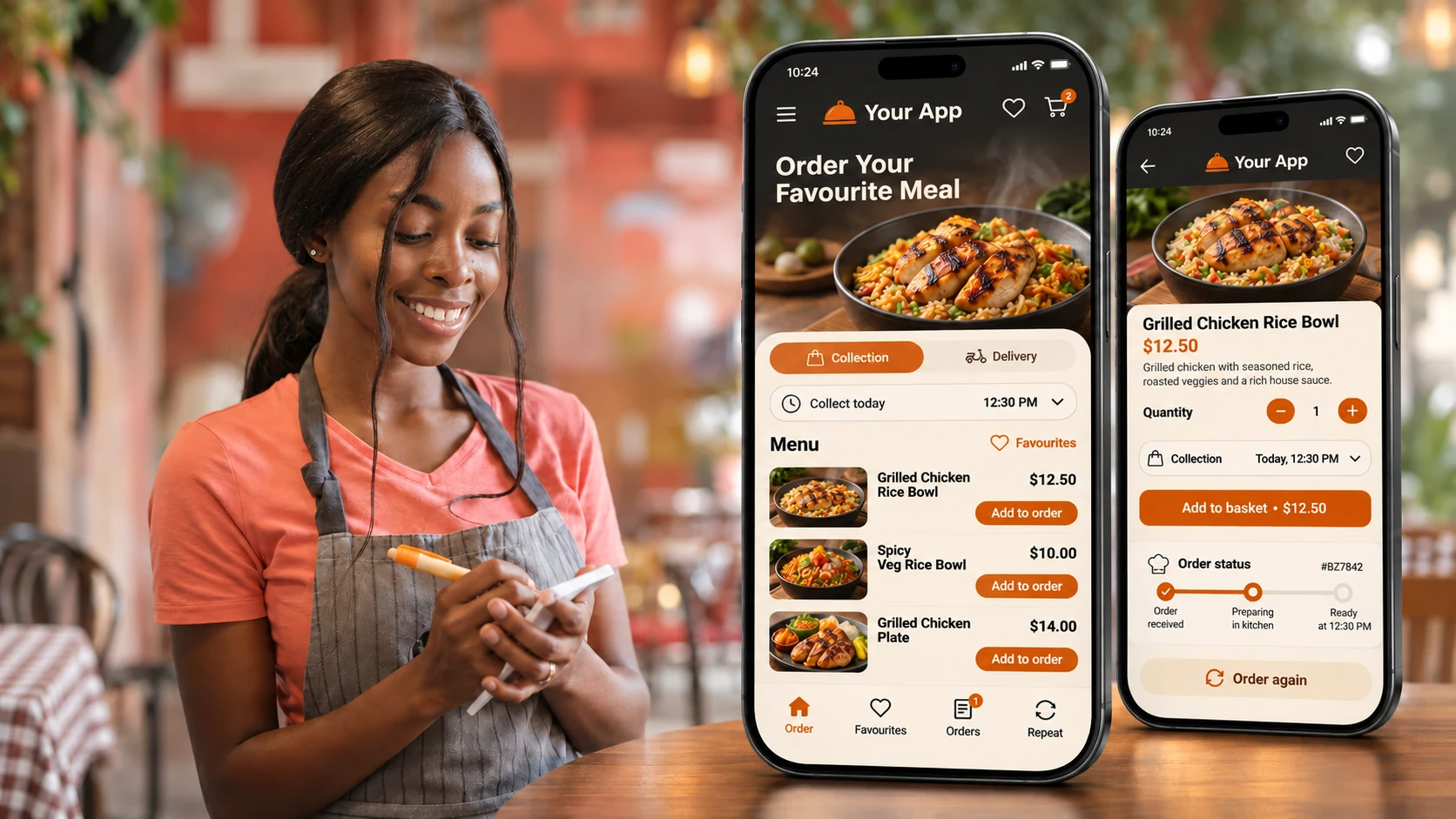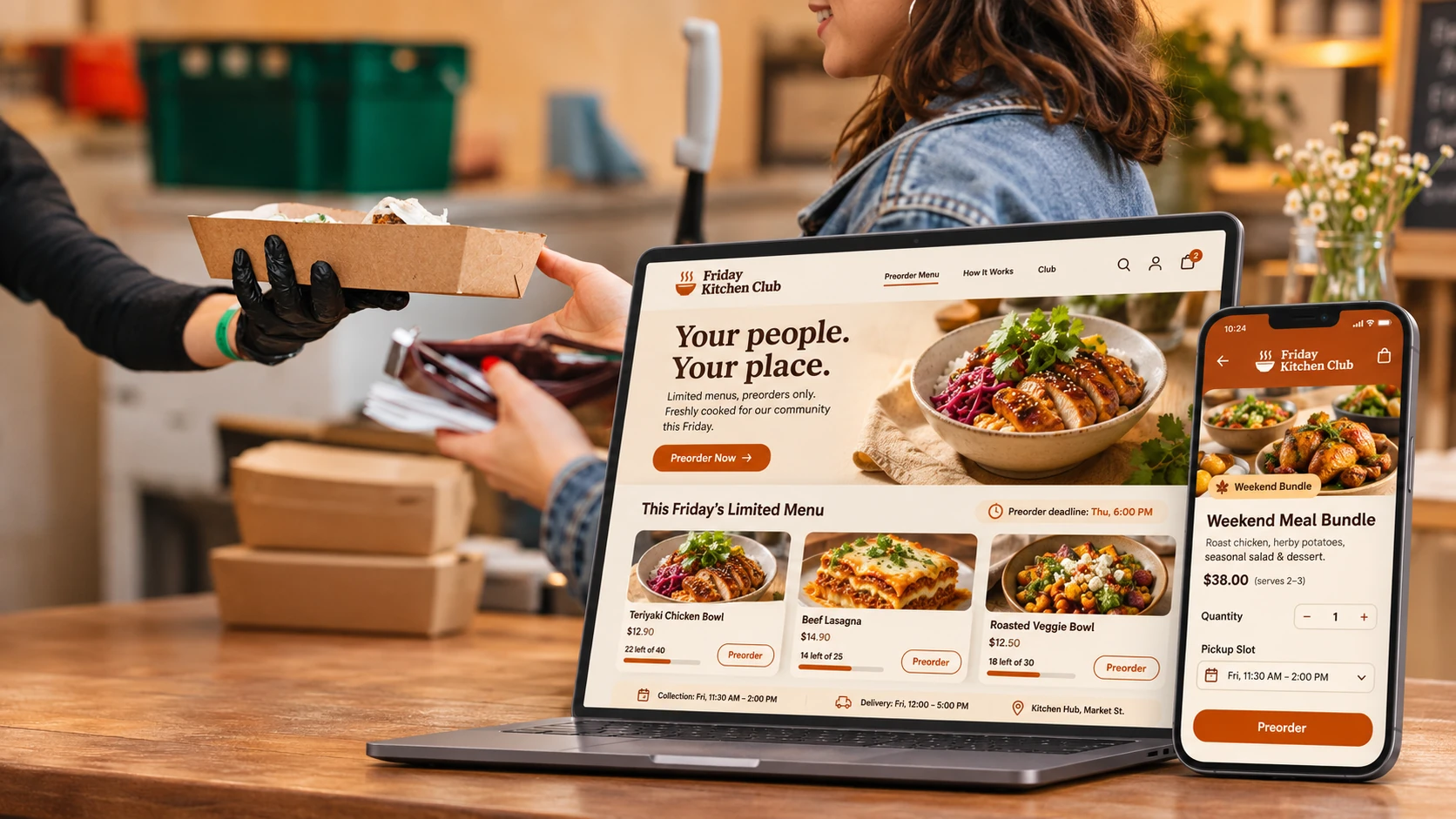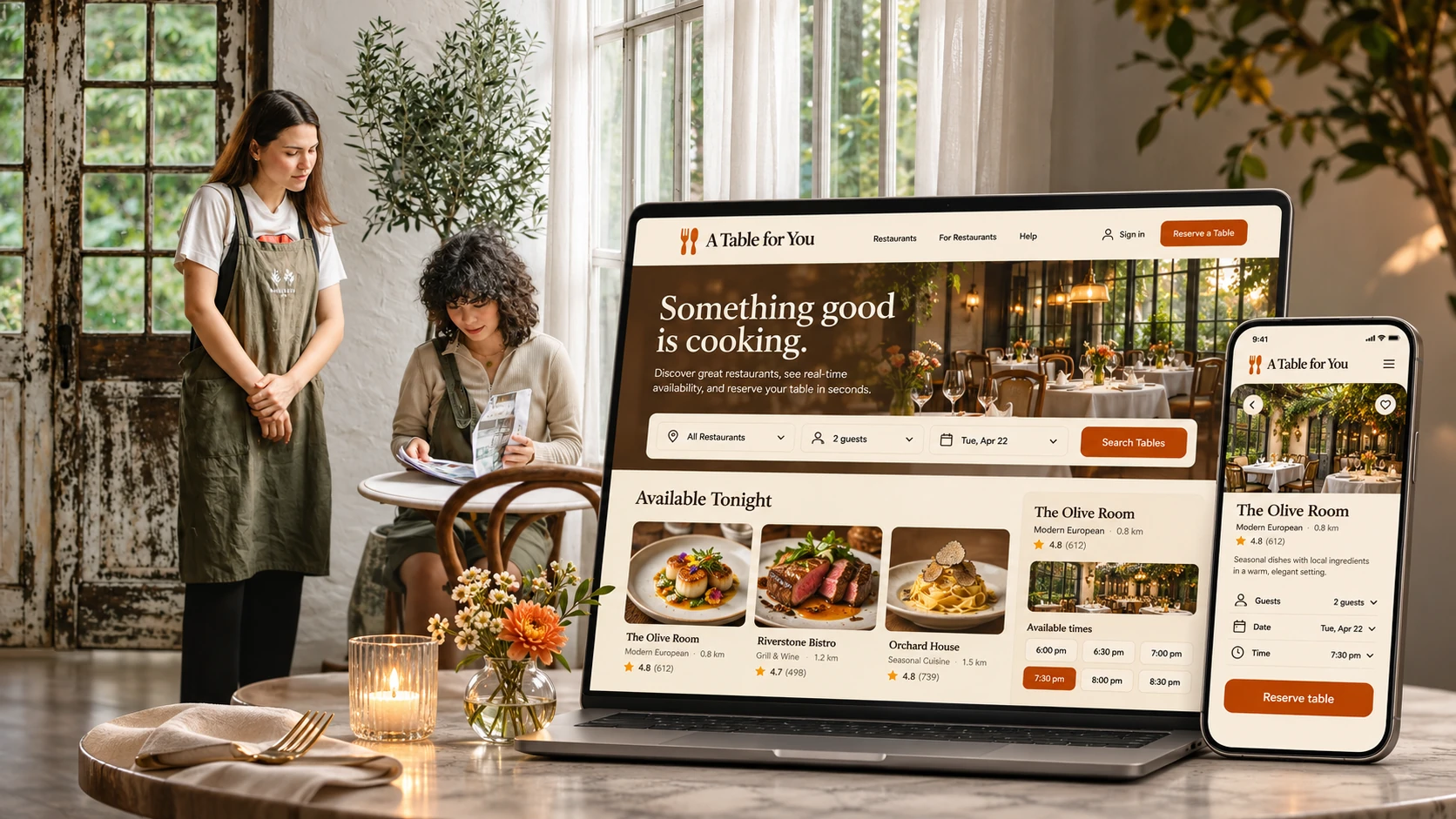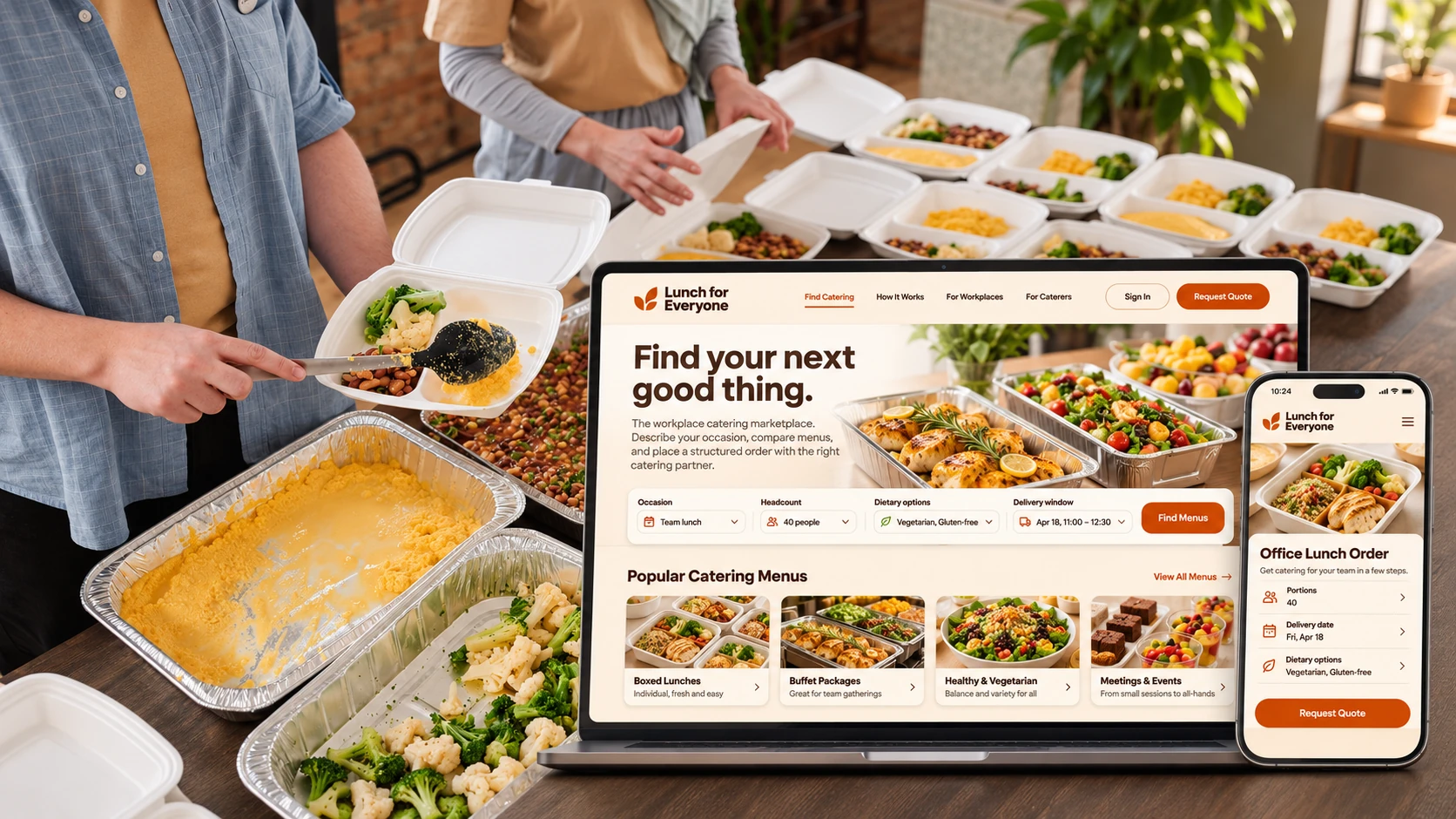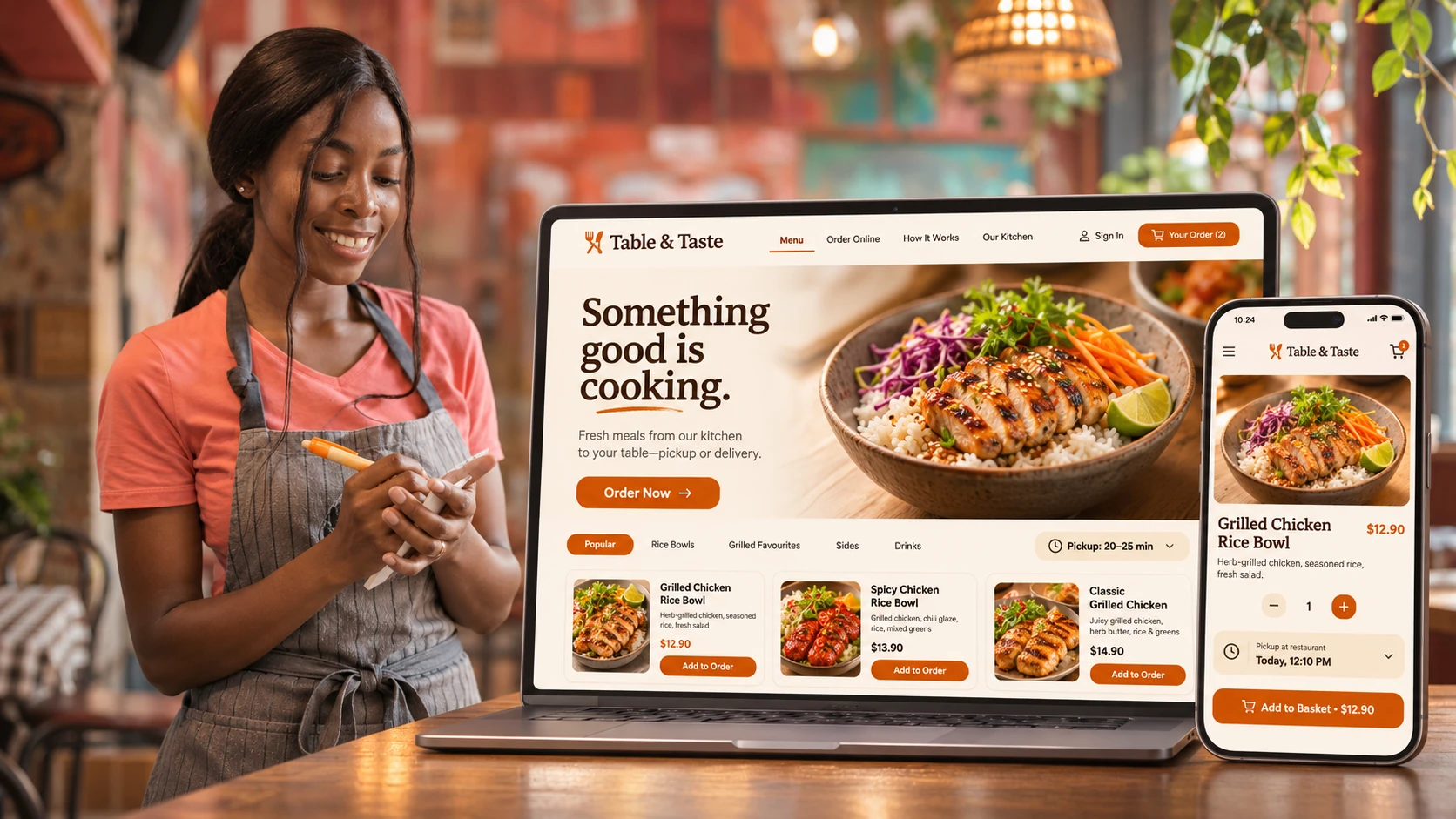
A customer knows exactly which meal they want, but ordering means asking for the menu, checking the price and waiting for a reply. Your direct-ordering service could bring those steps together, while the restaurant sees a clear order it can accept, prepare and hand over under realistic arrangements.
A business you can
picture.
Build an ordering business for a restaurant or sell ordering software to a focused restaurant group. Connect the public menu to the kitchen’s actual capacity and fulfilment process.
Who would be glad
you built it?
Regular diners
Reorder a favourite meal with clear choices.
Customers planning collection
Understand preparation and pickup arrangements.
Small workplace groups
Place a coordinated order with accurate details.
Where the money
could come from.
For a restaurant-owned service, customers pay for fulfilled food orders. Food, labour, packaging, payments and any delivery costs come from that revenue. If you later sell the software to restaurants, use a distinct subscription or disclosed order fee so the platform's income is not confused with the restaurants' sales.
The part you could
make your own.
A dependable repeat-order experience could be the difference. Saved favourites, honest menu availability and clear preparation updates may give regulars a reason to use your direct channel. Test whether convenience holds up during an ordinary busy service.
An angle to test with the people you want to serve.Start with something
worth using.
Start with one restaurant, a focused menu and collection or a limited delivery area. Include item choices, availability, order confirmation and meaningful status updates. Make the kitchen handover work before expanding to many restaurants or complex promotions.
- Current menus and item choices
- Collection or delivery time slots
- Order confirmation and kitchen updates
Give the promise
something to stand on.
You need a restaurant operation or close restaurant partners that can maintain the menu and fulfil orders. Kitchen capacity, packaging, payment confirmation and delivery responsibility must connect to the website's promises.
Keep availability, allergy information and preparation times accurate. The kitchen needs a way to pause orders or contact a customer when something changes. Confirmation should reflect real acceptance of the order.
Let a small beginning
teach you something.
Invite regular customers to try a few direct orders during manageable service periods. Watch the journey from menu choice through kitchen acceptance and handover, then ask where customers still needed to call or repeat details.
Can the customer place a clear order that the kitchen can fulfil within the arrangements shown before payment?
Look for these signs
- Menus reflect current kitchen availability
- Orders reach the responsible staff
- Customers understand collection or delivery status
A little more
clarity.
Should the first version serve many restaurants?
One reliable restaurant can reveal the core workflow. A multi-restaurant marketplace adds onboarding, menus, payment arrangements and support complexity, so expand when the operating process is understood rather than simply duplicating listings.
Will direct orders remove delivery costs?
No. Collection and delivery each have real operating needs. Show relevant charges clearly and agree who handles transport, failed handovers and complaints; a direct website changes the ordering route, not the physical work.
Toast is a reference for restaurant ordering software.
Now picture it
with your name on it.
Your people. Your priorities. The version you keep thinking about. Answer a few questions and leave with a starting plan you can keep.
Free to explore. No account or email needed for your starting plan.