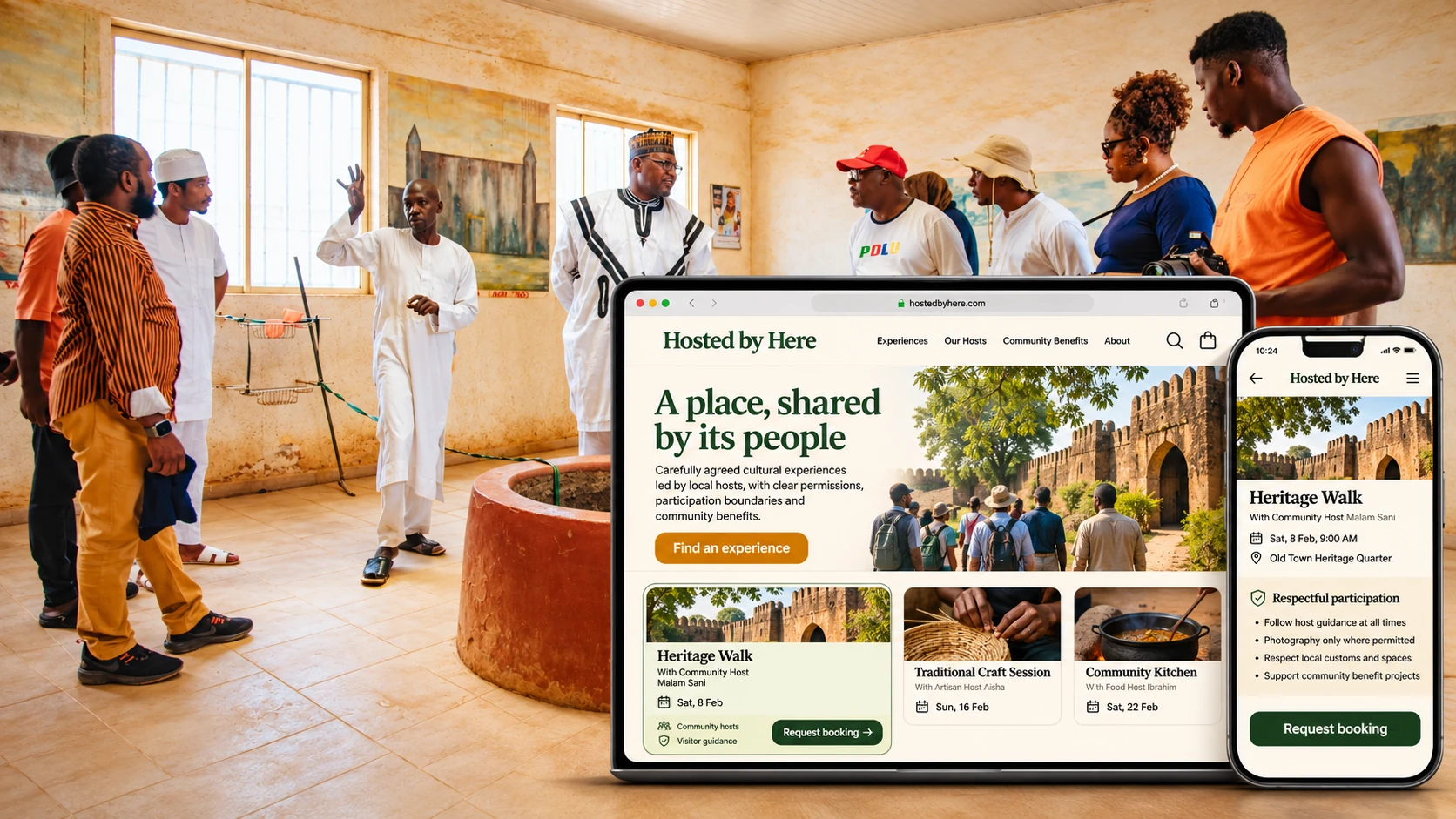
A community has stories and practices it is proud to share, alongside parts of life that remain private. A generic tour listing can blur that boundary. Your network could begin with the hosts’ own choices, helping visitors understand the invitation, the limits and the people whose work makes the experience possible.
A business you can
picture.
Work with a willing host community on a defined experience. Hosts decide what is offered, the platform explains participation expectations and bookings follow the agreed capacity and schedule.
Who would be glad
you built it?
Community hosts
Control over the experience and material they choose to share
Visitors interested in local heritage
Clear expectations for respectful participation
Educational groups
A properly agreed learning experience with suitable hosts
Where the money
could come from.
A disclosed coordination fee on confirmed bookings could support the platform, with host payment clearly agreed and visible to the relevant parties. The fee covers scheduling, guest preparation and support. Educational commissions can be separately scoped. The business must not assume that a commercial booking buys unrestricted access to cultural material, photographs or private community life.
The part you could
make your own.
Your proposed difference is community control of the invitation itself. Hosts determine what they want visitors to understand, and the experience can be reviewed as their preferences or circumstances change.
An angle to test with the people you want to serve.Start with something
worth using.
Co-design one experience with willing authorised hosts. Record what is shared, what remains private, visitor expectations and payment arrangements. Publish a host-approved description and confirm bookings within the agreed capacity.
- Describe what hosts have chosen to share.
- Explain photography and participation permissions clearly.
- Show how the experience fee is allocated.
Give the promise
something to stand on.
You need patient host relationships and a process for appropriate community permission. Review representation, rights and visitor conduct with the people involved, and give hosts a practical way to change or withdraw an offering.
Obtain appropriate permission, review representations and respect restrictions on cultural material. Hosts need a practical way to change or withdraw an offering, and guests need clear support arrangements.
Let a small beginning
teach you something.
Work with a willing host group to design a small pilot and review it before inviting visitors. Gather host feedback as carefully as guest feedback, including whether boundaries and compensation felt fair.
Do hosts feel the experience reflects their chosen invitation, and do visitors understand and respect its practical and cultural boundaries?
Look for these signs
- Hosts approve descriptions and permitted uses
- Visitor expectations are clear before booking
- Changes and withdrawal requests have a workable process
A little more
clarity.
Can guests photograph everything?
Only within the hosts’ agreed permissions. Explain photography, recording and reuse conditions before the visit, and make it easy for hosts to identify moments or material that remain private.
Who decides whether a story can be shared?
Use the appropriate people and permissions for that community and material. Do not assume one enthusiastic participant can authorise every tradition, story or representation on everyone’s behalf.
What should my first version focus on?
Start with the first test described here, then build around the part people actually use and would pay to keep.
Now picture it
with your name on it.
Your people. Your priorities. The version you keep thinking about. Answer a few questions and leave with a starting plan you can keep.
Free to explore. No account or email needed for your starting plan.