A visitor understands your offer until the booking form switches into unfamiliar wording. The confidence built on the page disappears at the next step. Reviewed language support could make the essential journey coherent, including instructions, errors and confirmations, while your business is honest about the support it can provide afterwards.
A visitor understands part of the site but meets unfamiliar wording in forms, errors or confirmations, making the next step uncertain.
Reviewed language carries the offer and essential actions through a complete journey, with clear expectations for the support available afterwards.
Where it could
make a difference.
Local multilingual services
Explain an offer to different language groups.
International teams
Keep essential client journeys consistent.
Businesses expanding their audience
Offer reviewed information for a defined market.
Useful on: Business website, Online store, Learning website, Directory.
What this could mean
for your business.
Language support can make the website more accessible to the audiences you choose to serve and support clearer enquiries. Its value depends on the whole experience, including human service. Budget for review and updates, and assess completed journeys and misunderstandings rather than translated word count alone.
Start with something
worth using.
Start with one additional language across a complete essential journey. Include navigation, action labels and confirmation messages. Review meaning and local context before translating a much larger content library.
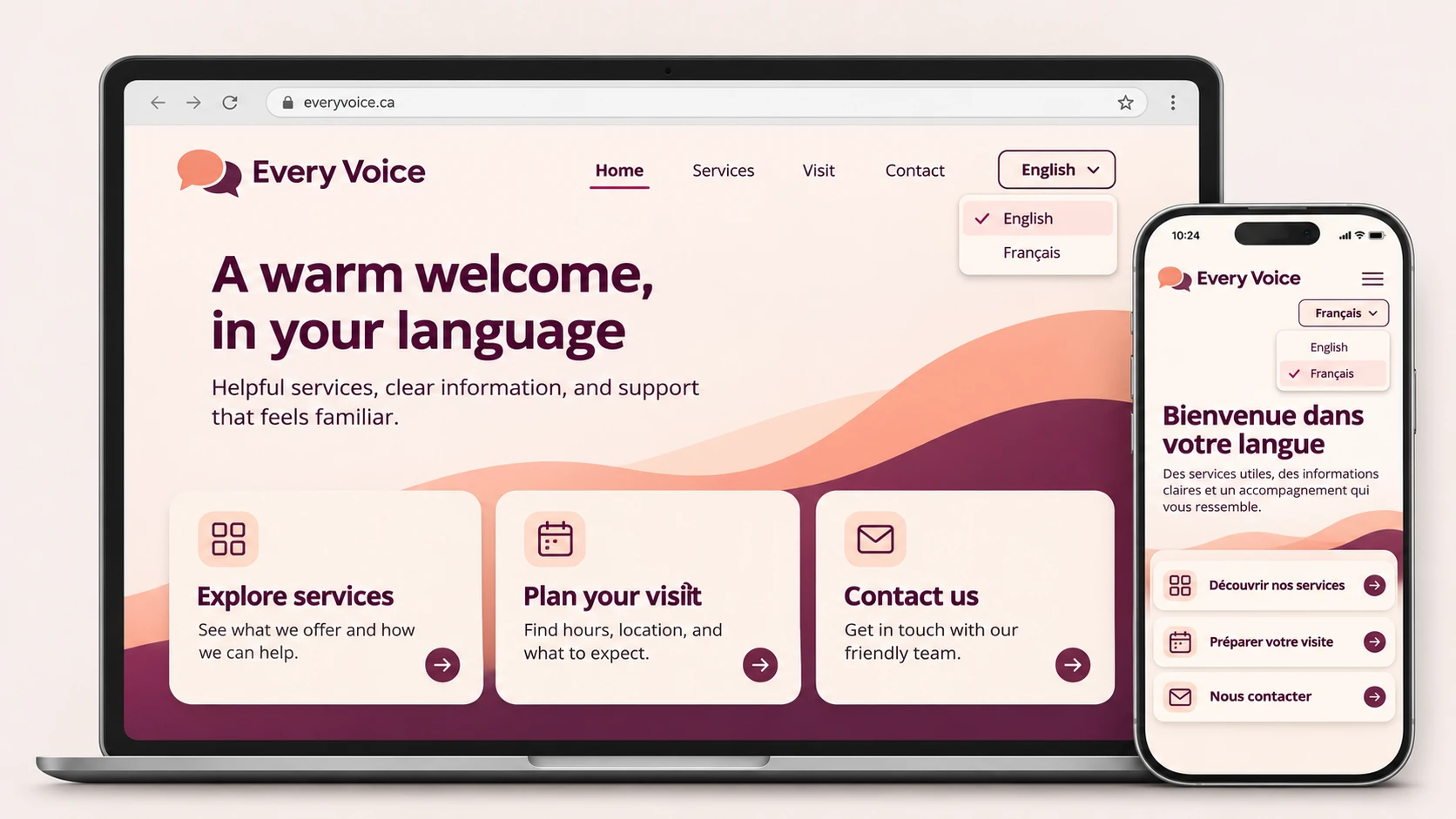
- A clear language switch
- Reviewed essential content
- Consistent navigation and actions
Give the promise
something to stand on.
You need capable language reviewers, update ownership and a realistic support plan. Choose the languages and pages you can maintain, including the forms and service messages that follow them.
Assign people to review meaning and keep versions in step when the offer changes. Automated translation can assist drafting, but important instructions and commitments need suitable review.
- Language review capability
- Content update ownership
- Support for the stated market
How it fits what you already have
Check page routing, language controls, forms, email templates and search. Define how content changes reach translators and confirm that the business can serve the audience promised by the translated experience.
Let a small beginning
teach you something.
Ask fluent intended users to complete a realistic task and explain the offer back to you. Review awkward wording, untranslated steps and support expectations with both the language reviewer and delivery team.
Can the visitor complete the essential journey in the chosen language and understand what language support continues after submission?
Look for these signs
- Essential steps remain consistently translated.
- Reviewers approve meaning and context.
- Content changes trigger translation updates.
A little more
clarity.
Can automatic translation handle everything?
It can assist a draft, but important offers, instructions and terms need capable review. A fluent person should check what the business means and how the intended audience will understand it.
Do we need every page in every language?
Begin with a complete useful journey you can maintain. Clearly indicate where other material is unavailable rather than letting a language switch promise a fully translated experience that ends halfway.
Could this work with my existing website?
We would check how your current website is built, what it already does and which services need to connect. That helps us choose a suitable addition and avoid paying twice for something you already have.
What would this change
in your business?
Your customers. Your working day. The part you would love to make easier. Answer a few questions and leave with a starting plan you can keep.
Free to explore. No account or email needed for your starting plan.